
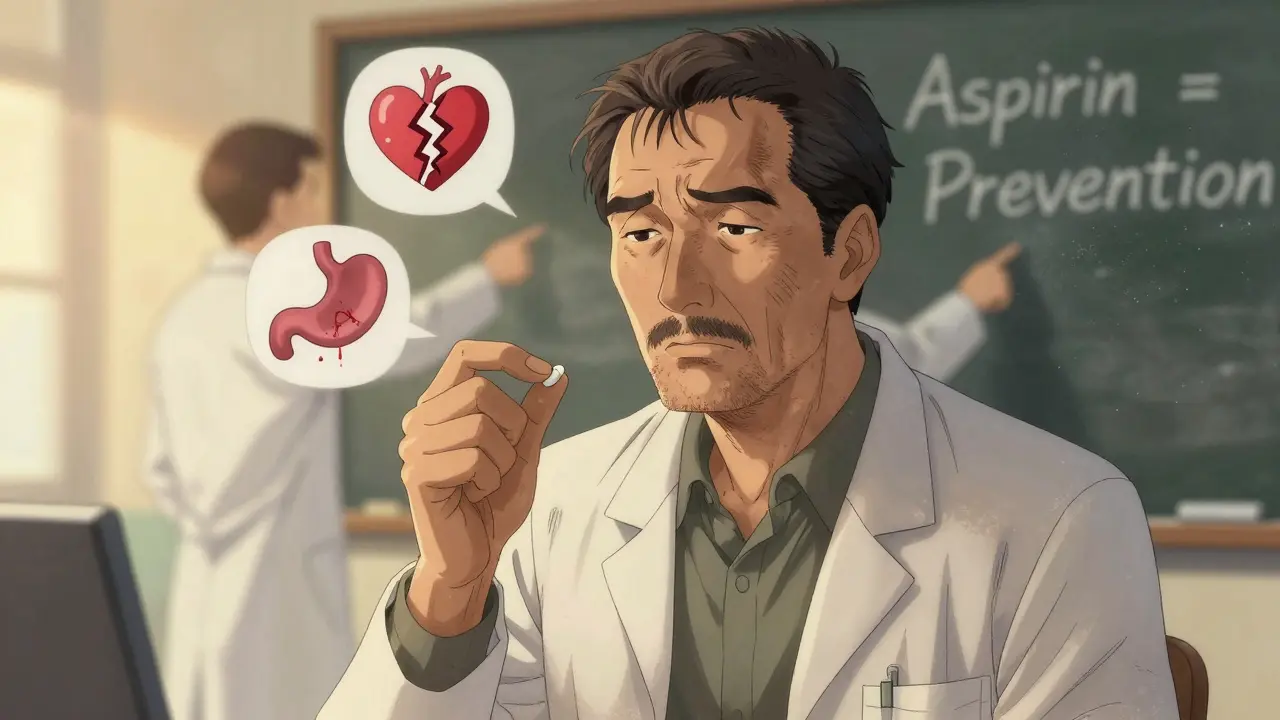
For decades, taking a daily low-dose aspirin was common advice for almost anyone over 40 trying to avoid a heart attack. But that advice has changed - dramatically. Today, if you’re healthy and have never had a heart attack, stroke, or stent, aspirin might not help you - and could actually hurt you.
Why Aspirin Was Once a Go-To for Heart Health
Aspirin works by thinning the blood just enough to stop clots from forming in arteries. That’s why it’s so effective for people who already have heart disease. If you’ve had a heart attack, angina, or a stent placed, aspirin cuts your risk of another event by about 21%. That’s why it’s still standard care for secondary prevention. But for people without existing heart disease? The math flipped. In the 1980s and 1990s, big studies like the Physicians’ Health Study suggested aspirin could prevent first heart attacks. That led to millions of healthy people popping a daily pill. By 2010, nearly 40% of Americans aged 40-75 were using aspirin for prevention. Then came the hard data. Between 2018 and 2022, four major trials - ASPREE, ASCEND, ARRIVE, and others - showed something alarming: for every 100 people taking aspirin daily for 10 years, about 1 might avoid a nonfatal heart attack. But 2 might have a serious bleed - in the stomach, brain, or elsewhere. The risks weren’t small. They were bigger than the benefits for most people.Who Should Still Consider Aspirin (And Who Shouldn’t)
Current guidelines from the U.S. Preventive Services Task Force (USPSTF), the American College of Cardiology (ACC), and the American Heart Association (AHA) are clear:- Do NOT start aspirin if you’re 60 or older. The bleeding risk outweighs any possible benefit. This applies even if you’re active, eat well, and have no family history of heart disease.
- Consider aspirin only if you’re 40-59, have a 10% or higher 10-year risk of heart disease, and have no high bleeding risk. This is a narrow group.
- Avoid aspirin if you have any of these: history of stomach ulcers, regular use of NSAIDs like ibuprofen, uncontrolled high blood pressure, heavy alcohol use, or if you’re on blood thinners like warfarin or apixaban.
How to Know Your 10-Year Heart Disease Risk
You can’t guess this. You need numbers. The ACC/AHA pooled cohort equation calculates your risk using seven factors:- Age
- Sex
- Race
- Total cholesterol
- HDL (good) cholesterol
- Systolic blood pressure (whether treated or not)
- Diabetes status
- Smoking history
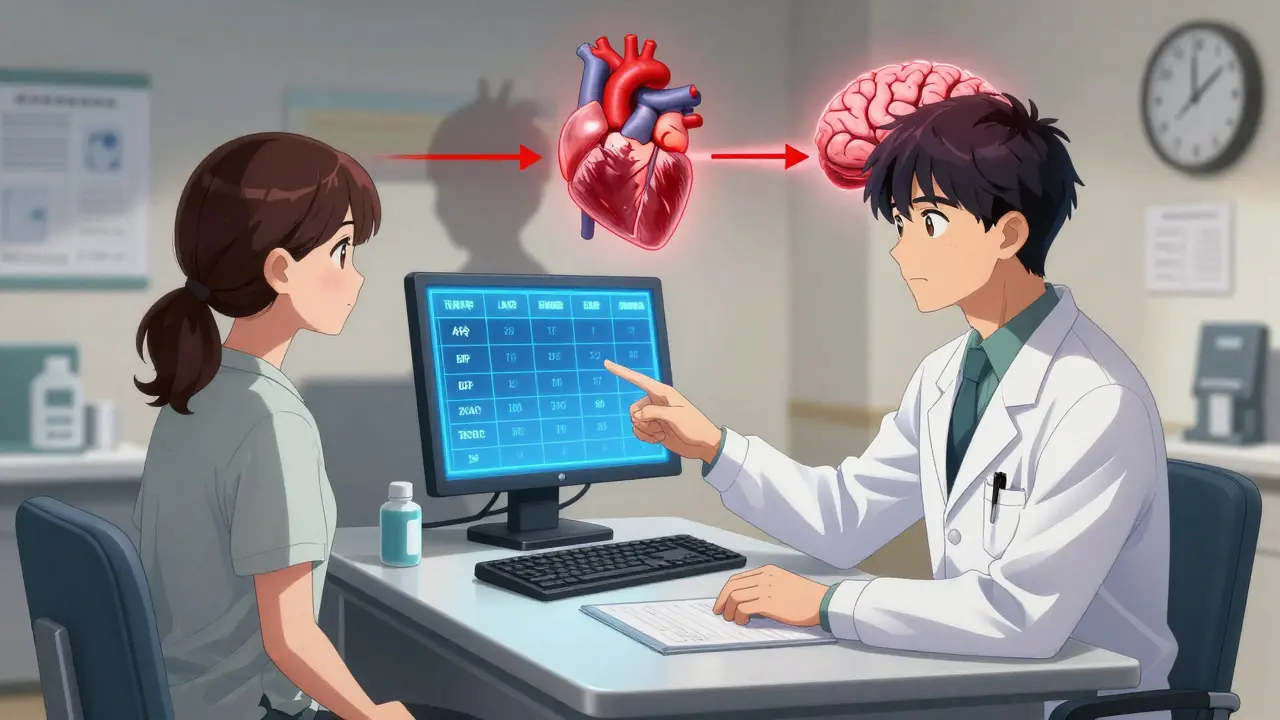
Bleeding Risk: The Hidden Cost
Aspirin doesn’t just prevent clots. It makes bleeding easier. That’s why the HAS-BLED score exists - a simple tool doctors use to spot who’s at high risk:- H - Hypertension (uncontrolled)
- A - Abnormal kidney or liver function
- S - Stroke history
- B - Bleeding history or tendency
- L - Labile INR (if on warfarin)
- E - Elderly (over 65)
- D - Drugs or alcohol (NSAIDs, steroids, heavy drinking)
What About Diabetes?
People with diabetes have a higher heart disease risk - but even here, aspirin isn’t automatic. The American Diabetes Association says aspirin might be considered for those over 40 with additional risk factors like high blood pressure or smoking. But if you’re under 40, have no other risks, or have kidney disease? Skip it. Studies show aspirin reduces heart attacks in diabetics by only 8-10%. But it increases major bleeding by 40-50%. That’s why many endocrinologists now recommend statins over aspirin for diabetic patients.Why So Many People Still Take It - And Why They Should Stop
Despite the guidelines, about 22% of Americans aged 40-75 still take daily aspirin for prevention. Why? Three reasons:- Family history. “My dad had a heart attack at 58” is a powerful reason - but it’s not a medical one. Genetics matter, but they don’t override bleeding risk.
- Old advice. Many people were told to take it 10, 20, or 30 years ago and never stopped.
- Perceived safety. “It’s just a baby aspirin” - but 81 mg is still a drug. It affects your blood, stomach, and brain.
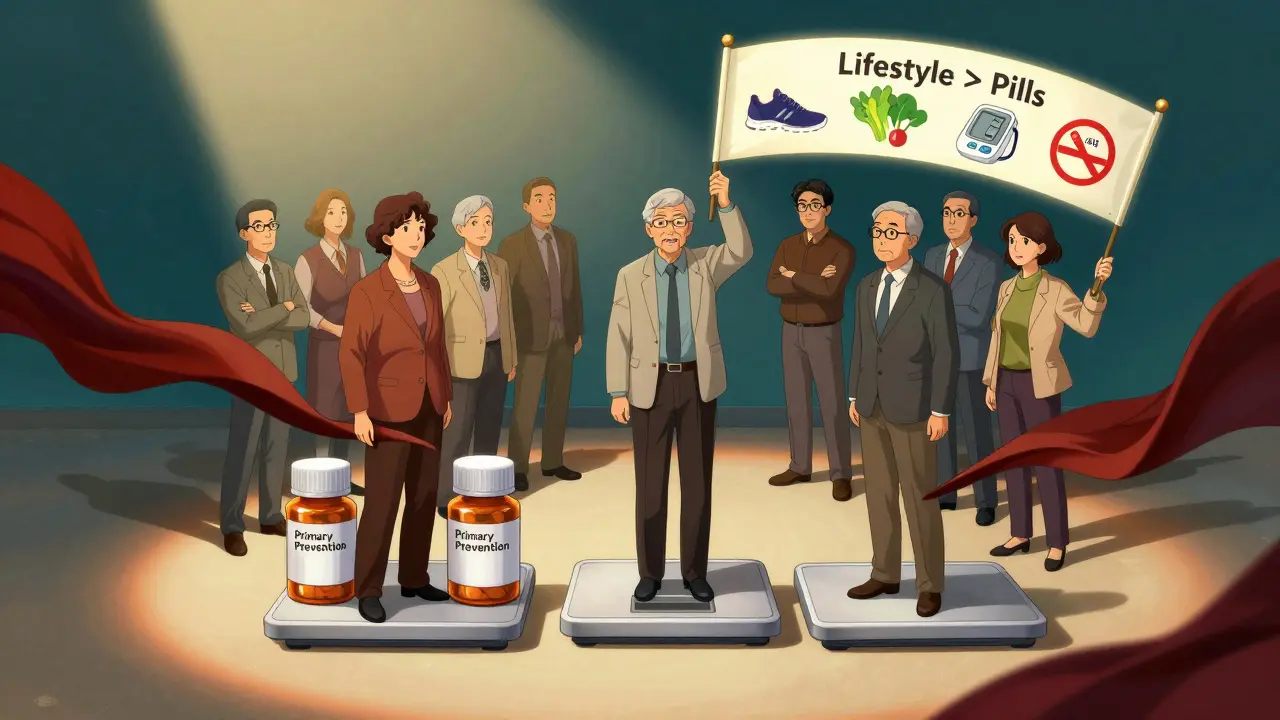
What Should You Do Instead?
If you’re healthy and thinking about aspirin, here’s what actually works:- Take a statin if your LDL is high. Statins reduce heart attack risk by 25-37% - twice as much as aspirin.
- Control your blood pressure. Keeping it under 120/80 cuts your heart risk more than any pill.
- Exercise 150 minutes a week. Walking, swimming, cycling - it’s free and more effective than aspirin.
- Quit smoking. If you smoke, quitting cuts your heart attack risk by half in one year.
- Check your cholesterol. Get a lipid panel. Know your numbers.
What If You’re Already Taking It?
Don’t stop cold turkey. If you’ve been taking aspirin daily and aren’t sure why, talk to your doctor. Ask:- “What’s my 10-year heart disease risk?”
- “Do I have any bleeding risk factors?”
- “Is this still right for me based on today’s guidelines?”
Aspirin Still Has a Vital Role - Just Not for Prevention
Let’s be clear: aspirin saves lives. But only in people who already have heart disease. After a heart attack, stroke, or stent placement, aspirin is one of the most effective, cheapest, and safest drugs you can take. It’s been proven for decades. For secondary prevention - yes, continue. For primary prevention - no, don’t start. And if you’re already taking it for prevention without a clear reason? It’s time to talk.Is it safe to take aspirin every day if I’m over 60?
No. The U.S. Preventive Services Task Force and major heart organizations now recommend against starting aspirin for heart disease prevention in adults aged 60 and older. The risk of serious bleeding - including in the brain or stomach - outweighs any small potential benefit. If you’re already taking it, don’t stop suddenly. Talk to your doctor about whether you should continue.
Can I take aspirin if I have diabetes?
Maybe, but not automatically. The American Diabetes Association says aspirin might be considered for people with diabetes aged 40 or older who have additional risk factors like high blood pressure or smoking. But if you’re under 40, have no other risks, or have kidney disease, aspirin isn’t recommended. Statins and blood pressure control are more effective and safer for most diabetics.
What’s the right dose of aspirin for heart prevention?
If aspirin is recommended, the dose is 75-100 mg per day - commonly sold as an 81 mg “baby aspirin.” Higher doses don’t offer more protection and increase bleeding risk. Never take more than 100 mg daily for prevention unless your doctor specifically tells you to.
Why did doctors used to recommend aspirin for everyone?
In the 1980s and 1990s, early studies showed aspirin reduced heart attacks in healthy men. That led to widespread use. But those studies didn’t account for modern treatments like statins, better blood pressure control, or smoking cessation. Newer trials, like ASPREE and ARRIVE, showed that today’s healthier populations get little benefit - and more harm - from daily aspirin. Guidelines have been updated to reflect this.
Can I take aspirin if I’m on other blood thinners?
No. Combining aspirin with other blood thinners like warfarin, apixaban, rivaroxaban, or dabigatran greatly increases your risk of life-threatening bleeding. If you’re on one of these medications, aspirin should only be used if there’s a very strong, documented medical reason - and even then, it’s closely monitored.
Does family history mean I should take aspirin?
Family history increases your risk - but it doesn’t automatically mean you need aspirin. If your father had a heart attack at 58, your doctor should calculate your 10-year risk using your own health data (cholesterol, blood pressure, etc.). If your risk is below 10%, aspirin won’t help. Lifestyle changes and statins are far more effective than aspirin for most people with a family history.
Is there a test to see if aspirin will work for me?
Not directly. But your doctor can calculate your 10-year cardiovascular risk using the ACC/AHA pooled cohort equation, which uses your age, sex, cholesterol, blood pressure, diabetes status, and smoking history. Some doctors also use coronary calcium scans - a low-dose CT scan of the heart - to detect early plaque buildup. If your calcium score is high, aspirin might be reconsidered. But this isn’t routine for everyone.
What are the signs that aspirin is causing bleeding?
Watch for: dark, tarry stools; vomiting blood or material that looks like coffee grounds; unexplained bruising; frequent nosebleeds; or unusually heavy menstrual bleeding. Headaches, dizziness, or weakness could signal internal bleeding. If you notice any of these, stop aspirin and call your doctor immediately. Don’t wait.
tynece roberts
March 14, 2026 AT 20:11so i took aspirin for like 15 years bc my mom said it was good for the heart... turns out i never even asked my doc? lol. just assumed. now i’m 62 and just stopped cold turkey after reading this. no idea if i’m gonna live longer but at least i won’t be puking blood anymore. also why does everyone still think baby aspirin is harmless? it’s a drug. not candy.
Hugh Breen
March 15, 2026 AT 06:00OMG this is so important 😭 I literally cried reading this. Aspirin is NOT a vitamin!! 🙈 My uncle had a GI bleed last year and they said it was from daily aspirin he’d been taking since 1998. He’s fine now but terrified. Please everyone, stop self-prescribing. Talk to your doc. I’m so glad this info is out there. 🙌❤️ #HealthAwareness
Byron Boror
March 17, 2026 AT 03:24They’re telling us to stop aspirin because we’re too soft now? Back in my day, we took aspirin and didn’t whine about bleeding. If you can’t handle a little blood, maybe you shouldn’t be alive. This is why America’s getting weaker. Stop coddling people. Just take the pill. Problem solved.
Lorna Brown
March 18, 2026 AT 22:51I’ve been thinking about this for weeks. It’s wild how we cling to outdated medical advice like it’s gospel. We’re taught to trust doctors, but rarely taught how to question them. The real issue isn’t aspirin-it’s our passive relationship with healthcare. Why don’t we demand personalized risk assessments? Why do we accept blanket recommendations? This isn’t about pills. It’s about autonomy.
Rex Regum
March 19, 2026 AT 19:23Of course the guidelines changed. Big Pharma didn’t want us all on a $5 drug when they could sell us $120 statins. They funded the new studies. They rebranded bleeding as ‘risk.’ It’s all a scheme. I’ve been taking 81mg since 2003. I’ve never had a problem. My heart’s fine. My stomach’s fine. My bank account? Still intact. Who’s really lying here?
Kelsey Vonk
March 20, 2026 AT 10:23thank you for writing this. i’ve been scared to ask my doctor about aspirin bc i thought i was being annoying. but now i know i’m not. i’m 54, diabetic, no heart issues, but i take it bc i thought it was ‘just in case.’ i’m going to ask for my risk score next week. maybe i’ll finally feel like i’m making a real choice, not just following habit. 🌱
Emma Nicolls
March 20, 2026 AT 14:15so i got my 10 year score yesterday and it was 7% so i guess i dont need it? but like… my dad had a heart attack at 56 so i felt like i should. but now i realize i was just scared. i’m gonna start walking 30 mins a day instead. and i’m telling my mom to stop taking hers too. she’s 68. she said ‘but i’ve always done it’ and i just hugged her. we’re all just trying to be safe
Jimmy V
March 21, 2026 AT 09:44Here’s the truth: Aspirin isn’t the villain. Complacency is. You don’t get heart disease from one bad habit-you get it from 10 ignored ones. Statins? Great. Aspirin? Only if your numbers scream ‘yes.’ But if you’re skipping exercise, eating junk, ignoring BP, and still popping pills like they’re mints? You’re not being proactive-you’re being lazy. Stop looking for magic bullets. Go run. Get tested. Quit smoking. That’s the real medicine.
Devin Ersoy
March 22, 2026 AT 04:23Wow, this is such a beautifully nuanced take. I love how you framed this-not as a binary ‘take or don’t take’ but as a deeply personal calculus. I’ve been an endocrinologist for 22 years, and I still see patients who cling to aspirin like a talisman. The real tragedy? They’ve been told they’re ‘doing everything right’ by their doctors… when really, they’re just doing what they were told 30 years ago. Knowledge evolves. We must evolve with it. And yes-statins, movement, sleep, and stress management are the holy trinity. Aspirin? Just a footnote.