

Why Proper Inhaler Technique Matters for Kids
When a child uses an asthma inhaler without a spacer, less than 20% of the medicine actually reaches their lungs. The rest sticks to their mouth, throat, or gets spit out. That’s not just wasted medicine - it’s wasted protection. Kids with asthma need every bit of their prescribed dose to keep breathing easy, especially during flare-ups. Studies show that when technique is done right - using a spacer and mask - up to 80% of the medication gets where it needs to go. That’s the difference between a child who can play soccer and one who can’t even run to the playground.
The problem? Most parents don’t know how to do it correctly. A 2022 audit found that 63% of caregivers miss the most basic step: getting a tight seal between the mask and the child’s face. And if the seal isn’t perfect, the medicine escapes. Even worse, many parents shake the inhaler for only a few seconds, skip breath counts, or don’t wait between puffs. These mistakes lead to poor control, more ER visits, and kids being wrongly labeled as "steroid-resistant." In reality, they’re just not getting the medicine.
What You Need: Spacer, Mask, and Inhaler
You can’t just hand a child an inhaler and expect them to use it right. For kids under 8, you need three things: a metered-dose inhaler (MDI), a valved holding chamber (spacer), and a face mask that fits snugly. The spacer holds the medicine in a chamber so the child can breathe it in slowly. The mask covers the nose and mouth to keep the medicine from leaking out.
Not all spacers are the same. For babies under 12 months, use a spacer with a 150-350 mL volume. Toddlers (1-3 years) need 350-500 mL. Preschoolers (3-8 years) do best with 500-750 mL. The mask should cover from the bridge of the nose to the bottom of the chin - no gaps on the cheeks. If the mask is too small, it won’t seal. Too big, and it slips off. Many brands like AeroChamber and Vortex have size guides printed on the packaging. If you’re unsure, ask your pediatrician or asthma educator to check it during your next visit.
Also, don’t forget to wash the spacer once a week. Static builds up inside plastic spacers and traps medicine. Washing with mild soap and letting it air-dry (no towels!) cuts that static and boosts delivery by nearly 30%. Some newer spacers claim you don’t need to wash them, but research from the American Lung Association still recommends it. And never use a spacer with a dry powder inhaler - those need a strong, fast breath that young kids can’t make.
Step-by-Step: How to Use an Inhaler with a Spacer and Mask
Follow these 8 steps every single time. Skipping even one can cut your child’s medicine dose in half.
- Shake the inhaler for 5-10 seconds. Don’t just give it a quick wiggle. You need to mix the medicine and propellant properly. If you don’t shake it enough, you might get a puff of just propellant - no medicine at all.
- Attach the inhaler to the spacer. Make sure it clicks in snugly. Some spacers have a rubber ring - push the inhaler in until it’s secure.
- Place the mask over your child’s nose and mouth. Press gently but firmly. There should be no gaps. If your child has long hair, pull it back so it doesn’t break the seal. If they’re fussy, try a mask with their favorite cartoon character - it helps.
- Press the inhaler once to release one puff. One puff at a time. Never press more than one. If you press twice, the second puff gets trapped and wasted.
- Let your child breathe in and out normally for 5-10 breaths. For babies and toddlers, this is key. Don’t make them hold their breath. Just let them breathe normally. Count out loud: "One, two, three..." up to 6 or 10. They’ll get more medicine this way than if you force them to take one big breath.
- Wait 30-60 seconds before the next puff. If your child needs two puffs, wait at least 30 seconds. Some guidelines say 1-3 minutes, especially for steroid inhalers. Always check your doctor’s instructions.
- Repeat for the second puff if needed. Shake again, attach, press, mask on, breathe for 5-10 breaths. Don’t rush.
- Remove the mask and clean your child’s face. Especially if they used a steroid inhaler. Rinse their mouth with water or wipe their face. This prevents thrush (a mouth infection) and reduces side effects.

Age-Specific Breathing Techniques
One-size-fits-all doesn’t work here. How your child breathes depends on their age.
Infants (under 12 months): They can’t follow instructions. Use 5-10 normal breaths after each puff. Hold them close, maybe while feeding or cuddling. The goal is calm, even breathing. Don’t force it - if they cry, pause. Try again when they’re quiet.
Toddlers (1-3 years): They’re more active. Use 6-8 slow breaths. You can make it fun: "Let’s pretend we’re blowing up a balloon" or "Breathe like a sleepy dragon." Some parents use a favorite toy to demonstrate - hold the toy next to the mask and say, "The toy is breathing too!"
Preschoolers (3-8 years): They can start learning single-breath technique. After one puff, ask them to take one slow breath in, hold it for 5-10 seconds, then breathe out. But don’t push it. If they can’t hold it, go back to multiple breaths. Many kids this age still do better with tidal breathing.
Children over 8 can often use a mouthpiece instead of a mask - but only if they can seal their lips around it and hold their breath. Most kids under 5 still need the mask. Don’t switch too early.
Common Mistakes and How to Fix Them
Even experienced parents make the same errors. Here are the top 5 and how to fix them.
- Mistake: Not shaking the inhaler long enough. Fix: Shake for 10 full seconds. Count "one-Mississippi, two-Mississippi..."
- Mistake: Poor mask seal. Fix: Use one hand to hold the mask. Use the other to gently press the child’s chin up if needed. Check for gaps in the mirror.
- Mistake: Pressing the inhaler too early or too late. Fix: Press the inhaler after the mask is on and sealed. Don’t press before putting the mask on.
- Mistake: Giving two puffs back-to-back. Fix: Wait 30-60 seconds. Shake again. Repeat the whole process.
- Mistake: Not cleaning the mask or spacer. Fix: Wash the spacer weekly with soapy water. Let it air-dry. Wipe the mask with a damp cloth after each use.
One parent on a parenting forum said: "I thought I was doing it right until my pediatrician filmed me. We were only getting 2 out of 6 breaths with a good seal." That’s common. If you’re unsure, record yourself once a month and watch it. You’ll spot mistakes you never noticed.
How to Get Your Child to Cooperate
Getting a 2-year-old to sit still with a mask on their face is hard. Here’s what actually works.
- Use distraction. Watch a favorite cartoon, sing a song, or read a book. Keep their mind off the mask.
- Make it a game. "Let’s see how many dragon breaths you can do!" or "Can you blow the feather across the table?"
- Let them hold the spacer. Give them control. Kids are more likely to cooperate if they feel involved.
- Use character masks. Masks with Spider-Man, Elsa, or Paw Patrol have a 57% higher compliance rate, according to parent surveys.
- Practice when they’re not sick. Do "practice runs" with the spacer and no medicine. Make it normal.
One mom shared: "I taught my son to blow out birthday candles before we used the inhaler. It taught him to exhale fully - and now he does it without being told. Compliance went from 40% to 90%." That’s the power of turning technique into play.
When to Call the Doctor
You’re doing everything right - but your child’s asthma isn’t improving. That’s a red flag. Call your pediatrician or asthma specialist if:
- Your child still wheezes or coughs after using the inhaler
- You notice more nighttime symptoms or missed school days
- You’re unsure if you’re using the spacer correctly
- Your child has been prescribed a steroid inhaler but has mouth sores or thrush
- You’ve tried multiple techniques and still can’t get a good mask seal
Don’t assume it’s "just asthma." Many kids labeled as "treatment-resistant" actually have poor technique. A 2022 study found that 68% of these kids improved dramatically once their inhaler use was fixed.
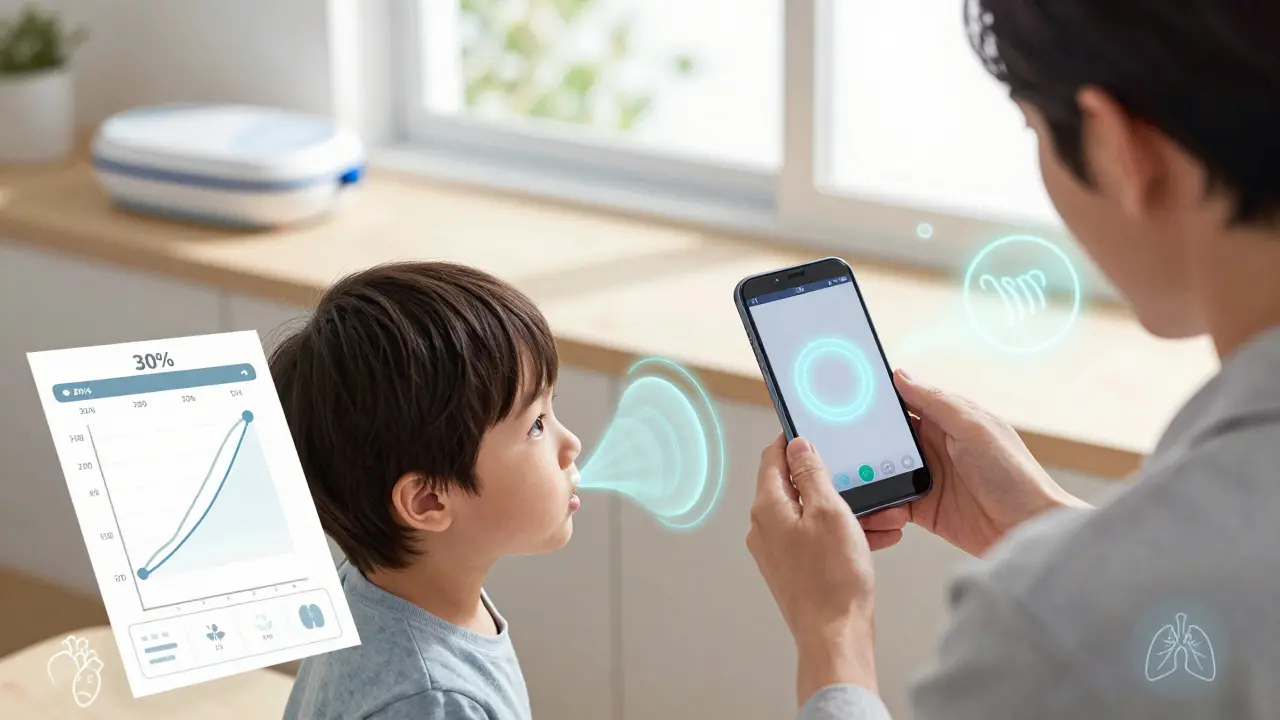
Ask for a video review. Some clinics now offer telehealth check-ins where you send a short clip of your child using the inhaler. The provider can spot errors you didn’t know existed.
What’s New in 2025
Technology is helping parents get it right. In 2023, the FDA approved the first "smart spacer" - a device that beeps when the child breathes too fast or too slow. It connects to an app and gives feedback. Early results show it improves technique by over 30%.
Also, the National Heart, Lung, and Blood Institute is rolling out new guidelines in early 2024 that recommend video verification of technique. If your child’s doctor asks you to record a video, don’t ignore it. Studies show families who do this reduce ER visits by nearly half.
And don’t forget: even with all the gadgets, the best tool is still your hands, your patience, and consistency. No app replaces a calm parent who knows the steps by heart.
Final Tip: Practice Makes Perfect
Technique isn’t something you learn once. It’s something you practice. Most parents need 3-4 supervised sessions to get it right. Even then, mistakes creep back in over time. Check your technique every few months. Watch a video from Johns Hopkins or the American Lung Association. Ask your pharmacist to demonstrate. And never be afraid to say, "I’m not sure I’m doing this right."
Asthma doesn’t care how smart you are. It only cares if the medicine gets to the lungs. Get the technique right, and you’re giving your child the best shot at breathing easy - every day, all year long.
Jay Ara
December 27, 2025 AT 02:31josue robert figueroa salazar
December 28, 2025 AT 14:42Kuldipsinh Rathod
December 29, 2025 AT 01:55Jody Kennedy
December 29, 2025 AT 20:00david jackson
December 30, 2025 AT 19:23Sarah Holmes
December 31, 2025 AT 06:14carissa projo
January 1, 2026 AT 09:23SHAKTI BHARDWAJ
January 2, 2026 AT 04:33Jay Ara
January 2, 2026 AT 18:27Matthew Ingersoll
January 3, 2026 AT 01:02