
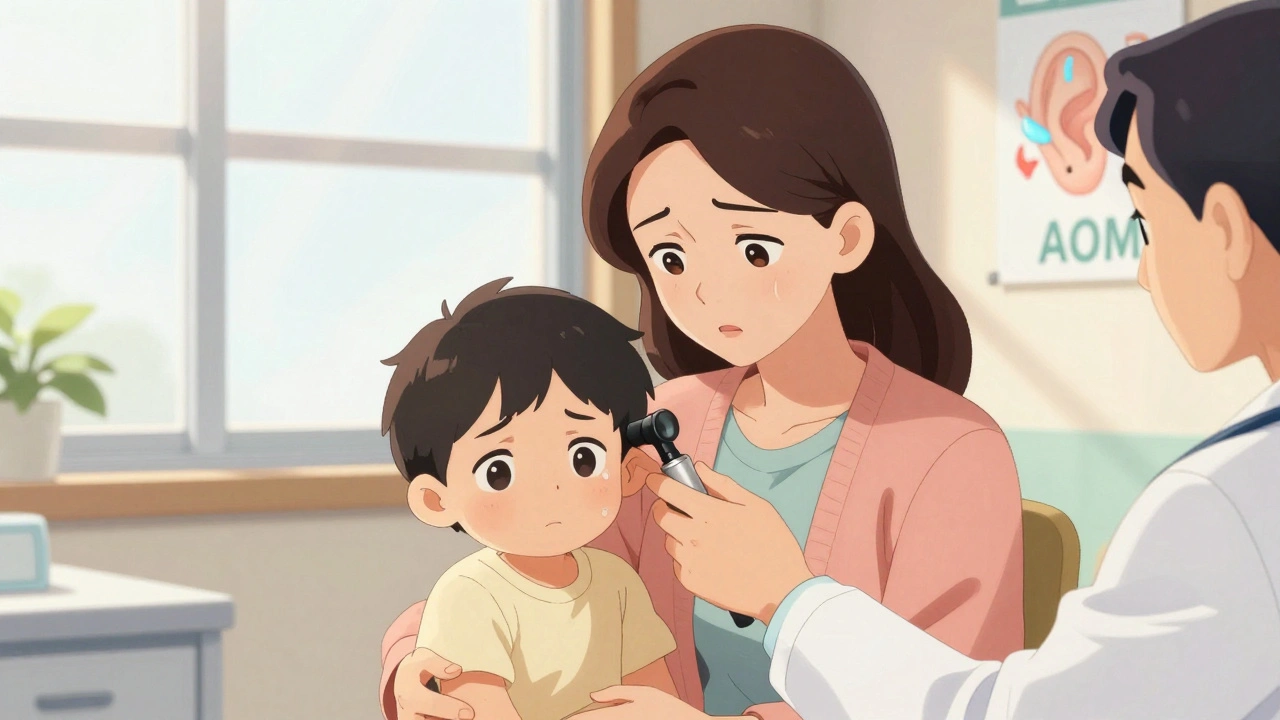
Every year, over 5 million children in the U.S. get ear infections. It’s one of the most common reasons parents bring their kids to the doctor. But here’s the thing: ear infections in children don’t always need antibiotics. And sometimes, tubes aren’t the answer either. Knowing when to treat, when to wait, and when to intervene can make all the difference for your child’s health - and help fight antibiotic resistance.
What Exactly Is an Ear Infection?
An ear infection in kids, called acute otitis media (AOM), isn’t just an earache. It’s a sudden infection behind the eardrum, with fluid buildup and signs of inflammation - like a red, bulging eardrum or pus draining from the ear. It’s most common between 6 and 24 months old, and by age 3, 83% of kids have had at least one.
Not every ear pain means infection. Viruses often cause ear discomfort that clears up on its own. Doctors diagnose AOM only when three things are present: sudden onset of symptoms, fluid trapped behind the eardrum, and clear signs of inflammation. If your child has a fever, tugs at their ear, cries nonstop, or won’t lie down, it could be AOM. But symptoms alone aren’t enough - a doctor needs to look inside the ear with an otoscope to confirm.
When Antibiotics Are Necessary
Antibiotics aren’t always the right first step. But they’re essential in some cases. The American Academy of Pediatrics says children under 6 months old with an ear infection always need antibiotics. Their immune systems aren’t strong enough to fight it off alone.
For kids 6 to 23 months with infection in both ears, antibiotics are strongly recommended. Studies show 95% of these children benefit from treatment. Same goes for any child with a fever over 102.2°F, ear pain lasting more than 48 hours, or pus draining from the ear - these are signs of a severe infection.
The first-line antibiotic is high-dose amoxicillin: 80-90 mg per kilogram of body weight per day, split into two doses. For kids under 2, it’s a full 10-day course. For older kids with mild symptoms, it can be shortened to 5-7 days. If your child is allergic to penicillin, alternatives like cefdinir, ceftriaxone, or clindamycin are used.
But here’s the catch: antibiotics don’t work for every ear infection. About 60-80% of cases clear up on their own within a few days. That’s why watchful waiting is now standard for many kids.
Watchful Waiting: The Smart Alternative
Watchful waiting isn’t ignoring the problem - it’s a science-backed strategy. If your child is over 2 years old and has mild symptoms in one or both ears, you can wait 48 to 72 hours before starting antibiotics. During that time, focus on pain relief.
Acetaminophen or ibuprofen are the go-to options. Give acetaminophen at 10-15 mg per kg every 4-6 hours, or ibuprofen at 5-10 mg per kg every 6 hours for kids over 6 months. Studies show 69% of kids with ear infections have serious pain, but only 37% actually get proper pain meds. Don’t skip this step.
According to CDC data, only about one-third of kids who start with watchful waiting end up needing antibiotics. Most improve within 24-48 hours. Safety-net prescriptions are key: your doctor gives you the antibiotic script but tells you to fill it only if symptoms don’t improve or get worse. This reduces unnecessary use without risking complications.
Watchful waiting works best for children 6-23 months with mild, one-sided infections - and for any child over 24 months with mild symptoms, whether it’s one or both ears. But if your child gets worse, develops a high fever, or stops eating or sleeping, don’t wait. Call the doctor.
When Are Tubes the Answer?
Tympanostomy tubes - tiny plastic tubes inserted through the eardrum - are often thought of as a fix-all for recurring ear infections. But they’re not for every kid.
The guidelines say tubes are recommended only when a child has:
- Three or more ear infections in six months, or
- Four or more in a year, with at least one in the last six months.
There’s another important reason: persistent fluid behind the eardrum for three months or longer and documented hearing loss of 40 decibels or more. That’s the level where speech and learning can be affected. If your child is constantly pulling at their ears but hearing fine, tubes probably aren’t needed.
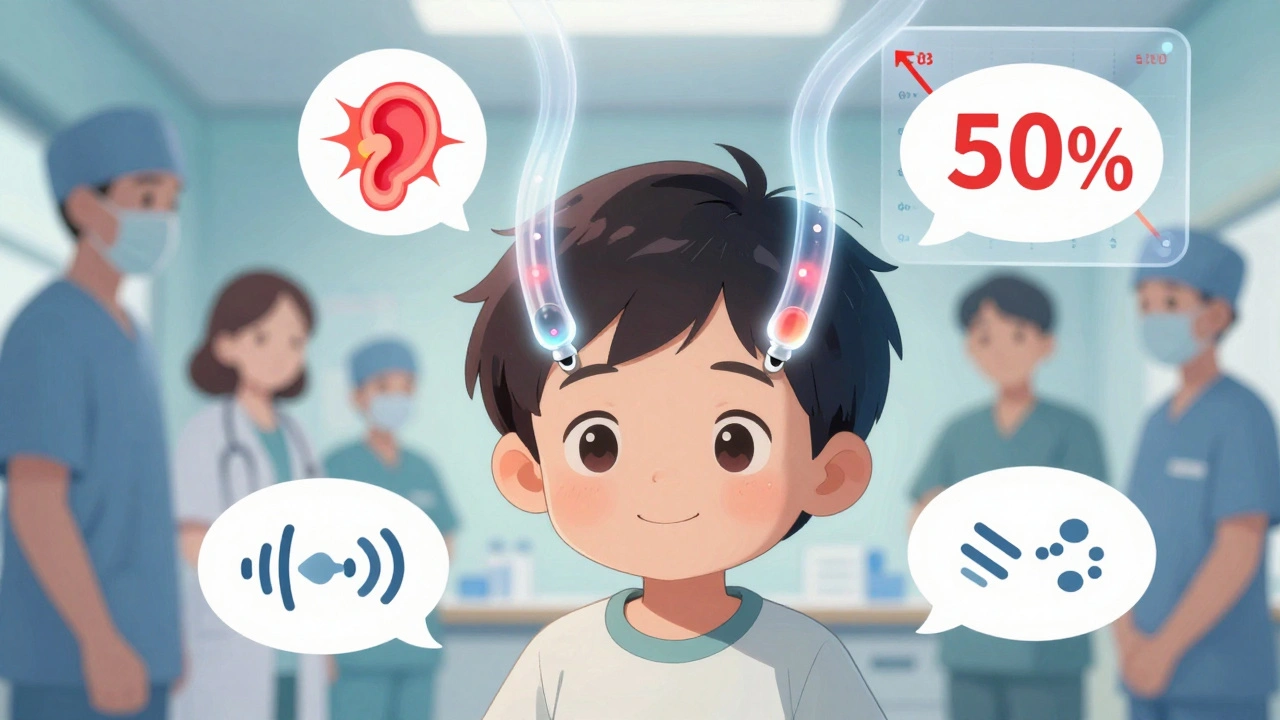
Each year, about 667,000 children in the U.S. get tubes. The procedure is quick, done under light anesthesia, and tubes usually fall out on their own in 6 to 18 months. They reduce infections by about half in the first six months after insertion. But after that, the benefit fades. And they don’t prevent all future infections.
Some experts warn tubes are overused. Dr. Charles Bluestone, a leading pediatric ear specialist, says many kids get tubes for simple recurrent infections without hearing loss - and that’s not what the evidence supports. Tubes are meant for kids whose hearing or development is at risk, not just those who get frequent infections.
Pain Management Is Non-Negotiable
No matter which path you choose - antibiotics, watchful waiting, or tubes - pain relief is the most important part of treatment. Ear infections hurt. A lot.
Studies show kids with AOM often have pain levels comparable to a broken bone. Yet, too many parents wait too long to give medicine. Don’t. Start acetaminophen or ibuprofen as soon as you suspect an infection. Keep giving it on schedule, even if your child seems better. Pain can linger even after the infection starts to clear.
And skip the decongestants and antihistamines. The CDC says they don’t help ear infections - and they can cause side effects like drowsiness, irritability, or even dangerous reactions in young kids. Same goes for home remedies like garlic oil or warm compresses alone. They might feel soothing, but they don’t treat the infection.
Why Overusing Antibiotics Matters
Every time antibiotics are used when they’re not needed, it increases the chance of antibiotic-resistant bacteria. In the U.S., inappropriate prescribing for ear infections contributes to nearly 3 million antibiotic-resistant infections every year.
That means next time your child gets sick - maybe with pneumonia, a sinus infection, or a urinary tract infection - the usual antibiotics might not work. That’s not theoretical. It’s happening right now.
Since 2000, watchful waiting has cut antibiotic use for ear infections by 35%. In 1995, 95% of ear infection visits led to an antibiotic prescription. By 2022, that number dropped to 61%. That’s progress. But in some states, it’s still over 80%. Why? Parental pressure, rushed appointments, and uncertainty about diagnosis.
Doctors who use decision aids, automated EHR reminders, and safety-net prescriptions see 22-29% fewer inappropriate antibiotic uses. If your doctor offers a wait-and-see script, take it. It’s not a delay - it’s a smarter approach.
What’s Changing in the Guidelines?
The current guidelines from the AAP (2013) are being updated, with new recommendations expected in 2024. The draft changes are tightening the rules even more:
- Tubes will only be recommended if there’s documented hearing loss - not just frequent infections.
- Watchful waiting may be expanded to include some children with bilateral infections if they’re over 2 years and have mild symptoms.
- Antibiotic duration for older kids may be shortened further.
And vaccines are helping. Since the pneumococcal vaccine (PCV13) became routine in 2010, ear infection rates have dropped 12%, and recurrent infections are down 20%. That’s a big win.
What Should You Do?
If your child has an ear infection, here’s your simple action plan:
- Don’t panic. Most ear infections aren’t emergencies.
- Give pain relief - acetaminophen or ibuprofen - right away.
- Ask your doctor: Is this severe? Is it in one or both ears? How old is my child?
- If symptoms are mild and your child is over 2, ask about watchful waiting with a safety-net antibiotic.
- If your child is under 6 months, has a high fever, or has pus draining, antibiotics are needed.
- If infections keep coming back, ask about hearing tests - not just tubes.
It’s okay to want to fix it fast. But sometimes, the best thing you can do is wait - and make your child comfortable while their body heals.
Do all ear infections in children need antibiotics?
No. About 60-80% of ear infections in children clear up on their own within a few days. Antibiotics are only needed for severe cases, children under 6 months, or those with bilateral infections. Watchful waiting with pain management is the recommended first step for most mild cases.
How do I know if my child’s ear infection is serious?
Signs of a severe ear infection include a fever of 102.2°F or higher, ear pain lasting more than 48 hours, a toxic or very sick appearance, pus draining from the ear, or refusal to eat or sleep. If your child shows any of these, they need antibiotics right away.
What are ear tubes, and when are they recommended?
Ear tubes are small plastic cylinders inserted into the eardrum to help drain fluid and prevent future infections. They’re recommended only if a child has three or more infections in six months, four or more in a year, or has persistent fluid for three months with documented hearing loss. They’re not a fix for occasional infections.
Can I use home remedies like garlic oil or warm compresses?
Warm compresses may help ease pain temporarily, but they don’t treat the infection. Garlic oil, essential oils, or other home remedies have no proven benefit and can be dangerous if put into the ear canal. Stick to FDA-approved pain relievers like acetaminophen or ibuprofen.
Why do doctors sometimes prescribe antibiotics even when they’re not needed?
Pressure from parents, time constraints during appointments, and uncertainty in diagnosis can lead to overprescribing. But studies show that when doctors use safety-net prescriptions and decision aids, inappropriate antibiotic use drops significantly. It’s okay to ask your doctor if watchful waiting is an option.
Will my child outgrow ear infections?
Yes. Most children outgrow frequent ear infections by age 5 or 6. As their Eustachian tubes grow longer and more angled, fluid drains more easily. The immune system also gets stronger. Tubes are rarely needed beyond early childhood unless there’s an underlying structural issue.
Can ear infections cause hearing loss?
Temporary hearing loss can happen when fluid builds up behind the eardrum - this is called otitis media with effusion. It usually clears up on its own. But if fluid lasts more than three months and hearing drops below 40 dB, it can affect speech and language development. That’s when doctors consider tubes.
Are there alternatives to antibiotics for ear infections?
Yes - watchful waiting with pain management is the main alternative. For children with mild symptoms and no risk factors, waiting 48-72 hours is safe and effective. Antibiotics are only added if symptoms don’t improve. Vaccines like PCV13 also reduce infection rates over time.
Stephanie Fiero
December 6, 2025 AT 06:09my kid got ear infections every other month until we switched to organic dairy and cut out gluten. no joke. my pediatrician thought i was crazy but after 3 months? zero infections. why isn’t this in the guidelines? the system is ignoring food triggers.
sean whitfield
December 6, 2025 AT 18:07antibiotics are a scam. big pharma pays doctors to push pills. watchful waiting? more like watchful waiting for your kid to go deaf. tubes are the real solution. they just don’t want you to know how easy it is to fix this.
Carole Nkosi
December 8, 2025 AT 09:39you think this is about medicine? no. it’s about control. who decides when a child’s pain is ‘mild’ enough to wait? the same people who told us vaccines caused autism. we’re being manipulated.
Stephanie Bodde
December 9, 2025 AT 13:37my daughter had 4 infections in 6 months and we did the wait-and-see thing. she cried for days. i wish i’d pushed harder for tubes sooner. you’re not a bad parent if you choose them. 💔
Philip Kristy Wijaya
December 10, 2025 AT 07:38the notion that ear infections are benign is a dangerous fallacy. children are not miniature adults. their Eustachian tubes are not merely underdeveloped-they are vulnerable conduits for systemic collapse. the medical establishment ignores this because profit trumps precision
Jennifer Patrician
December 11, 2025 AT 10:02they say watchful waiting but what they really mean is wait until your kid’s hearing is permanently damaged. then they’ll blame you for not acting fast enough. i’ve seen it happen. the system doesn’t care. they just want to save a buck.
Manish Shankar
December 13, 2025 AT 06:56as a physician in a rural clinic, I have witnessed the profound benefits of watchful waiting with appropriate analgesia. Parents who are educated about the natural history of otitis media demonstrate greater satisfaction and reduced anxiety. The data is clear, and compassionate communication is key.
luke newton
December 13, 2025 AT 08:09you people are so naive. antibiotics don’t just kill bacteria-they kill your child’s gut. and tubes? they’re just the first step before they start inserting cochlear implants. next thing you know, your kid’s deaf and on meds for life. the FDA knows. they just don’t tell you.
Lynette Myles
December 14, 2025 AT 07:42PCV13 reduced ear infections by 12%. That’s the real story. Not antibiotics. Not tubes. Vaccines.
Annie Grajewski
December 15, 2025 AT 18:44my kid got tubes and still got ear infections. so now what? the docs act like its magic but its just surgery with a side of placebo. also i think they use the word ‘mild’ so they dont have to deal with crying parents. i hate this system