

Most people with gallstones never know they have them. But for those who do, the pain hits like a sledgehammer-sharp, steady, and stuck in the right upper belly, sometimes radiating to the shoulder. It doesn’t go away with gas or vomiting. It doesn’t care if you’re lying down or standing up. And it doesn’t stop until the stone moves-or the gallbladder gets inflamed. This isn’t just indigestion. This is gallstones in action.
What Happens When a Stone Gets Stuck
Biliary colic is the name for that sudden, intense pain caused by a gallstone blocking the cystic duct. It’s not a constant ache. It comes in waves, usually after a fatty meal, and lasts between one and five hours. The pain starts fast, peaks within an hour, and then fades as the stone shifts. You might feel nauseous, maybe vomit. But unlike a stomach bug, there’s no fever, no diarrhea, no relief from passing gas. That’s because the blockage is mechanical, not infectious-at least not yet. Gallstones form when bile, the fluid your liver makes to digest fat, hardens into pebble-like lumps. About 80% of these are made of cholesterol. The rest are pigment stones, formed from bilirubin, a breakdown product of red blood cells. Risk factors? Being female, over 40, overweight, or having a family history. Hispanic women have nearly double the risk compared to non-Hispanic white women. And while 10-15% of adults in developed countries have gallstones, only 1-3% of those will ever have symptoms each year.When Biliary Colic Turns Into Cholecystitis
If the stone stays lodged for more than a few hours, the gallbladder starts to swell. That’s when biliary colic becomes acute cholecystitis. The pain doesn’t fade anymore-it grows worse. You’ll likely have a fever, chills, and tenderness when someone presses on your right side. Your skin might turn yellow if the stone moves into the common bile duct, blocking bile flow. That’s called jaundice. It’s a red flag. About 20% of people who get biliary colic will develop cholecystitis within a year. And if you’ve had one episode, you’re almost guaranteed to have another. The American Academy of Family Physicians found that more than 90% of patients with a first episode of biliary colic will have more pain within 10 years. Two-thirds get it back within two. That’s not just inconvenient-it’s dangerous. Without treatment, 20-30% of people with symptomatic gallstones end up in the emergency room within five years, often with complications like pancreatitis or infected bile ducts.The Only Real Solution: Surgery
There’s no magic pill for gallstones. Medications like ursodeoxycholic acid can dissolve small cholesterol stones, but only in about 30-50% of cases-and it takes six to 24 months. Even then, half of those stones come back within five years. Shock-wave therapy? It works for single stones under 20mm, but recurrence is high, and the equipment isn’t widely available. These options are rarely used anymore. The only reliable fix is removing the gallbladder. That’s cholecystectomy. And for most people, it’s done laparoscopically-through four tiny cuts in the abdomen. A camera and tools go in, the gallbladder is carefully detached, and you’re out in a day. Recovery? Most people are back to light activity in a week. Open surgery? That’s for complex cases-severe inflammation, scarring from past surgeries, or complications. It takes weeks to recover. In the U.S., 90% of gallbladder removals are laparoscopic. The average surgery lasts 45 to 60 minutes. Surgeons need to do 20 to 40 of these before they’re truly confident. But once they are, complication rates drop below 2%. Patient satisfaction? Around 95%. A 45-year-old woman in Cleveland Clinic’s 2023 case study had 17 attacks over 18 months. After surgery, her pain vanished in 10 days. She was back to running by week two.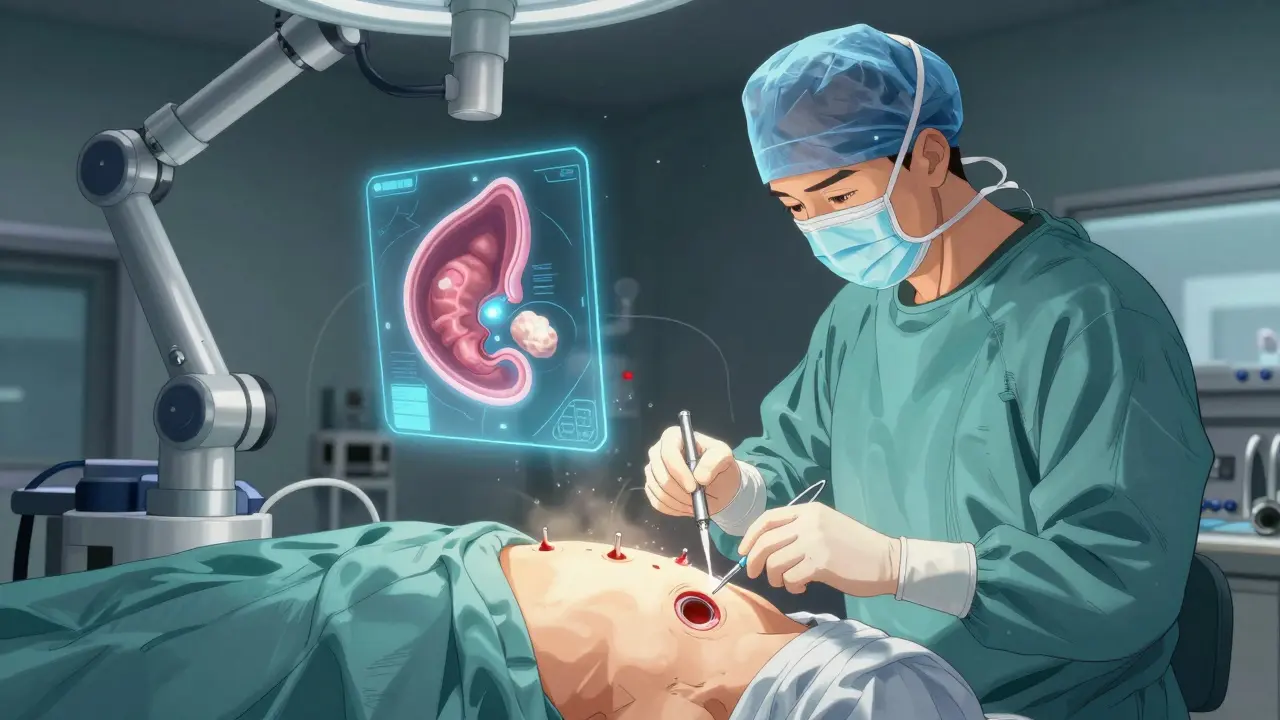
Who Should Skip Surgery?
Not everyone needs it. If you’ve never had symptoms, doctors won’t touch your gallbladder. But if you’ve had even one serious episode, the odds favor surgery. Still, age and health matter. For healthy people under 75, the risk of surgery is tiny. But for someone over 75 with heart disease, diabetes, or lung problems, the risk jumps. A 2023 study showed 30-day mortality for cholecystectomy in patients with three or more conditions rose to 2.8%. That’s not a reason to avoid surgery-it’s a reason to plan carefully. Doctors now use tools to assess risk before operating. Weight loss, better blood sugar control, and stopping smoking can make surgery safer. There’s also a new option for high-risk patients who can’t handle surgery yet: endoscopic ultrasound-guided gallbladder drainage. The FDA approved it in 2023. It drains the gallbladder through the stomach using a tiny tube, relieving infection without removing the organ. It’s not permanent, but it buys time. For patients too sick for surgery, it’s a lifeline.What to Expect After Surgery
Most people feel better fast. But not everyone. About 12% report ongoing diarrhea after surgery. That’s because without a gallbladder, bile flows continuously into the intestine instead of being stored and released in bursts. It can make digestion trickier, especially with fatty meals. Eating smaller portions, cutting back on grease, and giving your body time to adjust helps. A small number-about 6%-get something called post-cholecystectomy syndrome. That means pain or digestive issues that stick around. Sometimes it’s because a stone was missed. Other times, it’s unrelated-like acid reflux or IBS. If symptoms persist, further testing is needed.
Why Wait? The Cost of Delay
Delaying surgery isn’t harmless. In the U.S., 700,000 gallbladder surgeries are done every year. That’s $6.2 billion in costs. But emergency surgeries cost more than planned ones. They take longer. They’re riskier. And they often turn into open surgeries when inflammation is too bad for laparoscopy. The Society of American Gastrointestinal and Endoscopic Surgeons says if you have acute cholecystitis, surgery within 72 hours cuts the chance of needing an open procedure from 25% to just 7%. That’s huge. Early surgery means less pain, less time in the hospital, and faster recovery.What Patients Say
On Reddit, 82% of people who had laparoscopic surgery said their quality of life improved within two weeks. The main reason people chose surgery? Severe pain that sent them to the ER. Nearly two-thirds said they’d had emergency care before deciding to operate. But many also said they waited too long. Over 40% saw three or more doctors before getting the right diagnosis. Pain was dismissed as gas, acid reflux, or stress. That’s a problem. Gallstone pain has a clear pattern: steady, right upper quadrant, no relief from vomiting or gas. If your doctor doesn’t recognize that, ask for an ultrasound. It’s quick, cheap, and accurate.What’s Next?
The future of gallstone care is faster, safer, and more personalized. Enhanced Recovery After Surgery (ERAS) protocols-starting with early walking and eating after surgery-are now used in over 100 U.S. hospitals. They’ve cut hospital stays by 30% and readmissions by 25%. Single-incision surgery? It sounds appealing-only one small cut-but studies show it has a 20% higher complication rate than standard laparoscopy. Not worth the trade-off. Obesity rates keep rising. So do gallstone cases. By 2028, the global market for gallstone treatments will hit $2.7 billion. But the best tool we have-laparoscopic cholecystectomy-is already here. It’s proven. It’s safe. And for anyone with recurring pain, it’s the only real way to get your life back.Can gallstones go away on their own?
Sometimes, yes-but only if they’re small and don’t cause symptoms. If a stone passes on its own without blocking anything, you might never know it happened. But if you’ve had pain, the stone is likely still there. Most people who have one episode of biliary colic will have another. Gallstones don’t disappear just because the pain stops.
Is gallbladder surgery risky?
For healthy people, laparoscopic gallbladder removal is one of the safest major surgeries. Complication rates are under 2% in experienced hands. Risks include infection, bleeding, or injury to the bile duct-but these are rare. The bigger risk is waiting. Emergency surgery for inflamed or infected gallbladders is far more dangerous than planned surgery.
Do I need to change my diet after gallbladder removal?
You don’t need a strict diet, but you’ll likely feel better avoiding large, fatty meals right after surgery. Without a gallbladder, bile flows continuously, so your body handles fat less efficiently at first. Most people adjust within a few weeks. Eating smaller, more frequent meals and cutting back on fried or greasy foods helps reduce diarrhea and bloating.
Can I live without a gallbladder?
Absolutely. The gallbladder stores bile, but your liver still makes it. After removal, bile flows directly from the liver into the small intestine. Most people live normal, healthy lives without it. You won’t need to take supplements or avoid specific foods long-term-just listen to your body and adjust portions if needed.
How do I know if my pain is from gallstones?
Gallstone pain is steady, not crampy. It’s usually in the upper right abdomen or center of the belly, often after eating fatty food. It lasts 1-5 hours and doesn’t improve with gas, vomiting, or bowel movements. If you also have fever, jaundice, or vomiting, it could be cholecystitis. An ultrasound is the fastest way to confirm gallstones.
Are there alternatives to surgery for gallstones?
There are options like medication to dissolve stones or shock-wave therapy, but they’re rarely used today. Dissolving stones takes months, only works on small cholesterol stones, and has a 50% recurrence rate. Shock-wave therapy is expensive, hard to access, and doesn’t prevent new stones. Surgery remains the only reliable, long-term solution for symptomatic gallstones.
How long does recovery take after gallbladder surgery?
Most people go home the same day or the next day after laparoscopic surgery. You can walk within hours and eat light meals within 6 hours. Return to desk work? Usually in 3-5 days. Full activity, including lifting and exercise? Around 7-10 days. Open surgery takes longer-up to 6 weeks. Recovery time depends on your health, age, and how complex the surgery was.
Jodi Harding
January 19, 2026 AT 03:35Naomi Keyes
January 20, 2026 AT 07:01Danny Gray
January 21, 2026 AT 23:02kenneth pillet
January 22, 2026 AT 06:04Stacey Marsengill
January 23, 2026 AT 16:27Kristin Dailey
January 24, 2026 AT 01:53Wendy Claughton
January 25, 2026 AT 08:52Chuck Dickson
January 27, 2026 AT 02:17Selina Warren
January 27, 2026 AT 08:53Praseetha Pn
January 28, 2026 AT 01:04christian Espinola
January 29, 2026 AT 23:46Tyler Myers
January 31, 2026 AT 18:18rachel bellet
February 1, 2026 AT 16:54Pat Dean
February 2, 2026 AT 00:47Jay Clarke
February 3, 2026 AT 18:16