
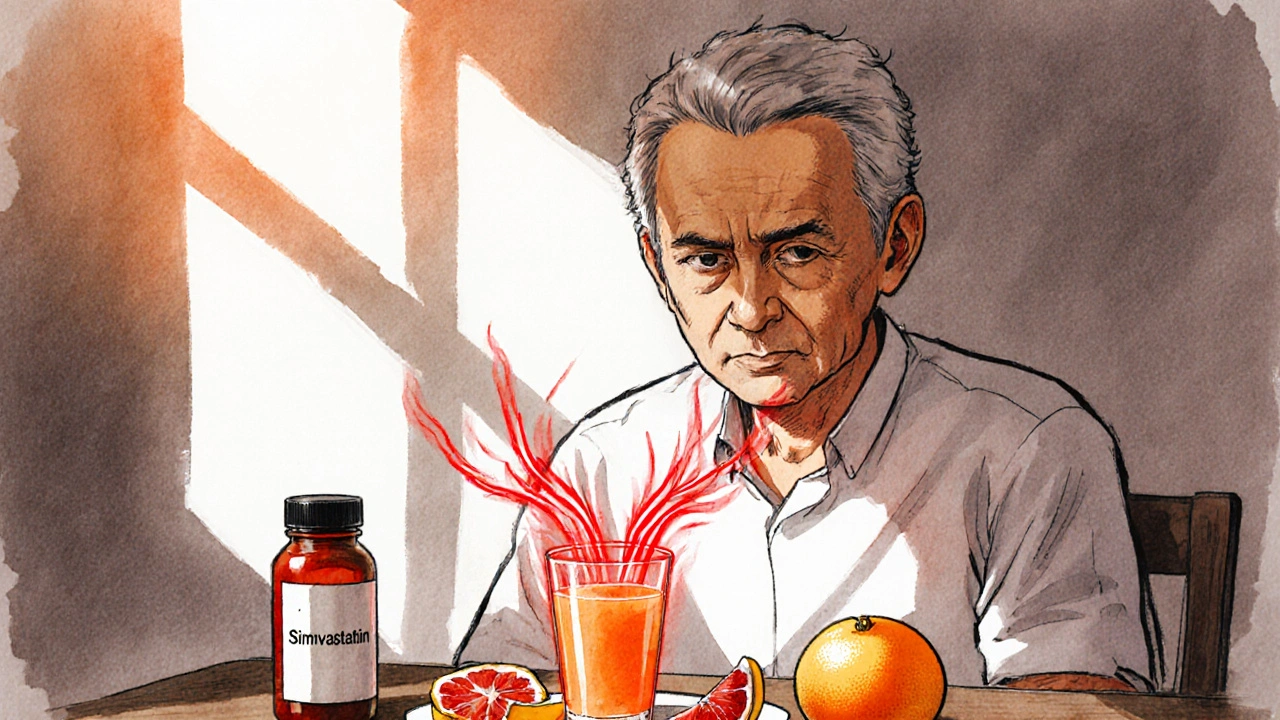
One glass of grapefruit juice in the morning might seem like a healthy habit-until it turns into a silent danger. If you're taking certain medications, that glass could be pushing drug levels in your body into toxic territory. This isn't a myth or a warning from an old wives' tale. It's a well-documented, life-threatening interaction backed by decades of research and confirmed by the FDA, Mayo Clinic, and top medical journals.
Why Grapefruit Juice Changes How Your Medication Works
Grapefruit juice doesn't just taste different-it changes how your body handles drugs. The problem lies in chemicals called furanocoumarins, mainly bergamottin and 6',7'-dihydroxybergamottin. These compounds shut down an enzyme in your gut called CYP3A4. This enzyme is responsible for breaking down about half of all oral medications before they enter your bloodstream. When it's blocked, the drug isn't broken down. Instead, it floods into your system, often at levels two to five times higher than intended. This isn't a temporary effect. One 200-milliliter glass (about 6.7 ounces) of fresh grapefruit juice can block CYP3A4 for up to 72 hours. That means even if you take your medication at night and drink grapefruit juice in the morning, the interaction still happens. The enzyme doesn't bounce back quickly. Your body needs days to grow new enzyme molecules. So timing doesn't save you-avoidance does.Which Medications Are Most at Risk?
More than 85 prescription drugs are known to interact dangerously with grapefruit juice. Of those, 43 can cause life-threatening side effects. The risk isn't the same across all medications. Some are far more sensitive than others.- Statins (cholesterol-lowering drugs): Simvastatin (Zocor) is the most dangerous. Just one glass of grapefruit juice daily for three days can triple its blood levels. That raises your risk of rhabdomyolysis-a condition where muscle tissue breaks down and can cause kidney failure. Atorvastatin (Lipitor) has a smaller but still real risk. Pravastatin and rosuvastatin? Safe. No interaction.
- Calcium channel blockers (for high blood pressure): Felodipine (Plendil) sees a five-fold increase in blood concentration. Nifedipine (Procardia) jumps by 3.3 times. Amlodipine (Norvasc)? Minimal effect. If you're on blood pressure meds, don't assume they're all safe.
- Immunosuppressants: Cyclosporine (Neoral), used after organ transplants, can spike 50-60% in concentration. That raises the risk of kidney damage and infection. Tacrolimus is a safer alternative for many patients.
- Antiarrhythmics: Amiodarone (Cordarone) can increase plasma levels by 30-40%, raising the chance of irregular heart rhythms.
- Others: Some sedatives like triazolam, certain opioids like oxycodone, and even some antidepressants like sertraline are affected. But others-like trazodone and zolpidem-show little to no interaction.
Not All Citrus Is the Same
If you love citrus but need to avoid grapefruit, don’t panic. Not all citrus fruits are dangerous. Seville oranges (used in marmalade) and pomelos contain the same furanocoumarins as grapefruit. So if you're on a high-risk medication, skip those too. Sweet oranges (like navel or Valencia), tangerines, lemons, and limes? They're safe. They don’t contain the chemicals that block CYP3A4. You can enjoy them without worry.Why This Interaction Is So Unpredictable
Here’s the scary part: not everyone reacts the same way. Two people taking the same drug, drinking the same amount of grapefruit juice, can have wildly different outcomes. Why? It comes down to genetics and biology. Some people naturally have more CYP3A4 enzyme in their intestines. When grapefruit juice blocks it, their drug levels skyrocket. Others have less enzyme to begin with, so the effect is smaller. There’s no blood test to check your CYP3A4 levels. No way to know if you’re in the high-risk group. A 2013 study found that after drinking grapefruit juice, felodipine levels in patients ranged from zero to eight times higher than normal. One person had no reaction. Another nearly overdosed. That’s why experts say: if you're on a medication that interacts with grapefruit, avoid it completely. There’s no safe amount.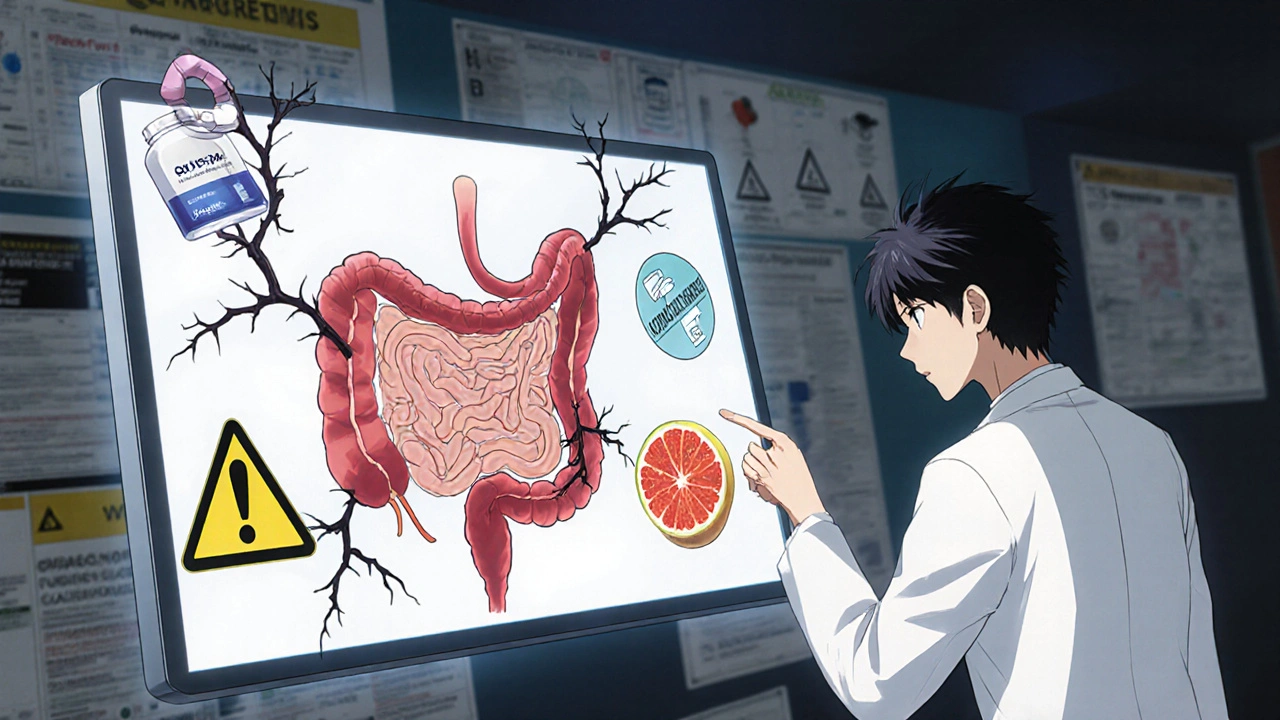
What Happens If You Ignore the Warning?
The consequences aren’t theoretical. People have ended up in the hospital-some didn’t survive. - A 68-year-old man on simvastatin drank grapefruit juice daily. He developed severe muscle pain, dark urine, and kidney failure. His creatine kinase (a muscle damage marker) was 10 times higher than normal. He needed dialysis. - A woman on cyclosporine after a kidney transplant started drinking grapefruit juice for its "antioxidants." Within weeks, her kidney function dropped sharply. Her drug levels were 60% above safe limits. - In another case, a man on amiodarone developed a dangerous heart rhythm after just one glass of grapefruit juice. He survived, but only because his family noticed his confusion and called 911. These aren’t rare. They’re documented. And they’re preventable.What Should You Do?
If you're taking any medication, here’s what to do:- Check your prescription label. Since 2014, the FDA has required manufacturers to include grapefruit warnings on labels for affected drugs. Look for phrases like "avoid grapefruit juice" or "do not consume grapefruit products."
- Talk to your pharmacist. Pharmacists screen for this interaction during dispensing. Ask them: "Does this medicine interact with grapefruit?" They check databases like First Databank and know which drugs are risky.
- Review all your meds. It’s not just prescriptions. Some over-the-counter drugs, herbal supplements, and even vitamins can interact. Don’t assume "natural" means safe.
- Keep a list. Write down every pill, capsule, and supplement you take. Bring it to every doctor visit. Many patients don’t remember everything they’re on-especially if they see multiple specialists.
- Ask about alternatives. If you love grapefruit and are on a high-risk drug like simvastatin or felodipine, ask your doctor if you can switch. Pravastatin works just as well for cholesterol. Amlodipine is a safe alternative to felodipine for blood pressure.
Who’s Most at Risk?
Older adults are the most vulnerable group. People over 65 make up 40% of grapefruit juice consumers in the U.S., according to USDA data. They’re also more likely to be on multiple medications-three to five on average. Many take statins, blood pressure drugs, or heart medications-all high-risk categories. Age also slows down how quickly the body clears drugs. So even small increases in concentration can tip into danger.What About Grapefruit Supplements or Extracts?
Grapefruit extract, pills, or powders? Just as dangerous-maybe more so. They’re concentrated. One capsule might contain the furanocoumarins from multiple fruits. And since they’re sold as "dietary supplements," they’re not regulated like drugs. You won’t find clear warnings on the label. Avoid them entirely if you’re on any medication that interacts with grapefruit.
Is There Any Hope for the Future?
Scientists are working on solutions. In October 2023, the USDA announced that CRISPR-edited grapefruit with 90% less furanocoumarin had completed early safety trials. These aren’t on shelves yet, but they could one day give people the taste without the risk. Until then, the safest rule is simple: if your medication interacts with grapefruit, don’t take it. Not sometimes. Not in small amounts. Not if you "think you’re fine."What If You’ve Already Been Drinking It?
If you’ve been drinking grapefruit juice while on a risky medication, don’t panic-but don’t ignore it either. - Stop drinking grapefruit juice immediately. - Watch for signs of overdose: muscle pain or weakness (especially with statins), dizziness, irregular heartbeat, nausea, confusion, or dark urine. - Call your doctor or pharmacist. They may want to check your drug levels or run blood tests. - Don’t restart grapefruit juice unless your provider says it’s safe.Frequently Asked Questions
Can I drink grapefruit juice if I take my medication at night and juice in the morning?
No. The enzyme-blocking effect of grapefruit juice lasts up to 72 hours. Even if you take your medication and grapefruit juice hours apart, the interaction still happens. Avoid grapefruit entirely while on affected medications.
Is orange juice safe to drink with my medication?
Yes-sweet oranges like navel or Valencia are safe. They don’t contain furanocoumarins. But avoid Seville oranges (used in marmalade) and pomelos-they have the same harmful chemicals as grapefruit.
Why do some statins interact with grapefruit and others don’t?
It depends on how the drug is processed. Simvastatin and atorvastatin rely heavily on CYP3A4 to break down in the gut. Pravastatin and rosuvastatin use different pathways, so grapefruit doesn’t affect them. Always check which type you’re taking.
Can I eat grapefruit instead of drinking the juice?
No. The furanocoumarins are in the flesh and peel, not just the juice. Eating the fruit has the same effect as drinking the juice. Avoid all forms of grapefruit if your medication interacts with it.
Do over-the-counter drugs like ibuprofen or antihistamines interact with grapefruit?
Most common OTC pain relievers like ibuprofen and acetaminophen are safe. But fexofenadine (Allegra) is an exception-it’s less effective with grapefruit juice. Always check the label or ask your pharmacist.
What should I do if I accidentally drank grapefruit juice with my medication?
If it’s a one-time accident and you feel fine, monitor yourself for symptoms like unusual muscle pain, dizziness, or irregular heartbeat. Call your doctor or pharmacist to discuss whether you need a check-up. Don’t wait for symptoms to appear-some effects build up over time.
Gus Fosarolli
November 29, 2025 AT 06:32So let me get this straight - I can’t have my morning grapefruit juice because some lab rat in a white coat decided my statin doesn’t play nice with citrus? Cool. I’ll just switch to orange juice… which is basically grapefruit’s boring cousin who never talks at parties. Also, why is no one talking about how the FDA lets supplement companies sell grapefruit extract in capsules with zero warnings? That’s not safety - that’s corporate negligence wrapped in a ‘natural’ bow.
Evelyn Shaller-Auslander
November 29, 2025 AT 17:18oh wow i had no idea even eating the fruit was bad too 😳 i’ve been eating it with my yogurt for years… better stop. thanks for the heads up!
Jasper Arboladura
December 1, 2025 AT 01:10Interesting that the FDA mandates warnings on pharmaceutical labels but not on juice cartons. The regulatory asymmetry here is a textbook case of how modern medicine prioritizes liability over logic. One must wonder whether the CYP3A4 inhibition mechanism was fully characterized in vivo or merely extrapolated from murine models - a common flaw in pharmacokinetic literature.
Joanne Beriña
December 1, 2025 AT 10:43Of course the Canadians are the ones drinking grapefruit juice and then crying about it. We’ve had warnings on every bottle since the 90s. Meanwhile, people here still think ‘natural’ means ‘safe’ like it’s some kind of magic spell. Wake up. Your ‘healthy habit’ is a slow-motion suicide pact with your liver.
ABHISHEK NAHARIA
December 2, 2025 AT 08:41It is imperative to recognize that the pharmacodynamic variance observed across populations is not merely a biological phenomenon but a sociocultural epiphenomenon rooted in dietary colonialism. The Western obsession with citrus as a health panacea ignores the indigenous metabolic adaptations of non-Western populations. One must question the universal applicability of these warnings.
Hardik Malhan
December 2, 2025 AT 10:12FWIW the CYP3A4 inhibition is dose-dependent and saturable so the 72hr claim is overstated for low-dose exposure. Also the furanocoumarin concentration varies wildly by cultivar and season - you can't treat all grapefruit juice as equivalent. Most studies use commercial juice which is often pasteurized and diluted. Real fruit? Different ballgame.
Casey Nicole
December 2, 2025 AT 16:54so like… i just found out my grandpa died because he drank grapefruit juice with his heart med and no one told him?? and now im crying and also mad and also scared because i take like 7 pills and i love grapefruit and i just want to live but also i want my juice and also why does no one warn people in a way that actually sinks in??
Kelsey Worth
December 3, 2025 AT 20:30okay but what if you drink it at 11pm and take your pill at 7am? i mean… technically they’re not together? i feel like this rule is just there to make pharmacists feel powerful. also i’m pretty sure my neighbor drinks it every day and she’s 82 and still rides her bike to the store.
shelly roche
December 3, 2025 AT 21:06Thank you for writing this so clearly. I’m a nurse and I see this happen way too often - especially with older folks who think ‘natural’ = harmless. I always tell my patients: if your pill bottle says ‘avoid grapefruit,’ then treat it like you would avoid a live wire. It’s not about being paranoid - it’s about being smart. And yes, orange juice is your new best friend. 🍊💛
Nirmal Jaysval
December 4, 2025 AT 08:43bro you people are so scared of everything now. in india we drink lime juice with every meal and no one dies. you think your body is special? maybe you just need to stop being weak. grapefruit is a gift from god. if you die from it then maybe you were meant to go.
Emily Rose
December 6, 2025 AT 06:01As someone who takes cyclosporine after my transplant, I need to say - this post saved my life. I was drinking grapefruit juice thinking it was ‘boosting my immune system.’ I had no idea. I stopped immediately and switched to pomegranate juice instead. My levels are stable now. Don’t wait for a crisis. Talk to your pharmacist. They’re your real heroes.
Richard Elias
December 7, 2025 AT 10:57So you’re telling me I can’t have my grapefruit juice with my Lipitor? That’s it. I’m switching to generic. And I’m gonna tell my doctor I’m ‘allergic’ to the label. That’ll teach ‘em. Also I’m gonna post this on Facebook so my mom stops giving me juice for Christmas. She’s gonna be mad but hey - I’m alive.