

Why a Medication Review Matters
Every year, thousands of people end up in hospital because of problems with their medications. Not because they took too much, but because they took the wrong mix, the wrong dose, or didn’t realize a pill they bought over the counter was making their other drugs dangerous. A medication review isn’t just a check-up-it’s a safety net. If you’re taking five or more medications, or if you’ve seen multiple doctors lately, this appointment could literally save your life.
It’s not about being told what to do. It’s about making sure every pill you take actually helps you-not hurts you. Doctors and pharmacists aren’t just looking at prescriptions. They’re checking for interactions, side effects you might have ignored, and whether you even need all those meds anymore.
What You Need to Bring
Don’t rely on memory. Bring everything.
- All prescription medications in their original bottles
- Over-the-counter pills: painkillers, antacids, sleep aids
- Vitamins, supplements, and herbal remedies-yes, even the ones from the health food store
- Inhalers, creams, eye drops, patches-anything you apply or inhale
- Any empty pill bottles or packaging you still have
Some people think, “I don’t take anything weird,” but that’s exactly when things go wrong. A common cold remedy with pseudoephedrine can raise your blood pressure if you’re on heart meds. Garlic supplements can thin your blood before surgery. Your pharmacist won’t know unless you tell them.
Write Down the Details
Create a simple list with four columns:
- Medication name (use the exact name on the bottle)
- Dosage and frequency (e.g., “20mg once daily,” “1 spray in each nostril every morning”)
- Why you take it (e.g., “for high blood pressure,” “for joint pain,” “for anxiety”)
- Prescribing doctor (e.g., “Dr. Lee, GP,” “Dr. Chen, neurologist”)
Include any side effects you’ve noticed-even small ones. Did you feel dizzy after lunch? Did your stomach feel off after starting a new pill? Did you sleep more than usual? Write it down. These aren’t minor complaints. They’re clues.
Know Your Questions
Go in with questions. Don’t wait for the doctor to ask. Here are some that matter:
- “Is this medicine still necessary?”
- “Could any of these interact with each other?”
- “Are there cheaper or simpler alternatives?”
- “What happens if I stop taking this one?”
- “Is there a better time of day to take this?”
- “Should I be taking this with food or on an empty stomach?”
If you’re taking meds for Parkinson’s, diabetes, or heart disease, ask about timing. Some pills need to be taken exactly 12 hours apart. Others must be taken before meals. Even a 30-minute shift can change how well they work.

What to Expect During the Appointment
Most reviews take 20 to 45 minutes. You’ll likely meet with your GP or a clinical pharmacist. They’ll ask you how you’re feeling, what you’ve noticed since your last visit, and whether you’ve missed doses or changed how you take things.
They might hold up each bottle and ask, “Do you take this every day?” Don’t feel embarrassed if you forget sometimes. That’s why they’re asking. They’re not judging. They’re fixing.
If you’re doing a video or phone review, have your meds laid out in front of you. Show them each one on camera. Say the name out loud. Say the dose. Say why you take it. If you can’t see the label clearly, read it slowly. This is how they confirm what’s in your system.
Telehealth? Here’s How to Get Ready
If your appointment is virtual, treat it like an in-person visit-with extra steps.
- Test your camera and mic before the call
- Have your meds laid out on a table in good lighting
- Keep your list printed and nearby
- Have a second device ready (like a tablet or phone) to show pill bottles if needed
- Make sure you’re in a quiet room where you won’t be interrupted
Phone calls are harder. If you’re on the phone, have someone else in the room who can hold up your meds and read labels while you talk. Or record yourself reading each one aloud before the call and play it back.
What Happens After the Review
At the end, you should walk away with:
- A clear list of what to keep, stop, or change
- Updated dosing instructions
- Any new prescriptions or referrals
- Written notes or a printed summary
Don’t assume your doctor will send you an email. Ask for a copy. Keep it with your meds. If you’re confused about a change, call back. Don’t guess.
Some practices will stop refilling your prescriptions if you skip your review. It’s not punishment-it’s safety. If you haven’t had a review in over a year, your pharmacy may hold your next refill until you book one. That’s standard in Australia, the UK, and the US.
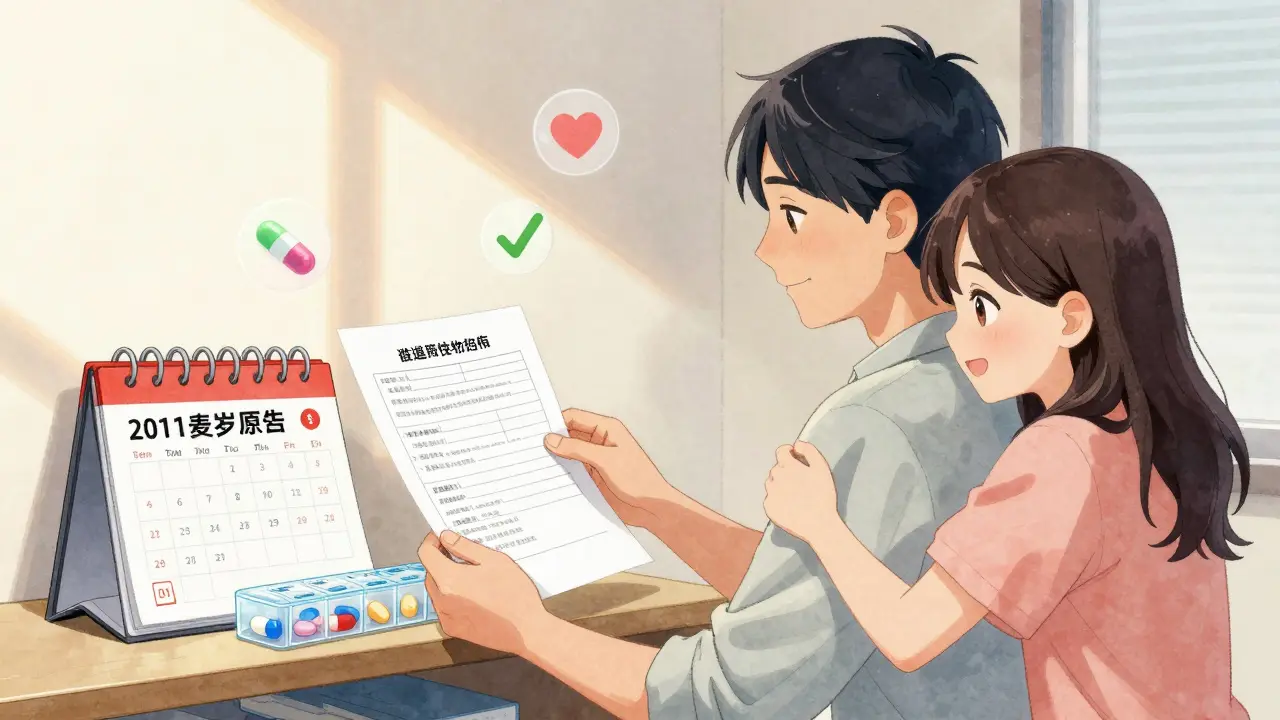
Special Situations
For older adults or those with memory issues: Ask a family member to come with you. Or request a home visit. Many practices offer this if travel is hard.
For Parkinson’s patients: Timing is everything. Write down the exact time you take each dose. Even a 15-minute delay can cause stiffness or tremors to flare up. Bring your pill organizer if you use one.
If you’ve recently changed doctors: Bring your old medication list and any recent lab results. New doctors don’t have your history. You’re the only one who does.
What If You’re Not Sure You Need This?
You might think, “I feel fine. Why fix what isn’t broken?” But many side effects creep in slowly. You might not notice you’re more tired, or that your balance is off, or that you’ve been forgetting things more often-until it’s too late.
Medication reviews aren’t just for people who are sick. They’re for anyone who takes more than five medicines. That includes common combinations like blood pressure pills, statins, painkillers, and daily vitamins. Even if you feel great, your body might be working harder than it should to process all those chemicals.
Don’t Wait for the Letter
Some clinics send invitations once a year. But if you haven’t heard from them, don’t assume you’re off the hook. Book your own appointment. Call your GP’s office. Say, “I’d like to schedule a medication review.” You don’t need a reason. You don’t need to be sick. You just need to be alive-and taking pills.
Final Tip: Make It Routine
Set a reminder in your phone for the same month every year. Mark it on your calendar. Treat it like your annual check-up. After a few times, you’ll know exactly what to bring, what to ask, and what to expect. You’ll feel more in control. And that’s the whole point.
Angie Thompson
January 24, 2026 AT 16:41Ashley Karanja
January 24, 2026 AT 22:11James Nicoll
January 26, 2026 AT 02:41John Wippler
January 27, 2026 AT 07:16Renia Pyles
January 28, 2026 AT 12:13Ryan W
January 28, 2026 AT 23:42Robin Van Emous
January 29, 2026 AT 23:09Faisal Mohamed
January 31, 2026 AT 13:39Rakesh Kakkad
January 31, 2026 AT 19:30TONY ADAMS
February 1, 2026 AT 09:05Aishah Bango
February 3, 2026 AT 05:15Simran Kaur
February 4, 2026 AT 17:53