
You're looking for a way to save money on your prescriptions, so you turn to generic versions of your medication. It seems like a no-brainer-same active ingredients, lower price. But there's a dark side to the convenience of the internet: the rise of "falsified medical products." These aren't just low-quality copies; they are fraudulent products deliberately mislabeled to look like real medicine. From pills containing nothing but crushed drywall to lethal doses of fentanyl disguised as anxiety meds, the stakes of a wrong click are incredibly high. While you can't always tell if a pill is fake just by looking at it, you can drastically lower your risk by knowing how the scammers operate and where the red flags hide.
The Quick Guide to Staying Safe
- Check the URL: Only trust sites ending in the .pharmacy domain.
- Demand a Prescription: If a site sells prescription-only meds without asking for a script, it is a scam.
- Compare Packaging: Look for font mismatches, spelling errors, or color shifts compared to your usual bottle.
- Watch Your Body: Any new or unusual side effect is a reason to stop taking the drug immediately.
- Verify the Source: Call the manufacturer with your lot number if something feels off.
Why Counterfeit Generics Are So Dangerous
When we talk about counterfeit medicines, we aren't talking about a generic brand you'd find at a local drugstore. Legitimate generics are approved by regulatory bodies like the FDA or the TGA. Counterfeits, however, are produced in illegal labs. The danger is that they often contain the wrong active ingredient, no active ingredient at all, or even toxic fillers.
Take malaria medication in Asia as an example; over 50% of some counterfeit versions contain zero active ingredients. You think you're treating a life-threatening illness, but you're actually taking a placebo. Even more terrifying is the trend in North America, where the DEA has seized millions of fake pills containing synthetic fentanyl. These are designed to look exactly like legitimate generics, meaning the danger is invisible to the naked eye.
How to Spot a Pharmacy Scam Online
Scammers are great at making their websites look professional. They use the same templates, the same stock photos of smiling pharmacists, and the same fake testimonials. However, they almost always trip up on a few key details. Most illegal online pharmacies operate with a "too good to be true" pricing model. If a medication that normally costs $200 is being offered for $20, you aren't getting a deal-you're getting a risk.
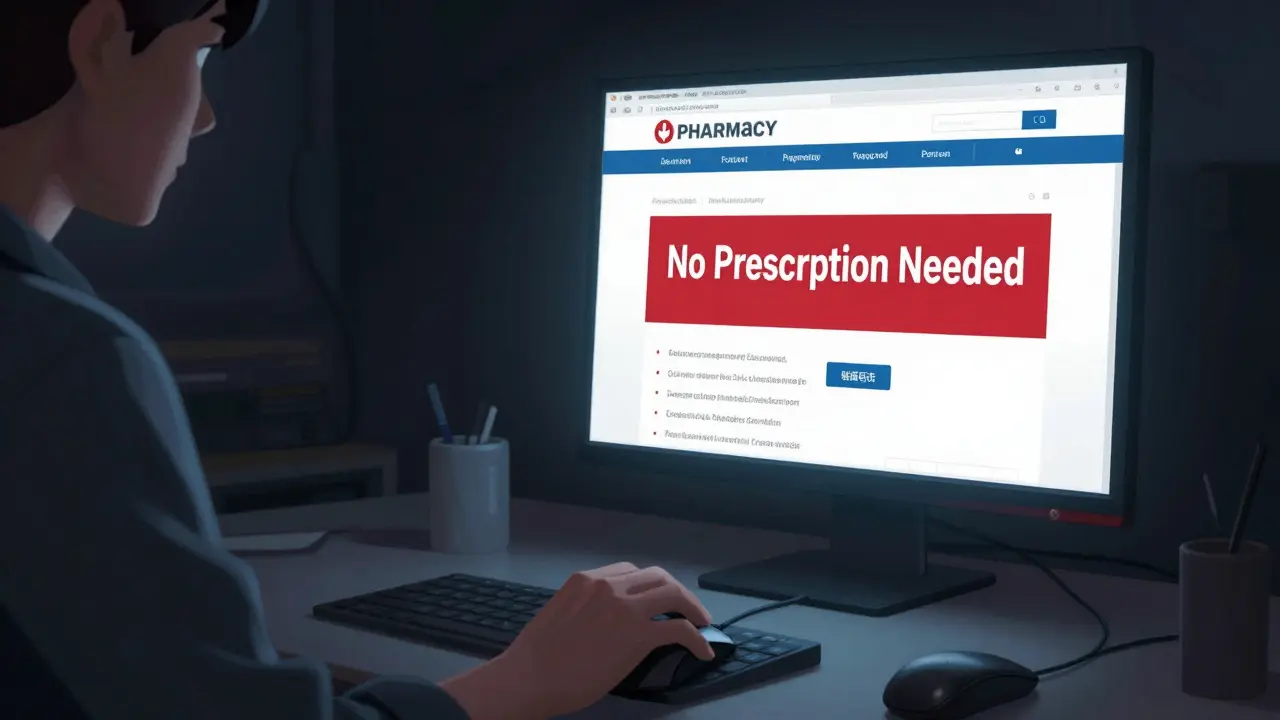
One of the biggest tells is the lack of a prescription requirement. According to the National Association of Boards of Pharmacy, nearly 88% of illegal online pharmacies don't even ask for a prescription. A real pharmacy is legally required to verify your medical needs before dispensing. If a site says "No Prescription Needed," close the tab immediately.
Another pro tip is to look for the .pharmacy domain. Unlike a .com or .net, this specific domain is only granted to pharmacies that prove they comply with all licensing laws and regulations. It's essentially a digital seal of approval.
Visual Red Flags and "Tells" in Your Medication
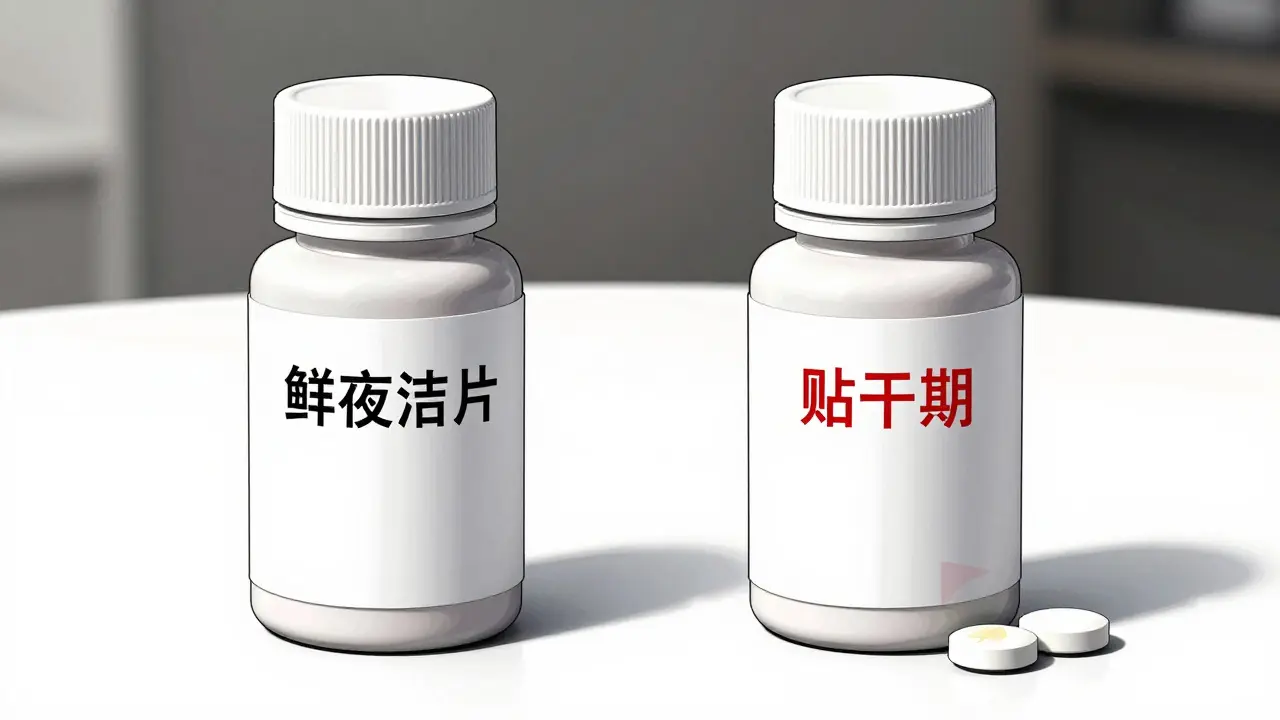
While experts like Amy Callanan from Pfizer warn that you can't be 100% sure without a lab test, there are visual indicators that should make you pause. Start by comparing your new batch of medication side-by-side with a previous, known-authentic bottle. Look for these specific discrepancies:
- Packaging Errors: Check for slight changes in font style, weird capitalization, or spelling mistakes in the manufacturer's name.
- Pill Appearance: Is the color slightly off? Is the pill size different? Does the imprint look blurry rather than crisp?
- The "Dissolve Test": While not scientific, some users have reported that fake pills dissolve instantly in water, whereas authentic versions take significantly longer.
- Physical Sensations: If you use an eye drop and feel an intense burning sensation that wasn't there before, it could be a sign of a counterfeit product, as seen in cases involving Muro 128.
The Science of Detection (What the Pros Use)
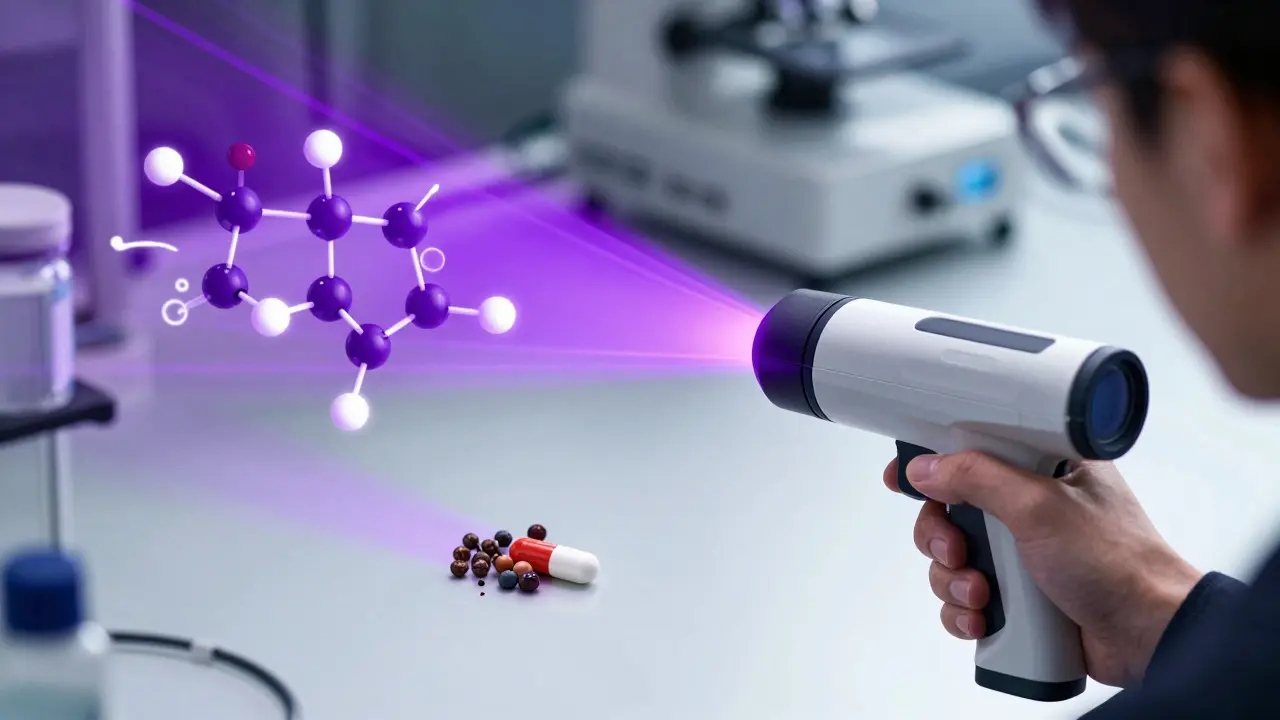
If you're wondering how the authorities actually catch these fakes, it's all about chemistry. Since counterfeiters now use professional pill presses to replicate imprints perfectly, visual checks aren't enough. The TGA and other agencies use analytical chemistry to profile the potency of a drug.
| Method | How it Works | Best For... | Limitation |
|---|---|---|---|
| Raman Spectrometry | Handheld laser scanning | Immediate field results (Yes/No) | Lower detail than lab tests |
| FT-NIR Spectroscopy | Infrared light analysis | Analyzing solid formulations | Requires a reference database |
| Track-and-Trace | Unique ID/QR codes per unit | Supply chain visibility | Hard to implement in poor regions |
| Mass Spectrometry | Molecular weight analysis | Identifying exact impurities | Requires a full laboratory |
Advanced Security Features to Look For
Legitimate pharmaceutical giants like Pfizer, GlaxoSmithKline, and Johnson & Johnson use layered security to protect their brands. These are divided into three categories: overt, covert, and track-and-trace.
Overt features are things you can see, like holograms with micro-text or color-shifting inks that change when you tilt the box. Covert features are invisible to the eye, such as UV-sensitive inks or RFID labels. Finally, track-and-trace systems assign a unique ID to every single bottle. Some companies are even piloting blockchain technology to ensure a drug's journey from the factory to your door is untampered with.
What to Do if You Suspect a Fake
If you have a bottle of meds and something feels wrong, don't just throw it away or, worse, keep taking it. First, stop using the medication immediately. Second, contact the pharmaceutical company directly. They keep extensive databases of reported counterfeits and can often tell you if your specific lot number is legitimate.
You should also report the incident to your national health authority. In the US, that's the FDA; in Australia, it's the TGA. Reporting these fakes helps systems like the Global Surveillance and Monitoring System (GSMS) issue alerts to other patients and pharmacies, potentially saving lives.
Can a pharmacy that looks professional still be a scam?
Yes. Modern scammers use templates that mimic legitimate pharmacies perfectly. They often use fake quotes from doctors and professional-looking layouts. The best way to verify is to check if they use the .pharmacy domain and if they require a valid prescription from a licensed physician.
Is it possible for a legitimate pharmacy to accidentally sell a counterfeit?
Unfortunately, yes. Even trusted pharmacies can unknowingly stock counterfeits if the fraud happened earlier in the supply chain. This is why it's important to buy from reputable, licensed pharmacies that have strict procurement protocols and to report any suspicious medications.
How can I tell the difference between a legal generic and a counterfeit?
A legal generic is approved by a government regulator (like the FDA) and sold through licensed channels. A counterfeit is an illegal copy. While they look similar, legal generics have consistent packaging, correct labeling, and are always dispensed with a valid prescription.
Why are some counterfeit pills so dangerous?
Many counterfeiters use cheap fillers like crushed drywall or chalk. Worse, some use potent synthetic opioids like fentanyl to mimic the effects of the real drug, which can lead to accidental overdose or death.
What is the safest way to buy medication online?
Only use websites that end in .pharmacy, require a prescription, provide a physical address and phone number for the pharmacy, and allow you to consult with a licensed pharmacist.