
When you pick up a prescription for insulin or a biologic drug like Humira, you might get a biosimilar instead. But here’s the real question: Can your pharmacist swap it out without asking your doctor? That’s where interchangeability comes in. It’s not just a buzzword-it’s a legal and medical gatekeeper that decides whether you get a cheaper version without a second signature from your prescriber. And right now, only in the United States does this system actually work the way it’s supposed to.
What Makes a Biosimilar Interchangeable?
Not all biosimilars are created equal. A biosimilar is a biologic drug that’s highly similar to an already-approved biologic-called the reference product. Think of it like a copy of a complex machine, not a simple pill. These drugs come from living cells, so even tiny changes in manufacturing can affect how they work. That’s why the FDA doesn’t treat them like generic pills. Generic drugs, like those for high blood pressure or cholesterol, are chemically identical to their brand-name counterparts. The Hatch-Waxman Act lets pharmacists swap them automatically. But biosimilars? They’re not identical. They’re similar. So to get the green light for automatic substitution, a biosimilar must earn an extra designation: interchangeable. The FDA requires more than just proving similarity. To be labeled interchangeable, a manufacturer must show that switching back and forth between the reference product and the biosimilar doesn’t increase risk or reduce effectiveness. That means real-world testing: patients get the reference drug, then switch to the biosimilar, then switch back-sometimes multiple times. The data must prove no clinically meaningful differences in safety, immune response, or how the drug works in the body. As of November 2023, the FDA has approved 41 biosimilars. Only 10 of them carry the interchangeable label. The first was Semglee, an insulin glargine product approved in July 2021. Then came Cyltezo, the first interchangeable biosimilar for adalimumab (Humira), approved in August 2023. These aren’t just new drugs-they’re game-changers for cost and access.Why Does This Matter?
Biologics are expensive. Drugs like Humira, Enbrel, or insulin can cost $7,000 to $10,000 a year. Biosimilars, even without interchangeability, are typically 15-30% cheaper. But if your pharmacy can’t swap them automatically, many patients never even see the lower price. Insurance companies often don’t cover biosimilars unless they’re interchangeable. Pharmacists, too, are hesitant to switch without clear rules. Interchangeability removes the friction. When a biosimilar is interchangeable, pharmacists can substitute it without calling the doctor-just like generics. This means fewer delays, fewer refills, and lower out-of-pocket costs. A 2023 JAMA Health Forum study found that states with automatic substitution laws had 18.7% higher biosimilar use for insulin. Semglee, the first interchangeable insulin, hit 17.3% market share in just six months. Non-interchangeable biosimilars? They barely cracked 10%. But here’s the catch: interchangeability doesn’t mean better. All FDA-approved biosimilars-interchangeable or not-are just as safe and effective as the original. The difference isn’t in quality. It’s in the rules around substitution.State Laws Make It a Patchwork
The federal government says, “If it’s interchangeable, you can swap it.” But states say, “Not so fast.” Forty states, including Arizona, allow pharmacists to substitute interchangeable biosimilars without telling the prescriber. In Arizona, pharmacists must still notify the patient, record the product used, and send a note to the doctor within five days. Other states, like California, require the substitution to save the patient money. If the biosimilar isn’t cheaper, they can’t swap it. Then there are the holdouts. Alabama, Indiana, South Carolina, and Washington require prescriber approval before any substitution-even if the biosimilar is FDA-approved as interchangeable. Washington, D.C., and five other states have similar restrictions. This mess creates real problems. A community pharmacist in California told a Reddit thread: “My pharmacy system doesn’t know the difference between states. I have to manually check each prescription. I’m spending hours a week just on biosimilar rules.” A 2022 survey by the National Community Pharmacists Association found 67% of independent pharmacists were confused about state laws. That’s not just frustrating-it’s risky.
What Happens When You’re Switched Without Knowing?
Patient experiences vary. One user on the Psoriasis Foundation forum wrote: “I switched from Humira to Hyrimoz and saved $800 a month. Zero side effects.” Another wasn’t so lucky: “My pharmacy substituted Hadlima without telling me. I had a reaction. Turns out I was allergic to an excipient.” The FDA says biosimilars don’t cause more side effects. But patients can react to inactive ingredients-the fillers, stabilizers, or preservatives added during manufacturing. These aren’t part of the active drug, but they can still trigger allergies. And if you’re not told what you’re getting, you can’t connect a reaction to the right product. A 2022 survey by the National Psoriasis Foundation found 63% of patients were satisfied after switching. But 28% said they were never informed. That’s a communication gap. And it’s not just about trust-it’s about safety.Global Differences: The U.S. Is Alone
The United States is the only country with an official interchangeability designation. In Europe, the EMA approves biosimilars but doesn’t allow automatic substitution. Pharmacists can’t swap them without the doctor’s okay. Canada has a hybrid system: Health Canada might call a biosimilar interchangeable, but provinces decide whether to allow substitution. Japan requires extra clinical data but doesn’t use the term “interchangeable” at all. Why does the U.S. do it differently? Because we built a system that tries to balance speed, cost, and control. The BPCIA, passed in 2010, created this pathway to bring down prices for biologics. But other countries prioritized caution. They worry about long-term effects from switching. The U.S. says the data shows it’s safe. And so far, it’s holding up.The Big Debate: Should All Biosimilars Be Interchangeable?
There’s a bill in Congress right now-the Biosimilar Red Tape Elimination Act (H.R. 9500). It proposes eliminating the switching studies entirely. That would make every FDA-approved biosimilar automatically interchangeable. Supporters say it’s long overdue. The Association for Accessible Medicines says it’s essential to unlock savings in the $300 billion biologics market. They argue that if a biosimilar is safe enough to be approved, it’s safe enough to be swapped. Opponents, including PhRMA, warn it could harm patients. They cite studies showing 20.3% higher discontinuation rates in psoriasis patients after non-medical switching. That means people stopped treatment because of side effects or loss of effectiveness. The FDA’s stance? “All approved biosimilars are as safe and effective as the reference product.” Interchangeability is about logistics, not safety.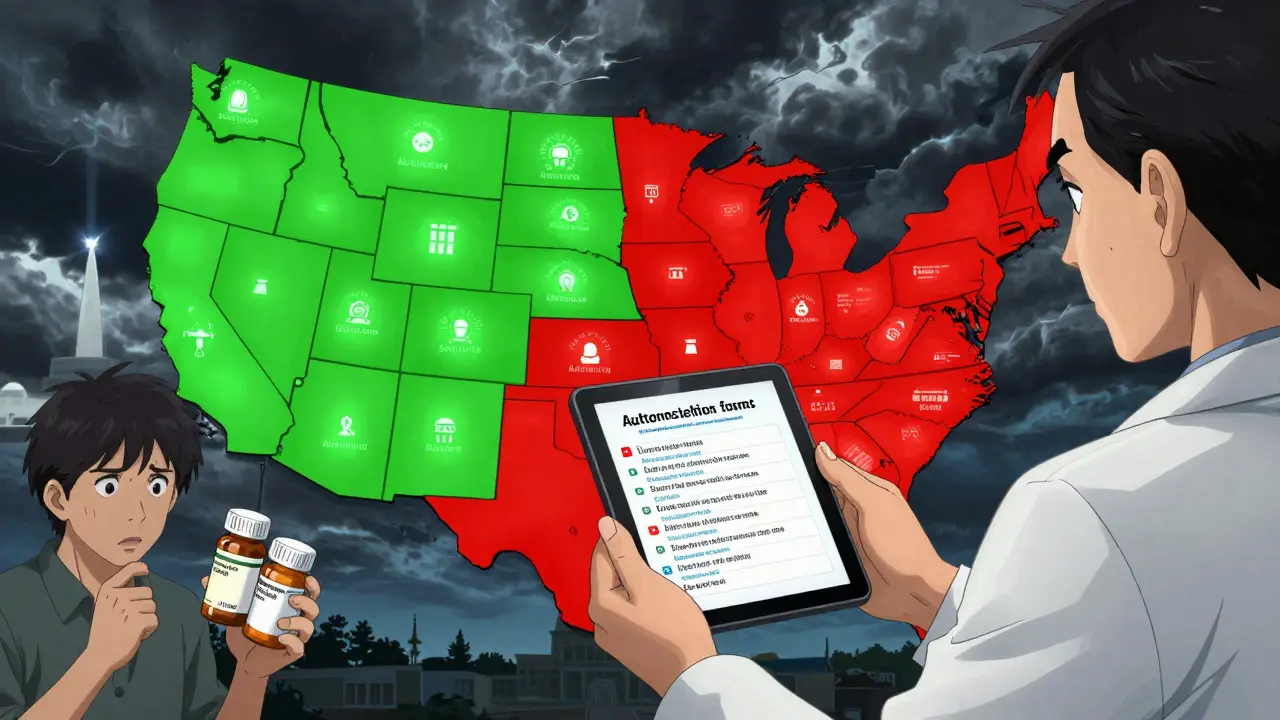
What Pharmacists Need to Know
If you’re a pharmacist, you’re on the front lines. You need to know:- Is the biosimilar FDA-designated as interchangeable?
- What does your state law say about substitution?
- Did the prescriber write “Do Not Substitute” or use a DAW code?
- Are you documenting the product, manufacturer, and date?
- Are you notifying the patient?
The Future: More Biosimilars, More Complexity
By 2025, 70% of the top 20 biologic drugs will have biosimilar competitors. Insulin, Humira, Enbrel, and others are all under pressure. Interchangeable versions will keep coming. But the system is creaking under its own weight. Insurance companies are pushing for automatic substitution. Some require it by contract. But state laws vary. Pharmacies use different software. Patients get confused. Doctors aren’t always informed. The path forward? Better education. Clearer state laws. And maybe, eventually, federal alignment. For now, the U.S. system works-but only if everyone knows the rules.What You Should Do
If you’re a patient:- Ask your doctor: “Is my biologic eligible for a biosimilar?”
- Ask your pharmacist: “Am I getting an interchangeable biosimilar?”
- Check your prescription label. It should list the manufacturer.
- If you notice new side effects after a switch, tell your doctor-and ask if it could be the drug.
- Use “Dispense as Written” if you want to prevent substitution.
- Know your state’s rules. They change.
- Talk to your patients. They’re likely saving money-but they deserve to know why.
Can a pharmacist substitute a biosimilar without my doctor’s permission?
Yes-but only if the biosimilar is FDA-designated as interchangeable and your state allows automatic substitution. Forty states permit this, but four states (Alabama, Indiana, South Carolina, Washington) and Washington, D.C., require prescriber approval. Always check your prescription label and ask your pharmacist if substitution occurred.
Are interchangeable biosimilars safer or more effective than regular biosimilars?
No. All FDA-approved biosimilars-interchangeable or not-are held to the same rigorous standards for safety, purity, and potency. The interchangeable label only means the drug has passed extra testing to prove it can be switched back and forth with the original without risk. It doesn’t mean it’s better.
Why aren’t all biosimilars interchangeable?
Because the FDA requires additional switching studies to prove that multiple switches between the reference product and biosimilar don’t affect safety or effectiveness. These studies are expensive and time-consuming. Many manufacturers choose not to pursue the designation unless market conditions demand it-like when insurers require it for coverage.
Can I be switched from one biosimilar to another?
No. FDA interchangeability only applies to switching between a biosimilar and its reference product-not between two different biosimilars. If you’re on Humira and your pharmacy switches you to Cyltezo (an interchangeable biosimilar), that’s allowed. But if they then switch you to another biosimilar like Hyrimoz, that’s not permitted under current rules. This creates confusion, especially when multiple biosimilars exist for the same drug.
What should I do if I think I had a reaction after a biosimilar switch?
Contact your doctor immediately. Document the exact name of the drug you received-including the manufacturer. Some reactions may be caused by inactive ingredients, not the active drug. Report the issue to the FDA’s MedWatch program. You have a right to know what you’re taking, and your provider needs accurate information to prevent future reactions.
Andrew Poulin
March 7, 2026 AT 02:28Interchangeable biosimilars are the only way forward. Why are we still making pharmacists jump through hoops? If the FDA says it's safe, let them substitute. Every delay costs patients money and time. This system is broken and everyone knows it.
Weston Potgieter
March 7, 2026 AT 06:47Y’all act like biosimilars are magic bullets. Nah. I’ve seen patients get switched and then show up at the ER with rashes. It’s not about the active ingredient-it’s the fillers, the stabilizers, the shit they add to make it shelf-stable. You think a pharmacist knows what’s in Hyrimoz vs Cyltezo? Doubt it. And now we’re just gonna wing it? LOL.
Vikas Verma
March 7, 2026 AT 21:59From India’s perspective, biosimilars are the backbone of affordable healthcare. We’ve been manufacturing and deploying them for over a decade without interchangeability protocols. The key is not substitution-it’s education. Pharmacists must be trained. Patients must be informed. Regulatory clarity matters more than legal loopholes. The US is overcomplicating what should be simple: access, affordability, safety.
Sean Callahan
March 9, 2026 AT 15:39i just got switched to semglee last month and i’m like… wait why didn’t anyone tell me?? i thought i was getting humira still. then i saw the name on the bottle and panicked. i called my doc and he was like ‘oh yeah that’s fine’. but what if i had a reaction?? no one warned me. this system is a nightmare. also i think my pharmacist hates me now.
phyllis bourassa
March 10, 2026 AT 19:21Oh sweetie, you think this is bad? Wait till you’re on a 70-year-old insurance plan that only covers the brand name. Then you get switched to a biosimilar that’s *technically* interchangeable but your pharmacy’s system flags it as ‘not approved’ and you have to wait 3 days for a fax from your doctor who’s on vacation. It’s not about safety-it’s about bureaucracy dressed up as policy. And don’t even get me started on the $12 co-pay that suddenly becomes $800 because ‘the system didn’t recognize the switch’.
Susan Purney Mark
March 12, 2026 AT 13:18As someone who manages biologics for chronic conditions, I can’t stress enough: communication is everything. 🌟 Always ask your pharmacist what you’re getting. Always check the label. Always tell your doctor if something feels off. I’ve helped 3 patients catch reactions early just because they asked one simple question: ‘Is this the same as before?’ You deserve to know what’s in your body. 💙
Ian Kiplagat
March 14, 2026 AT 08:02UK doesn’t have interchangeable designation. Pharmacists can’t swap without prescriber approval. But we don’t have chaos. We have clear protocols, training, and patient consent. Maybe the US doesn’t need more legal loopholes-just better implementation. And less noise. 🇬🇧
Amina Aminkhuslen
March 14, 2026 AT 17:19Interchangeable? More like interchangeable chaos. You think patients are dumb? Nah. They’re just tired of being lab rats for Big Pharma’s cost-cutting schemes. I’ve seen 5 people switch from Humira to biosimilars and 3 of them ended up on disability because ‘the new one didn’t work’. No one told them it wasn’t the same. No one warned them. And now they’re stuck with a bill they can’t pay and a body that’s broken. This isn’t healthcare. It’s a gamble.