
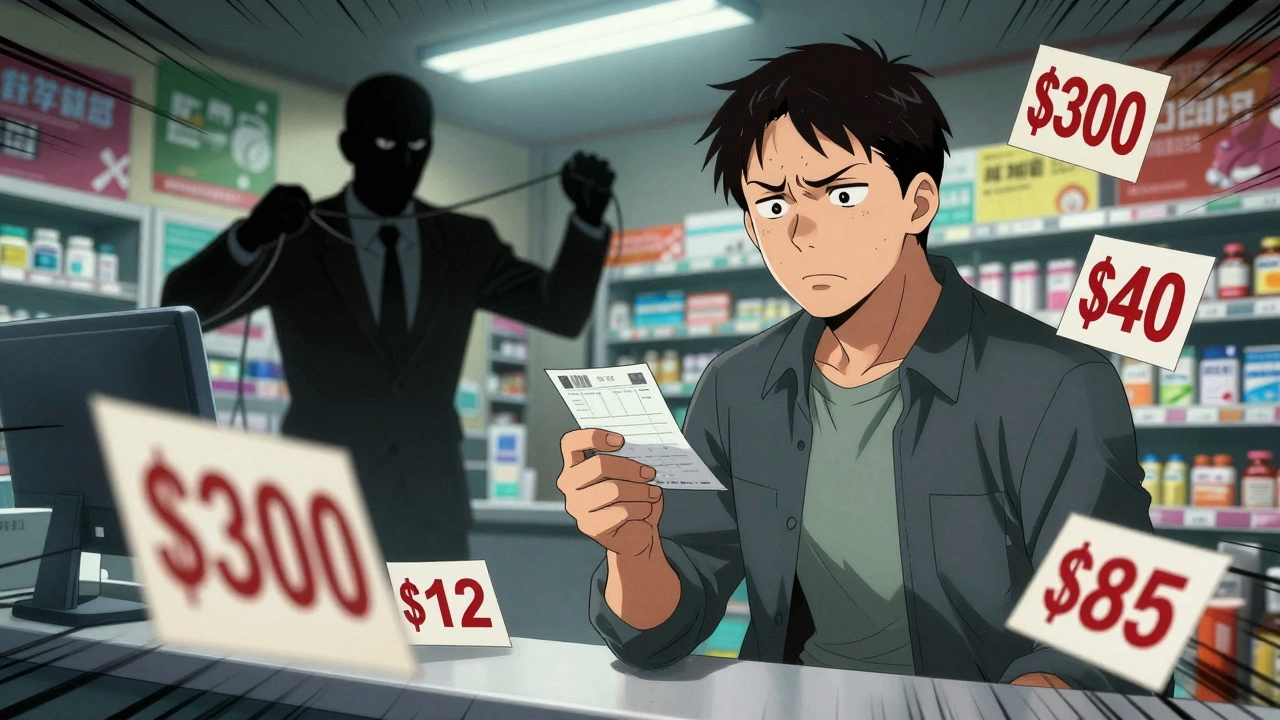
Buying prescription drugs in the U.S. feels like navigating a maze with no map. One month, your $300 pill costs $40. The next, your insurance denies it entirely. You’re handed a coupon that saves $50-only to find out it doesn’t work with your plan. This isn’t random. It’s the system. And understanding how medication costs really work-coupons, generics, and prior authorizations-is the only way to stop overpaying.
Why Your Prescription Price Changes Every Time You Walk In
The price you see on the shelf isn’t the price the pharmacy pays. It’s not even the price your insurer pays. It’s the list price-a number drugmakers set to make their profits look bigger. The real price? That’s buried in secret deals between drug companies, pharmacy benefit managers (PBMs), and insurers. PBMs act as middlemen. They negotiate rebates, but they also charge pharmacies fees, steer patients to their own pharmacies, and sometimes make more money when you pay more. That’s why the same drug can cost $12 at one pharmacy and $85 at another-even with the same insurance. Take insulin. A vial that costs $25 in Canada can be $120 in the U.S. Even with coupons, many people still skip doses because they can’t afford the co-pay. That’s not a personal failure. It’s a broken pricing model.Generic Drugs: The Secret Weapon You’re Not Using
Generics are the same drug, same dose, same active ingredient. Just without the brand name and the marketing budget. They’re approved by the FDA to work exactly like the brand version. Yet, many people stick with brand-name drugs out of habit-or because their doctor never mentions the generic. Here’s the math: A brand-name statin like Lipitor might cost $150 a month. Atorvastatin, the generic, costs $10. That’s a 93% drop. And it’s not rare. For 90% of prescriptions, there’s a generic alternative. The problem? Pharmacists can’t switch you to generic without your doctor’s OK if the brand was written on the script. Always ask: Is there a generic? If your doctor says no, ask why. Is it because it’s safer? Or because they get paid to push the brand? Some drugs don’t have generics yet-especially newer ones like GLP-1 weight-loss drugs. But even then, you can still save. Look for manufacturer coupons. Many big pharma companies offer discount cards that cut the price by 50% or more. But read the fine print. Some coupons only work if you have insurance. Others won’t work with Medicare Part D. And some expire after 12 months.Prescription Coupons: Save Money or Get Trapped?
Coupons look like free money. And sometimes, they are. But they’re also a clever trick. Drugmakers use them to keep you loyal to their expensive brand-even when a cheaper generic exists. Why? Because if you get used to paying $20 with a coupon, you won’t switch to the $5 generic when it becomes available. Worse, coupons often don’t count toward your deductible. So you’re paying $20 a month, thinking you’re saving, but your deductible is still at $0. That means when you need surgery or hospital care later, you’re still paying full price until you hit that deductible. Coupons help short-term. But they can hurt long-term. The best use of coupons? For drugs with no generic. Like Ozempic or Mounjaro. If you’re on Medicare, check if the manufacturer’s coupon works with your plan. Many don’t. But some Medicare Advantage plans now include extra drug discounts. Call your plan. Ask. Don’t assume.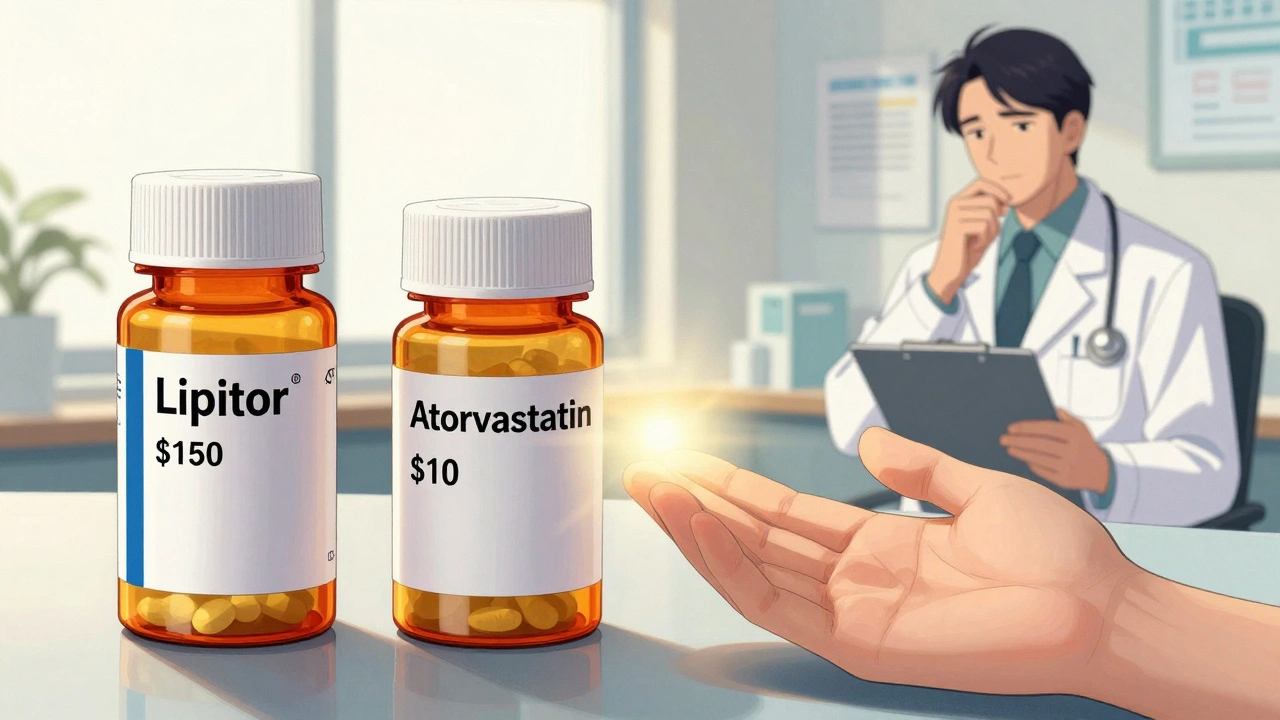
Prior Authorization: The Bureaucratic Gatekeeper
You walk to the pharmacy with your script. The pharmacist says, “We need prior authorization.” That means your insurer won’t pay unless they approve it first. Why? Because your drug is expensive, or they want you to try a cheaper one first. This isn’t about safety. It’s about cost control. And it’s a nightmare. You might wait days for approval. Your doctor has to fill out forms. Sometimes, they get denied. Then you start the whole process again with a different drug. Many people give up. They stop taking their meds. And that’s when hospital visits and emergency care spike. The good news? The Inflation Reduction Act (IRA) of 2022 started changing this. Medicare now negotiates prices for 10 high-cost drugs starting in 2026. That means fewer prior authorizations for those drugs-because insurers won’t need to fight over the price anymore. But until then, here’s what to do: When your doctor writes a script for a drug that needs prior authorization, ask them to submit it the same day. Call your insurer to find out what’s required. Get the form. Fill it out. Track it. Don’t wait for the pharmacy to tell you it’s denied. Be the one pushing.What’s Changing in 2025 and 2026
Big changes are coming. In 2025, Medicare Part D got a $2,000 annual out-of-pocket cap. That means no matter how many expensive drugs you take, you won’t pay more than $2,000 a year. That’s huge. And the “donut hole”-that gap where you paid full price-is gone. Starting January 2026, Medicare will start negotiating prices for 10 drugs. These are the most expensive ones: diabetes meds, heart drugs, blood thinners. The negotiated prices will be lower than what most private insurers pay. That means even if you’re not on Medicare, your plan might lower its prices too, just to stay competitive. States are stepping up too. Minnesota now uses Medicare’s negotiated prices as a cap for what Medicaid pays. Other states are watching. If this works, it could become the new standard.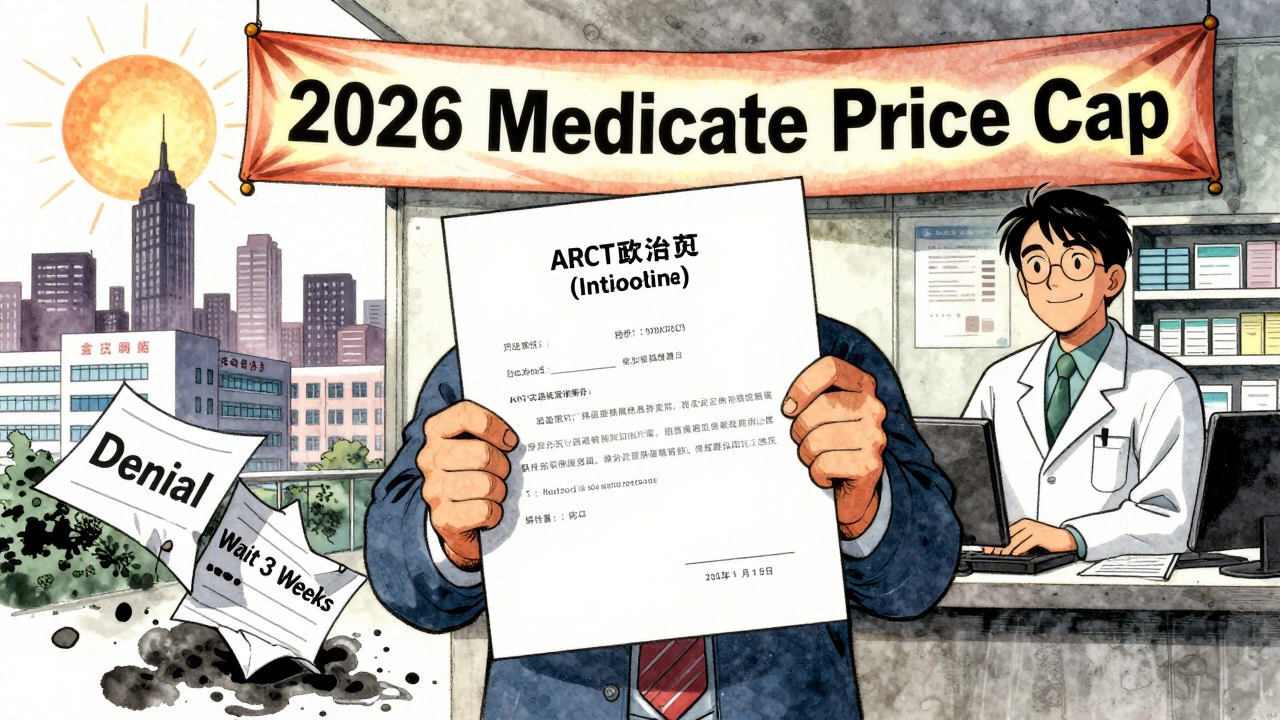
How to Take Control Right Now
You don’t have to wait for policy changes to save money. Here’s what you can do today:- Always ask for the generic. Even if your doctor says no, ask why.
- Use GoodRx or Blink Health to compare cash prices at local pharmacies. Sometimes, cash is cheaper than insurance.
- Check if your drug has a manufacturer coupon. Go to the drug’s official website. Look for “Patient Assistance” or “Savings Card.”
- If you’re on Medicare, call your plan. Ask: “What’s my out-of-pocket max for 2025? Which drugs are covered without prior auth?”
- When you get a prior authorization denial, ask for a formal appeal. Most are overturned on appeal.
- Ask your pharmacist: “Can I switch to a different formulation? Sometimes a tablet instead of a capsule, or a different strength, cuts the cost.”
Why This Matters More Than You Think
Medication costs aren’t just about money. They’re about survival. People skip insulin. Skip blood pressure pills. Skip antidepressants. Because they can’t afford them. And then they end up in the ER. The system is designed to make you pay more to get less. But you’re not powerless. The next time you get a prescription, don’t just walk out. Ask questions. Demand alternatives. Know your rights. You’re not just a patient. You’re a consumer. And you deserve to know what you’re paying for-and why.Can I use a coupon with my Medicare Part D plan?
Most manufacturer coupons don’t work with Medicare Part D because federal rules block them from counting toward your out-of-pocket costs. But some Medicare Advantage plans now offer their own discounts that work like coupons. Always check with your plan before using a coupon. If your drug has a high cost, ask your pharmacist if the manufacturer offers a direct discount program for Medicare beneficiaries.
Why is my generic drug more expensive than the brand?
That shouldn’t happen-but it does. Sometimes, your pharmacy is charging more for the generic because they’re not getting a good deal from their wholesaler. Other times, the brand-name drug is on a discount through your insurer, while the generic isn’t. Always compare cash prices using GoodRx. If the generic is still pricier, ask for a different pharmacy. Independent pharmacies often have better generic pricing than big chains.
What if my prior authorization gets denied?
Don’t accept the first no. Ask your doctor to file an appeal. Provide medical records that show why the alternative drug didn’t work or caused side effects. Many denials are overturned on appeal, especially if you have documentation. You have the right to a second review. Most insurers have a 30-day window to respond. If they deny again, you can request an external review by an independent third party.
Are there programs to get free or low-cost medications?
Yes. Most major drugmakers have Patient Assistance Programs (PAPs) for people with low income or no insurance. You can apply directly through their websites. Some require proof of income, but many don’t require insurance. Also, check with local community health centers or nonprofits like NeedyMeds or RxAssist. They help people get free or discounted meds-sometimes for just a small shipping fee.
Will the new Medicare drug price negotiations lower prices for everyone?
Not directly-but it will indirectly. Once Medicare negotiates a lower price for a drug, private insurers often follow suit to keep their own rates competitive. In 2026, the first 10 negotiated drugs will be available to Medicare beneficiaries. But because many private plans base their pricing on Medicare’s rates, you might see lower prices even if you’re not on Medicare. The goal is to reset the entire market’s baseline.
Lola Bchoudi
December 9, 2025 AT 23:09Let’s be real-PBMs are the silent parasites of the pharmaceutical ecosystem. They’re not intermediaries; they’re rent-seekers who game the rebate system to maximize margins while shifting cost burdens onto patients. The list price isn’t just inflated-it’s a decoy. The real transactional price is buried in opaque contracts where the pharmacy gets nickel-and-dimed just for dispensing. And don’t get me started on how coupons are weaponized to lock patients into brand loyalty. It’s not patient-centric care-it’s profit-centric manipulation wrapped in a white coat.
Morgan Tait
December 10, 2025 AT 18:03Y’know what’s *really* happening? Big Pharma owns Congress. The FDA? A revolving door. The Inflation Reduction Act? A PR stunt. They let Medicare negotiate 10 drugs-just enough to look like they’re doing something-while the rest of us keep bleeding cash. And those ‘patient assistance programs’? They’re designed to make you feel grateful for scraps. Meanwhile, CEOs pocket billions. I’ve seen the emails. The same people who push you to take insulin are the ones who raised the price 400% last year. It’s not a broken system. It’s working exactly as intended. The only cure? Burn it all down and start over. No more middlemen. No more coupons. No more lies.
Darcie Streeter-Oxland
December 11, 2025 AT 15:21It is, indeed, a matter of considerable concern that the pricing architecture of pharmaceuticals in the United States exhibits such a pronounced divergence from both economic rationality and ethical imperatives. The reliance upon coupons, while ostensibly beneficial, introduces a pernicious distortion in cost-allocation mechanisms, effectively circumventing insurance deductibles and thereby undermining the very structure of risk-pooling upon which the system is predicated. Furthermore, the absence of transparent pricing data renders consumer autonomy an illusion. One is left to wonder whether legislative intervention, or perhaps a shift toward single-payer pharmacoeconomic governance, might constitute a more structurally sound resolution.
Kathy Haverly
December 13, 2025 AT 06:33Wow. So you’re telling me people are actually surprised that corporations are greedy? Newsflash: the entire system is designed to extract every dollar you have. Generics? They’re not ‘the same.’ The fillers, the coatings, the bioavailability-sometimes they’re different enough to cause real issues. And those ‘manufacturer coupons’? They’re not helping you-they’re keeping you addicted to overpriced drugs so the brand stays dominant. And prior auth? That’s not bureaucracy. That’s a filter to make you give up. People die because they can’t afford meds. And you’re sitting here giving them a checklist like it’s a DIY home repair video. Pathetic.
Chris Marel
December 14, 2025 AT 13:43I come from a place where medicine is a right, not a privilege. I read your post and felt both hope and heartbreak. Hope because you’re speaking truth. Heartbreak because so many are suffering silently. I want to say thank you-for naming the system, not just the symptoms. If I may, I’ve seen friends in Nigeria pay $5 for a month’s supply of a drug that costs $120 here. It’s not about the science. It’s about who gets to decide who lives. You’re right: ask questions. Push back. But don’t do it alone. Find your people. Build your network. You’re not powerless. You’re just waking up.
Evelyn Pastrana
December 15, 2025 AT 22:59So let me get this straight: you’re telling me I’m supposed to be grateful because my $300 pill is now $40… thanks to a coupon that doesn’t work with my insurance? 🙄
Meanwhile, my neighbor’s generic version costs $8 and the pharmacy doesn’t even ask for my ID.
Also, ‘prior authorization’ sounds like a fancy way of saying ‘we’re gonna make you beg.’
And don’t even get me started on the guy who sold me ‘Ozempic’ for $900 because ‘it’s the only one that works.’
Yeah, right. I’ll take my $10 generic and my GoodRx app, thanks.
Nikhil Pattni
December 16, 2025 AT 09:58Bro, you didn’t even mention the REAL issue-the FDA’s approval process is a joke. They approve generics but don’t test for bioequivalence properly. I checked the FDA’s own database-some generics have 15% variation in absorption! That’s huge for meds like warfarin or levothyroxine. And the coupons? They’re not just tricks-they’re part of a bigger plan. Big Pharma buys pharmacy chains, then gives coupons only at their owned pharmacies. You think that’s coincidence? Nah. It’s vertical integration. And guess what? The PBM that runs your insurance? Probably owned by the same parent company as the drug maker. It’s all one big cartel. I’ve been in pharma for 15 years. I’ve seen the emails. The spreadsheets. The ‘growth targets.’ It’s not corruption-it’s the business model. And Medicare’s new price cap? It’s too little, too late. We need price controls on ALL drugs. Not just 10. And no more coupons. Ever. They’re poison.
Arun Kumar Raut
December 18, 2025 AT 06:04Hey, I just want to say-this post is a lifeline. I’ve been on insulin for 12 years. Last year, I was skipping doses to make it last. I didn’t tell anyone. I was too ashamed.
Then I found NeedyMeds. Applied for the PAP. Got it for free.
And I started asking my pharmacist: ‘What’s the cash price?’ Turns out, my generic was $12 at the corner store but $85 at CVS-even with insurance.
Now I tell everyone I know. Don’t be scared to ask. Don’t be embarrassed. You’re not broken. The system is.
And you? You’re doing the hard work just by reading this. Keep going. You’re not alone.