
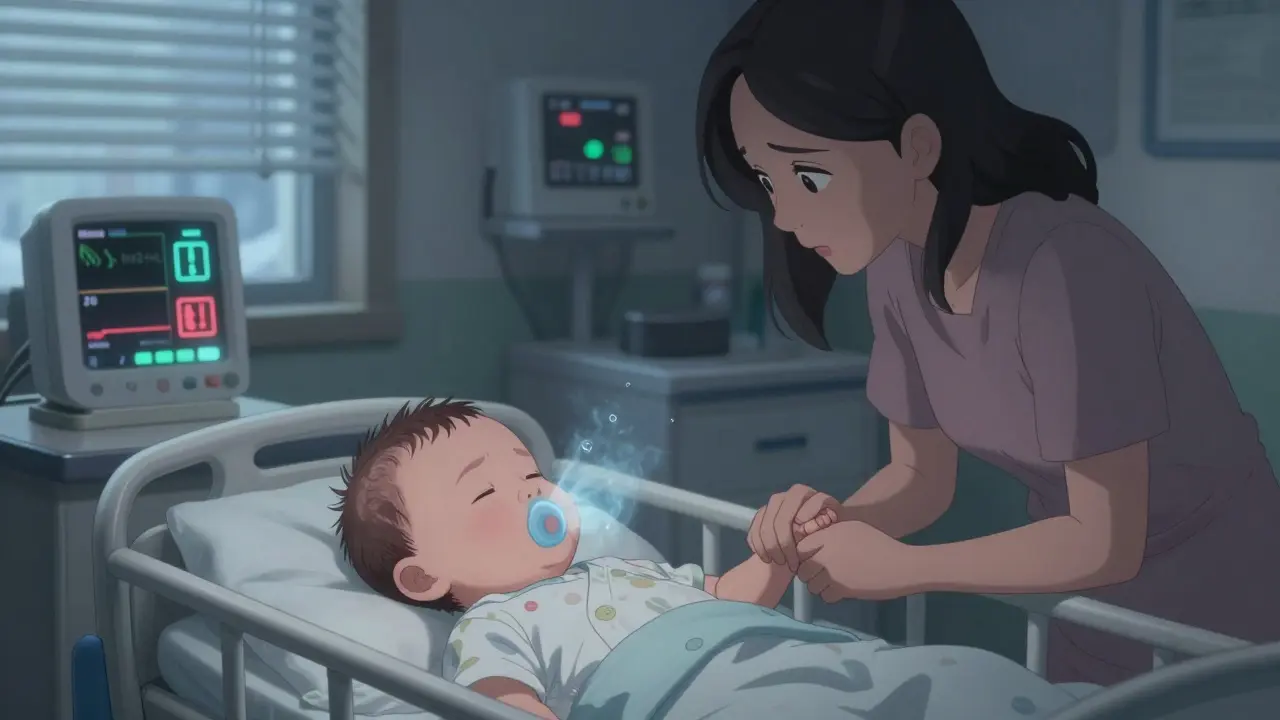
Every year, around December, hospitals start filling up with babies struggling to breathe and older adults rushed in with worsening coughs. It’s not flu. It’s not COVID. It’s RSV - Respiratory Syncytial Virus. For most healthy adults, it feels like a bad cold. But for infants and people over 65, it can turn deadly. And for the first time in decades, we now have real tools to fight it.
What RSV Actually Does to the Body
RSV isn’t some rare virus. It’s everywhere. Nearly every child gets it by age 2. In adults, it’s the reason your cough lingers for weeks after a “cold.” But what makes RSV dangerous isn’t just how common it is - it’s how it attacks the small airways in the lungs.
The virus starts in the nose and throat, then moves down. In babies, those tiny airways - called bronchioles - swell up and fill with mucus. Their lungs can’t push air in and out properly. That’s why you see babies with fast, shallow breaths, flaring nostrils, or their chest sucking in with every breath. In older adults, RSV doesn’t just cause pneumonia - it makes heart failure worse, triggers COPD flare-ups, and leaves people too weak to stand up on their own.
It’s not just the virus itself. It’s how the body reacts. In infants, the immune system overreacts, causing inflammation that blocks air. In seniors, the immune system is already worn down. So the virus slips through, and the body can’t fight back.
Why Infants Are Most at Risk
If your baby is under 6 months old, RSV is the #1 reason they might end up in the hospital. About 2 to 3% of all babies this young get sick enough to need care. That’s 58,000 to 80,000 hospitalizations each year in the U.S. alone.
Some babies are at even higher risk:
- Those born before 29 weeks - they’re 3 to 5 times more likely to be hospitalized.
- Babies with heart defects - their risk jumps 20 to 25 times higher.
- Children with lung problems from birth - their chance of severe illness is 10 to 15 times greater.
Signs your baby needs help right away:
- Breathing faster than 60 times per minute
- Chest muscles pulling in with each breath
- Not eating or drinking half their normal amount
- Extreme tiredness or unresponsiveness
And here’s something many parents don’t realize: even if your baby recovers, RSV can change their lungs for good. Kids hospitalized with RSV before age 2 are over four times more likely to develop asthma by age 7. Their lung function stays lower into their teens. This isn’t just a short-term illness - it can shape their health for years.
The Hidden Danger for Older Adults
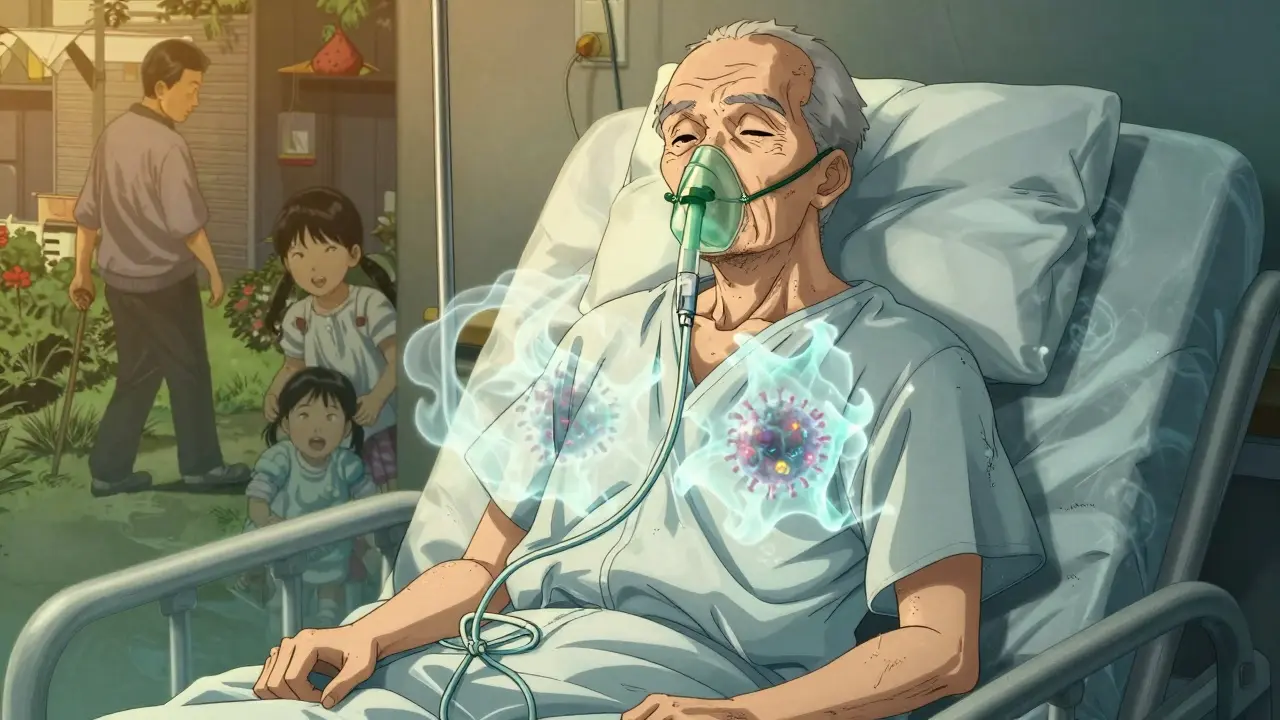
For years, RSV was called a “child’s virus.” But since 2020, doctors have been shouting about how deadly it is for older adults. Each year, 60,000 to 160,000 adults over 65 are hospitalized because of RSV. Around 6,000 to 14,000 die.
It’s not just age. It’s what’s already inside their bodies:
- People with COPD are over 4 times more likely to be hospitalized.
- Those with heart failure face nearly 3 times the risk.
- Adults over 75 stay in the hospital almost three times longer than younger patients.
And the damage doesn’t stop when they leave the hospital. Nearly half of older adults who get RSV badly develop new problems - they can’t bathe themselves, get dressed, or walk to the bathroom without help. One in four needs to go to a rehab center or nursing home after RSV. That’s not just illness. That’s loss of independence.
How RSV Spreads - And How to Stop It
RSV doesn’t need much to spread. It lives on doorknobs, toys, and phones for up to 10 hours. It floats in the air when someone coughs. It spreads when you kiss a sick child or touch your face after shaking hands.
Here’s what actually works to stop it:
- Wash hands for 20 seconds - soap and water cuts transmission by up to 50%. Use hand sanitizer if soap isn’t around.
- Don’t let sick people near babies - even a mild cough can be deadly to a newborn.
- Clean high-touch surfaces daily - use an EPA-registered disinfectant on light switches, remotes, and crib rails.
- Avoid crowded places - especially during peak season (December to February).
It’s simple, but most people skip these steps. They think, “It’s just a cold.” But for a 3-month-old, it’s not.
The Game-Changing New Tools: Vaccines and Antibodies
Before 2023, the only protection for high-risk babies was a monthly shot called palivizumab. It helped - but only for a few months, and only for the tiniest fraction of babies.
In July 2023, everything changed. The FDA approved nirsevimab (Beyfortus™). It’s a single shot given once before RSV season. It protects babies for five months - the whole time they’re most vulnerable. Studies show it cuts hospital visits by 75%.
And it’s not just for preemies anymore. The CDC now recommends it for all babies under 8 months entering their first RSV season. Even healthy, full-term babies.
For older adults, two new vaccines came out in May 2023:
- GSK’s Arexvy - 82.6% effective at preventing severe lung disease.
- Pfizer’s Abrysvo - 66.7% effective.
Both are given as a single shot. The CDC says adults 60+ should talk to their doctor about getting one - especially if they have heart or lung disease. It’s not a guarantee, but it’s the best protection we’ve ever had.
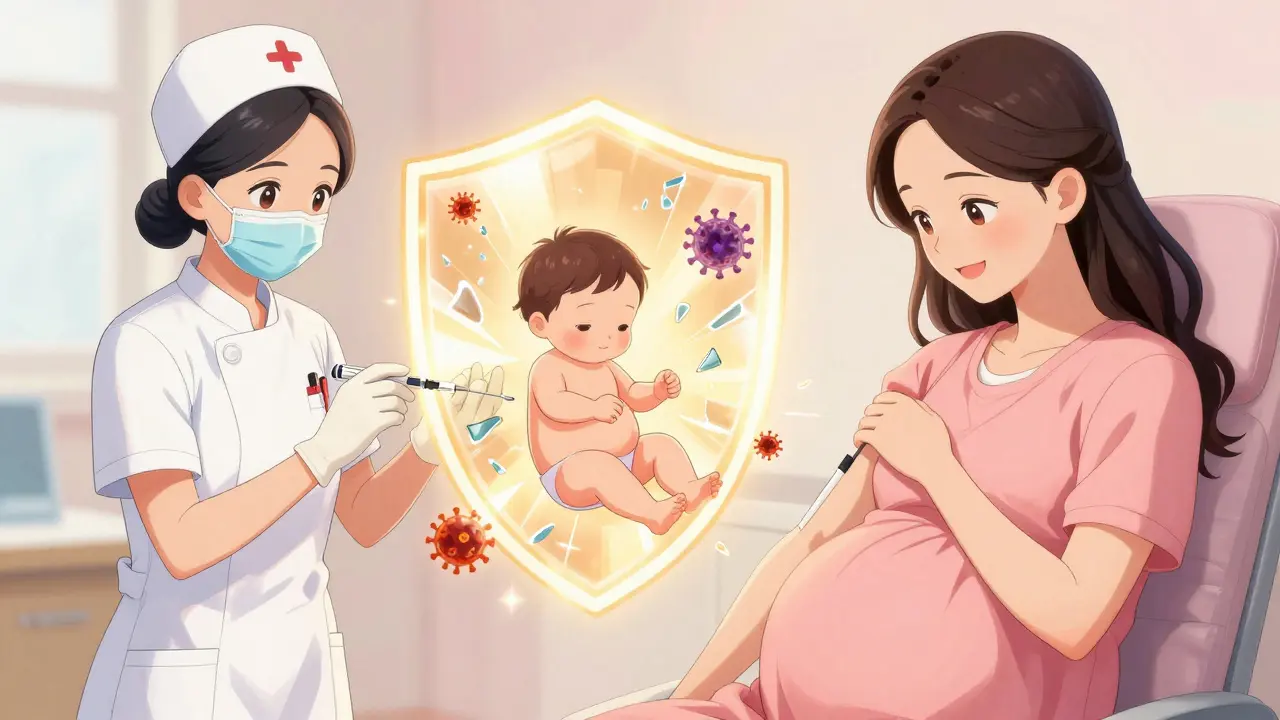
There’s even more: Abrysvo is now approved for pregnant people. If you get it between 32 and 36 weeks, your baby gets protection at birth. It cuts severe RSV in newborns by over 80%.
What’s Still Missing
These tools are powerful - but only if you can get them. In the U.S., nirsevimab and the vaccines are available. But in places like Kenya or Papua New Guinea, where RSV kills most of its young victims, none of this exists. The cost of a single dose of nirsevimab is over $400. Arexvy lists at $295. That’s more than most families in low-income countries make in a month.
There’s also a delay. Even in wealthy countries, hospitals ran out of nirsevimab in late 2023. Supply chains are still catching up. Doctors are still learning how to use the new vaccines properly.
And while we have these tools, we still don’t have a simple, cheap antiviral for RSV like we do for flu. That’s the next frontier.
What You Can Do Right Now
If you have a baby under 8 months: Talk to your pediatrician about nirsevimab. It’s given as a shot at the doctor’s office. No waiting. No complex schedule.
If you’re over 60: Ask your doctor about the RSV vaccine. If you have asthma, COPD, or heart disease, it’s not optional - it’s essential.
If you’re pregnant: Ask about Abrysvo between weeks 32 and 36. It’s safe, and it protects your baby before they’re even born.
And if you’re around a baby or older adult this winter:
- Wash your hands before touching them.
- Stay home if you have a cough or runny nose.
- Don’t kiss the baby on the face.
RSV isn’t going away. But for the first time, we’re not defenseless. We have science on our side. We just need to use it.
Can you get RSV more than once?
Yes. You can get RSV multiple times in your life. The first infection is usually the worst. After that, your body builds some immunity, so later infections are milder - like a cold. But in older adults and babies, even repeat infections can be serious because their immune systems can’t handle the stress.
Is RSV the same as the flu or COVID?
No. While all three cause respiratory illness, they’re different viruses. RSV hits the small airways hardest, especially in babies. Flu often causes high fever and body aches. COVID can affect taste, smell, and cause long-term fatigue. Testing is needed to know which one you have - but treatment is mostly supportive for all three: rest, fluids, and oxygen if needed.
Can I give my baby over-the-counter cold medicine for RSV?
No. The FDA and American Academy of Pediatrics strongly warn against giving cough and cold medicines to babies under 6. They don’t help and can be dangerous. Instead, use a nasal aspirator, keep the room humid, and offer small sips of fluids. If your baby is struggling to breathe, go to the ER.
When is RSV season?
In temperate places like the U.S., Australia, and Europe, RSV usually starts in the fall, peaks in winter (December-January), and fades by spring. In Australia, it often hits harder in April to July. The season can shift slightly each year, so it’s best to be protected before it starts.
Does the RSV vaccine cause side effects?
The RSV vaccines for older adults have mild side effects in most people: sore arm, headache, or muscle pain. These last 1-2 days. Serious reactions are rare. For nirsevimab in babies, the most common side effect is redness or swelling at the injection site. No deaths or severe reactions have been linked to either in clinical trials or real-world use.
What Comes Next
By 2030, experts believe these new tools could prevent half a million hospitalizations each year worldwide. But only if we make them fair. Right now, the most effective protections are only available in wealthy countries. That’s not just unfair - it’s dangerous. RSV doesn’t care about borders. If it’s still killing babies in rural Kenya, it can still spread globally.
For now, the best thing you can do is protect the people around you. Wash your hands. Get vaccinated. Ask your doctor. And don’t ignore a cough - especially if it’s near a baby or an older adult. RSV is no longer a mystery. We know how to stop it. Now we just have to do it.
Russell Thomas
December 30, 2025 AT 02:54Teresa Rodriguez leon
December 31, 2025 AT 22:52Emma Duquemin
January 1, 2026 AT 20:37Duncan Careless
January 2, 2026 AT 17:29Samar Khan
January 4, 2026 AT 08:15Sharleen Luciano
January 6, 2026 AT 01:52Jim Rice
January 6, 2026 AT 12:13Henriette Barrows
January 7, 2026 AT 19:53Alex Ronald
January 9, 2026 AT 16:21Manan Pandya
January 9, 2026 AT 21:22Kevin Lopez
January 10, 2026 AT 06:37Jasmine Yule
January 10, 2026 AT 18:13Greg Quinn
January 10, 2026 AT 20:14Lisa Dore
January 12, 2026 AT 13:32Joe Kwon
January 13, 2026 AT 05:18