

SGLT2 Inhibitor Hydration Calculator
Personalized Hydration Assessment
This tool helps you calculate your personalized hydration needs based on factors that increase dehydration risk from SGLT2 inhibitors.
Important: The average person loses 1.5-2.5 kg (mostly fluid) in the first week on SGLT2 inhibitors. This calculator helps you avoid the higher risk of dehydration and dizziness that can occur with more significant fluid loss.
Why Hydration Matters
SGLT2 inhibitors cause fluid loss through urine, which can lead to:
- Dehydration
- Dizziness and lightheadedness
- Orthostatic hypotension
- Increased risk of fainting
The goal is to maintain proper fluid balance while still benefiting from the drug's cardiovascular and kidney protection.
When you start taking an SGLT2 inhibitor for type 2 diabetes, you might not expect to feel dizzy or unusually thirsty. But these side effects are real - and they’re not random. They’re tied directly to how the drug works in your body. SGLT2 inhibitors like empagliflozin, dapagliflozin, and canagliflozin don’t just lower blood sugar. They also make your kidneys flush out extra glucose, sodium, and water. That’s why some people lose 1.5 to 2.5 kilograms in the first week - it’s mostly fluid. And that fluid loss is what leads to dehydration, dizziness, and drops in blood pressure.
How SGLT2 Inhibitors Work: More Than Just Sugar Control
SGLT2 inhibitors block a protein in your kidneys that normally reabsorbs glucose back into your blood. When this protein is turned off, about 70 to 100 grams of glucose spill into your urine every day. That’s roughly 300 calories lost through pee. But here’s the catch: glucose doesn’t leave alone. It drags sodium and water with it. This isn’t just a side effect - it’s the main mechanism behind both the benefits and the risks.
That osmotic diuresis (fluid loss from sugar in urine) also reduces sodium reabsorption. Less sodium means less fluid in your blood vessels. Your blood pressure drops - sometimes by 4 to 6 mmHg systolic in just a few weeks. That’s a good thing if you have high blood pressure or heart failure. But if your blood pressure was already on the low side, this drop can make you feel lightheaded, especially when standing up.
Studies like the EMPA-REG OUTCOME trial showed that empagliflozin lowered systolic blood pressure by an average of 5 mmHg, even in people without diabetes. That’s why these drugs are now recommended for heart failure patients, regardless of whether they have diabetes. But this same effect is what makes some people feel faint.
Dehydration: More Common Than You Think
Dehydration from SGLT2 inhibitors isn’t rare. In clinical trials, 1.3% to 2.8% of users reported volume depletion symptoms - dry mouth, dark urine, fatigue, or even fainting. That’s nearly three times higher than placebo. The risk jumps in older adults, people with kidney problems, or those already on diuretics like furosemide.
Canagliflozin had the highest rate of dehydration-related hospitalizations - 0.8% in patients over 65, compared to 0.4% on placebo. Why? Because older people often don’t feel thirsty as strongly. They might not drink enough, especially if they’re not used to the extra pee. Combine that with hot weather, exercise, or a stomach bug, and you’ve got a recipe for trouble.
Real-world reports back this up. On patient forums, people write things like: “I started Jardiance and felt like I was dying of thirst - but couldn’t drink enough to keep up.” Or: “I got dizzy walking to the bathroom and had to sit down. My doctor said it was fluid loss.”
It’s not just about drinking more water. It’s about understanding that your body is in a new balance. Your kidneys are working differently. If you’re on other blood pressure meds - like ACE inhibitors or ARBs - the combined effect can push you into low-volume territory.
Dizziness: The Body’s Warning Sign
Dizziness is one of the most common reasons people stop taking SGLT2 inhibitors. Clinical trials show 3.5% to 5.8% of users report it - compared to 2.5% to 3.2% on placebo. It usually hits within the first 4 weeks, right when your body is adjusting to the fluid shift.
Two out of three people who feel dizzy on these drugs have orthostatic hypotension - meaning their blood pressure drops sharply when they stand up. A systolic drop of 20 mmHg or more is a red flag. If your blood pressure was already below 130 mmHg before starting, your risk of dizziness jumps nearly threefold.
Age matters too. People over 75 are 2.4 times more likely to feel dizzy than younger users. And if you’re taking a diuretic on top of your SGLT2 inhibitor? Your odds go up by more than three times. That’s why doctors now check orthostatic blood pressure at your first follow-up - usually within 7 to 10 days after starting.
Most cases are mild and fade after a few weeks. But for some, it’s persistent enough to quit the drug. One survey of 1,842 users on Drugs.com found nearly 30% considered stopping because of dizziness. The key is recognizing it early. If you feel lightheaded when standing, sit or lie down. Drink water. Don’t ignore it.
Blood Pressure: A Double-Edged Sword
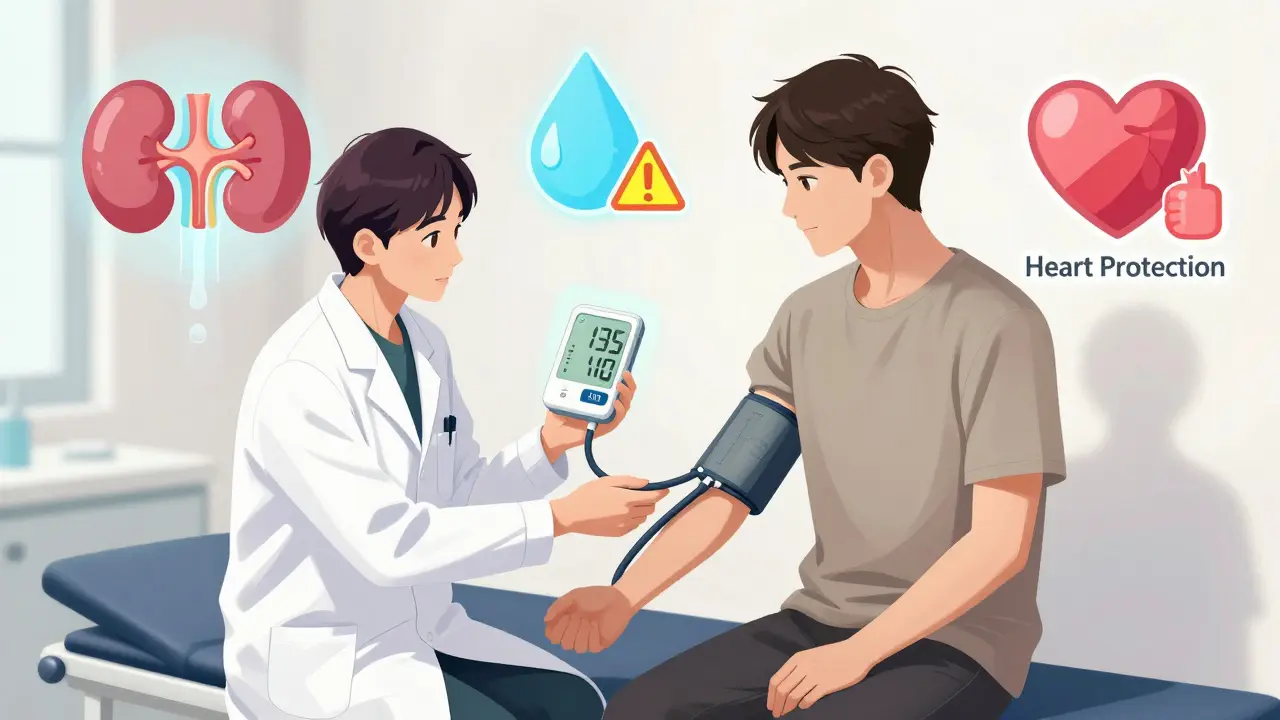
Lowering blood pressure sounds like a win - and it usually is. But not if it drops too far. SGLT2 inhibitors reduce systolic pressure by 4-6 mmHg and diastolic by 1-2 mmHg on average. That’s similar to a low-dose thiazide diuretic. But unlike other blood pressure meds, this effect isn’t just from less fluid. It’s also from improved blood vessel function. Studies show these drugs reduce arterial stiffness by 8-12% over 24 weeks, which helps the heart pump more efficiently.
This is why they’re now first-line for heart failure with reduced ejection fraction (HFrEF), even in non-diabetics. The DAPA-HF trial showed dapagliflozin cut cardiovascular death by 17%. That’s 6 lives saved per 100 patients over 18 months. But that benefit comes with a trade-off: you need to manage the fluid loss carefully.
The problem isn’t the blood pressure drop itself - it’s how fast it happens and who it affects. People with baseline systolic BP under 120 mmHg have over three times the risk of symptomatic hypotension. That’s why guidelines now say: don’t start SGLT2 inhibitors if your blood pressure is already low without good reason. And if you’re on multiple blood pressure meds, your doctor might need to reduce one of them.
Who’s at Highest Risk?
Not everyone needs to worry. But if you fall into one of these groups, you should talk to your doctor before starting:
- Age 65 or older
- Systolic blood pressure below 120 mmHg
- Estimated glomerular filtration rate (eGFR) under 60 mL/min
- Already taking a loop diuretic (like furosemide)
- On ACE inhibitors, ARBs, or other RAAS blockers
- Have had episodes of low blood pressure or fainting before
- Live in a hot climate or do heavy outdoor work
These aren’t hard rules - they’re warning signs. You can still take SGLT2 inhibitors if you’re in one of these groups, but you need a slower start and closer monitoring.

How to Stay Safe
Here’s what works in real life:
- Start low. Begin with the lowest dose (e.g., 10 mg empagliflozin instead of 25 mg).
- Hydrate. Drink an extra 500-1000 mL of water daily, especially in the first month. Don’t wait until you’re thirsty.
- Check your blood pressure. Take readings sitting and standing at your first follow-up. If your systolic drops more than 20 mmHg when standing, tell your doctor.
- Watch your weight. A 1.5-2.5 kg drop in the first week is normal. A drop over 3 kg? That’s a signal to pause and check.
- Hold the drug if you’re sick. If you have vomiting, diarrhea, or can’t eat/drink for a day, stop the SGLT2 inhibitor until you’re back to normal.
- Don’t rush to increase your diuretic. If you’re on a water pill and feel dizzy, your doctor might lower the diuretic dose instead of stopping the SGLT2 drug - because the heart benefits are worth keeping.
Most side effects fade within 4-6 weeks as your body adjusts. But if dizziness or dehydration persists, your doctor might switch you to a different drug - or adjust your other meds.
What to Do If You’re Already on One
If you’re already taking an SGLT2 inhibitor and haven’t had problems, keep going. The cardiovascular and kidney benefits are proven and significant. But if you’ve noticed:
- Feeling lightheaded when standing
- Dark yellow urine or dry mouth
- Unexplained fatigue or weakness
- Weight loss over 3 kg in a week
Don’t ignore it. Call your doctor. Bring your home blood pressure readings. Ask if you should check your orthostatic BP. Ask if your other medications need adjusting.
These drugs aren’t dangerous - but they’re not harmless either. They’re powerful tools. Like any tool, they work best when you understand how they work - and when you know the signs they’re pushing you too far.
Final Thought
SGLT2 inhibitors changed the game for heart failure and diabetes. They’re not just sugar-lowering pills anymore. They’re protective, life-extending medicines. But their power comes from forcing your body to lose fluid. That’s why dehydration and dizziness happen. And why they’re so preventable.
You don’t have to suffer through dizziness to get the benefits. You just need to be smart about it. Drink water. Watch your numbers. Talk to your doctor. And don’t assume every symptom is just ‘part of getting older.’ It might just be your kidneys trying to tell you something.
Can SGLT2 inhibitors cause serious dehydration?
Yes, but it’s uncommon and usually preventable. Clinical trials show dehydration-related events occur in 1.3% to 2.8% of users - higher than placebo. Risk increases in older adults, those with kidney disease, or those taking diuretics. Symptoms include dry mouth, dark urine, dizziness, and low blood pressure. Drinking extra fluids and avoiding illness can reduce risk significantly.
Why do I feel dizzy after starting an SGLT2 inhibitor?
Dizziness is often caused by orthostatic hypotension - a drop in blood pressure when standing up. SGLT2 inhibitors reduce fluid volume and blood pressure, which can make your body slower to adjust when you change positions. This usually happens in the first 4 weeks and improves over time. If it’s severe or persistent, check your blood pressure standing and sitting - and talk to your doctor.
Do SGLT2 inhibitors lower blood pressure too much?
They typically lower systolic blood pressure by 4-6 mmHg, which is beneficial for most people with high blood pressure or heart failure. But if your blood pressure was already low (under 120 mmHg systolic), you’re at higher risk of symptoms like dizziness or fainting. Doctors now screen for this before prescribing. If your BP drops below 90 mmHg systolic, they may pause the medication.
Should I stop taking my SGLT2 inhibitor if I feel dizzy?
Don’t stop without talking to your doctor. Mild dizziness often fades in a few weeks. But if it’s severe, happens often, or is accompanied by fainting, contact your provider. They may lower your dose, adjust other blood pressure meds, or check your fluid status. Stopping the drug means losing its heart and kidney protection - which is often more valuable than the temporary side effect.
Can I drink alcohol while taking an SGLT2 inhibitor?
Alcohol increases dehydration and can worsen dizziness or low blood pressure. It’s best to limit alcohol, especially in the first few weeks of starting the drug. If you do drink, make sure you’re well-hydrated and avoid large amounts. People with heart failure or kidney disease should be especially cautious.
Are generic SGLT2 inhibitors as safe as brand names?
Yes. Generic versions of empagliflozin, dapagliflozin, and canagliflozin became available in 2023 and are bioequivalent to brand names. They have the same active ingredient, same dosing, and same side effect profile. The only difference is cost. Safety depends on proper use and monitoring - not the brand.
Do SGLT2 inhibitors cause kidney damage?
No - they protect the kidneys. These drugs slow the decline of kidney function by 30-50% in people with diabetic kidney disease. The initial dip in eGFR (within the first few weeks) is a normal, temporary effect from reduced pressure in the kidney’s filtering units. It’s not damage - it’s a sign the drug is working. Long-term, kidney outcomes improve significantly.
Can I take an SGLT2 inhibitor if I don’t have diabetes?
Yes. Since 2021, guidelines have recommended SGLT2 inhibitors for heart failure with reduced ejection fraction (HFrEF) even if you don’t have diabetes. The benefits for heart and kidney health are independent of blood sugar control. Many non-diabetic patients now take them for heart failure or chronic kidney disease.
For more information, refer to the 2023 American Diabetes Association Standards of Care, the 2021 European Society of Cardiology Heart Failure Guidelines, and the DAPA-HF and EMPEROR-Reduced clinical trial publications.
Crystel Ann
January 15, 2026 AT 20:44ellen adamina
January 17, 2026 AT 12:09Niki Van den Bossche
January 18, 2026 AT 04:54Gloria Montero Puertas
January 19, 2026 AT 11:31Frank Geurts
January 21, 2026 AT 10:46Sohan Jindal
January 22, 2026 AT 13:02Dan Mack
January 22, 2026 AT 22:28RUTH DE OLIVEIRA ALVES
January 23, 2026 AT 00:55Amy Vickberg
January 24, 2026 AT 03:15Jami Reynolds
January 25, 2026 AT 18:42Mike Berrange
January 27, 2026 AT 14:51Tom Doan
January 27, 2026 AT 16:33Arjun Seth
January 28, 2026 AT 09:19Haley Graves
January 28, 2026 AT 14:24