
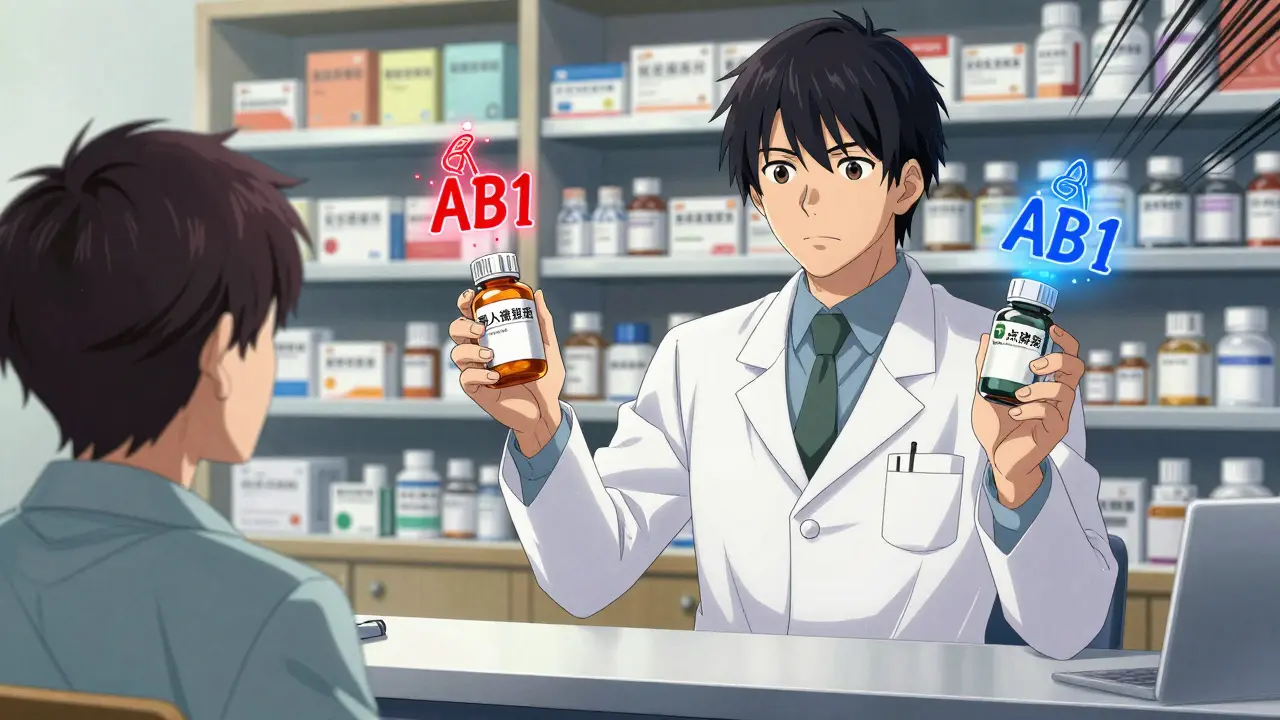
When your pharmacist hands you a pill bottle with a different name than what your doctor wrote, you might wonder: is this really the same thing? The answer lies in a quiet but powerful system the FDA uses to rate generic drugs - therapeutic equivalence codes. These two-letter codes - like AB, BC, or BX - don’t just sit on a shelf in a government database. They decide whether you can safely swap a brand-name drug for a cheaper generic without asking your doctor again.
What Therapeutic Equivalence Really Means
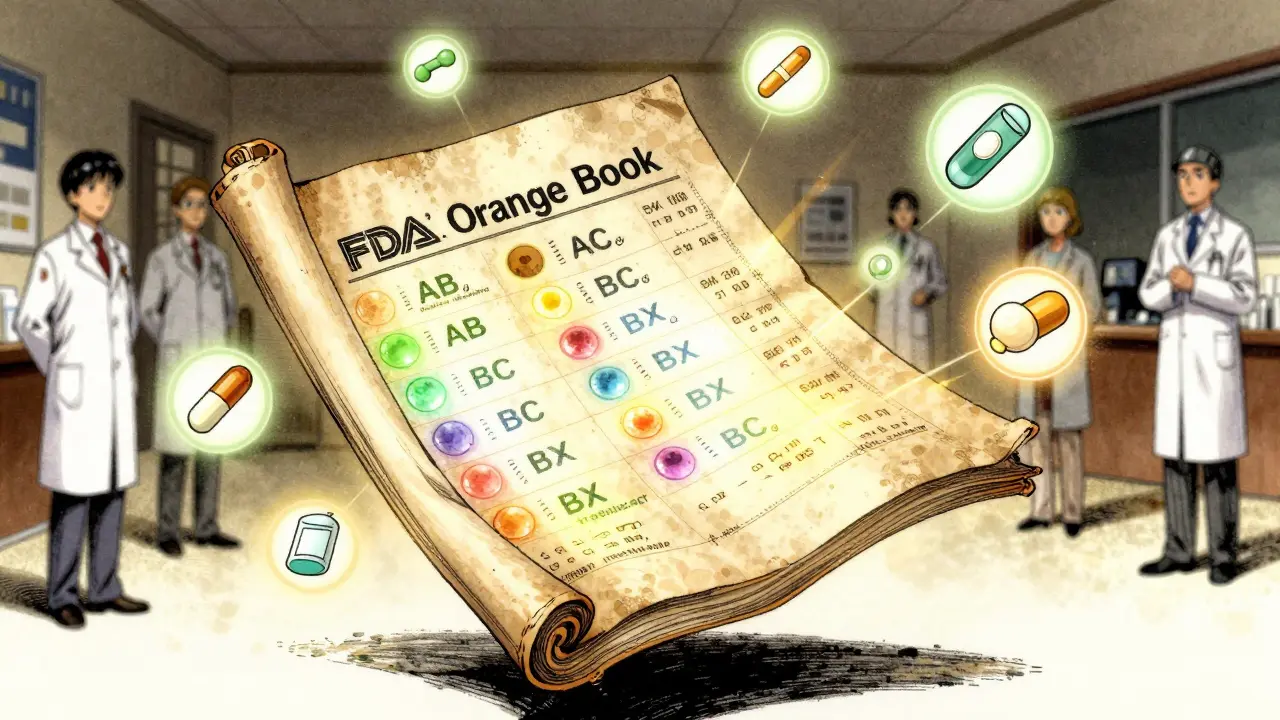
Therapeutic equivalence isn’t just about having the same active ingredient. It means two drugs - one brand, one generic - will do the same thing in your body, at the same rate, with the same safety profile. The FDA doesn’t guess. They test. And they assign a code based on hard evidence.The system lives in the Orange Book, officially called Approved Drug Products with Therapeutic Equivalence Evaluations. It’s been around since 1980, but it’s still the go-to tool for pharmacists, doctors, and state pharmacy boards. If a generic has an ‘A’ code, it’s legally interchangeable in 49 states. No extra approval needed. That’s why 90% of prescriptions filled in the U.S. are generics - and why they save the system about $370 billion every year.
The ‘A’ Code: Safe to Swap
If you see an ‘A’ at the start of the code, you’re good. The FDA has confirmed the generic matches the brand in every way that matters: same active ingredient, same strength, same form (pill, liquid, injection), and - most importantly - it gets into your bloodstream at the same rate and amount. That’s bioequivalence. Proven through studies. Not theory. Real data.But ‘A’ isn’t just ‘A’. There are sub-codes like AB1, AB2, AB3, and AB4. Why? Because sometimes, the brand-name drug has more than one version on the market. Let’s say two different brands make the same 20mg tablet. The generic that matches Brand A gets AB1. The one that matches Brand B gets AB2. If your doctor prescribes Brand A, you can only get AB1 - not AB2 - unless your doctor says otherwise. It’s a detail most patients don’t know, but pharmacists check it every day.
The ‘B’ Code: Not Automatically Substitutable
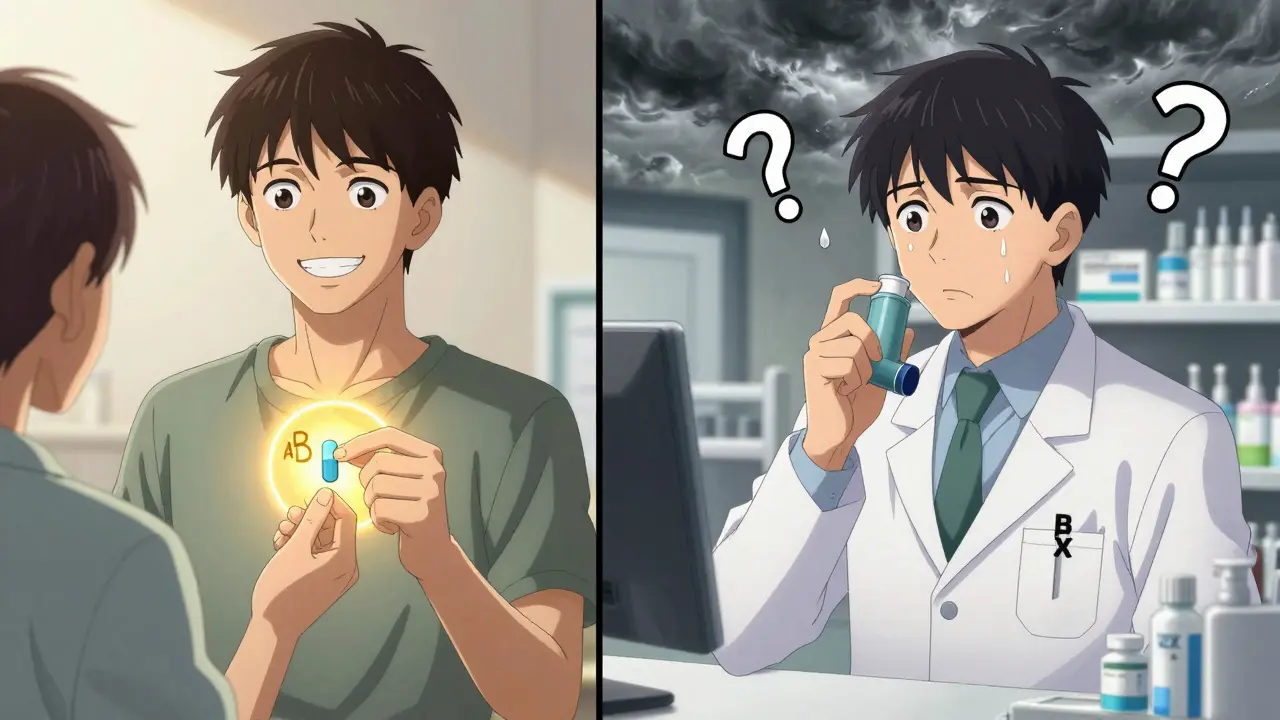
A ‘B’ code is where things get tricky. It means the FDA hasn’t confirmed therapeutic equivalence. That doesn’t mean the generic doesn’t work. It just means they don’t have enough proof yet - or there’s something unusual about the drug.Some ‘B’ codes are specific:
- BC = Extended-release forms with potential bioequivalence issues
- BT = Topical creams or ointments where absorption is hard to measure
- BN = Inhalers or nebulizer drugs
- BP = Products with known bioequivalence problems
- BX = Not enough data to judge
Here’s the problem: some ‘B’-rated drugs are perfectly safe and effective. But because they’re complex - like a patch that releases medicine slowly over days, or an inhaler that needs precise particle size - the FDA’s standard tests don’t always capture how they work in the body. So they get a ‘B’ by default. That leads to confusion. A 2022 AMA survey found 42% of doctors didn’t understand what ‘B’ really meant. Some refused to let pharmacists substitute. Others didn’t realize the generic might still be fine.
Why This System Matters in Real Life
For pharmacists, the Orange Book is a daily tool. A 2022 survey of 1,200 independent pharmacists showed 87% use it weekly. Each time they fill a prescription, they check the code. If it’s AB, they swap. If it’s B, they call the doctor or hold the brand. That extra step takes about 2.7 minutes per prescription. Multiply that by millions of fills, and you get $1.2 billion in annual savings - not from wasted pills, but from avoiding unnecessary brand-name costs.But it’s not perfect. A 2023 study found that 28% of pharmacists had refused to substitute a ‘B’-rated product that was actually clinically appropriate. Why? Because the code scared them. Or the doctor had written ‘dispense as written.’ Or the patient had a bad experience once with a generic and never trusted them again.
How It Compares to Other Countries
The U.S. system is unique. The European Medicines Agency (EMA) doesn’t use codes at all. Instead, they publish long scientific reviews for each generic. That’s thorough. But it’s not fast. In the U.S., a pharmacist can make a substitution decision in seconds. In Europe, the decision often goes back to the doctor - slowing things down and increasing costs.The FDA’s system works because it’s simple. ‘A’ means yes. ‘B’ means ask. It’s built into state laws. It’s taught in pharmacy school. It’s searchable online. And it’s updated monthly. The FDA’s Orange Book website had 1.7 million unique visitors in just one quarter of 2023. That’s not patients. That’s professionals. Doctors. Pharmacists. Regulators. All checking the same source.
What’s Changing Now
The FDA knows the system struggles with complex drugs. Between 2018 and 2022, applications for ‘B’-rated complex generics jumped 22%. That’s because more drugs are being made as patches, inhalers, injectables, and slow-release tablets. The old bioequivalence tests - measuring blood levels after a single dose - don’t always apply.In 2022, the FDA released draft guidance proposing new ways to evaluate these products. They’re looking at real-world data, better lab tests, and even patient outcomes. Their goal? Cut ‘B’ ratings for complex generics by 30% by 2027. That means more affordable options, without risking safety.
They’re also expanding Product-Specific Guidances - detailed rules for how to test each drug. There are now over 1,850 of them. For example, there’s a whole guide just for testing generic versions of the asthma drug albuterol. That kind of specificity is what’s making the system smarter.
What You Should Do
If you’re taking a generic:- Check the label. Does it say the same active ingredient as your brand?
- Ask your pharmacist: ‘Is this an A-rated generic?’
- If it’s a ‘B’, ask if it’s safe for you. Don’t assume it’s bad - just ask for the reason.
- If you’ve had a bad reaction to a generic before, tell your doctor. It might be the drug, not the code.
Most generics are safe. Most are interchangeable. But the system isn’t magic. It’s science - and science evolves. The FDA isn’t trying to stop you from saving money. They’re trying to make sure you save it safely.
What’s Next for Generic Drugs
The future of generics isn’t just about more of them. It’s about better ones. As more complex drugs go generic - biologics, inhalers, injectables - the FDA will need better tools. That’s where real-world evidence comes in. Data from patients using the drug over months or years. That’s the next step. And it’s already starting.For now, the Orange Book remains the backbone of generic substitution in the U.S. It’s not perfect. But it’s the most reliable system we have. And for millions of people, it means paying $10 instead of $100 for the same medicine. That’s not just policy. That’s real life.
Stephen Craig
January 4, 2026 AT 15:27The FDA’s system is quietly brilliant. It turns complex pharmacology into a simple yes-or-no for pharmacists. No jargon, no fluff. Just code. AB means you can swap. B means pause. It’s not perfect, but it’s the least bad system we’ve got. And honestly? That’s how good governance works - not with fanfare, but with quiet reliability.
People think innovation means flashy tech. Sometimes it’s just a spreadsheet that saves billions.
Vicki Yuan
January 4, 2026 AT 15:51I love how this post breaks down the Orange Book without drowning in legalese. As a pharmacist, I see the ‘B’ codes every day - and I can tell you, most of them are perfectly safe. The real problem isn’t the generics. It’s the fear. Patients panic when they see ‘B’ and assume it’s dangerous. Doctors panic and write ‘DAW’ without understanding why. The system works. We just need better education.
One time, a patient cried because I switched her from brand-name albuterol to an AB-rated generic. She said, ‘But my doctor said this one was better.’ I showed her the FDA page. She calmed down. Then she thanked me. That’s the real win.
Uzoamaka Nwankpa
January 6, 2026 AT 01:02They say generics save money. But who really pays the price? The people who get rashes. The ones whose seizures come back. The elderly who feel dizzy for days after the switch. The system says ‘safe.’ But safety isn’t just data. It’s lived experience. And no spreadsheet can measure the quiet suffering of someone who trusted the system and got hurt.
I’ve seen it. I know it. And no amount of ‘AB’ codes will change that.
Chris Cantey
January 6, 2026 AT 17:08It’s funny how we treat drug codes like sacred scripture. The FDA doesn’t know what’s happening inside your body. They test on 20 healthy college kids in a lab. Then they declare a generic ‘equivalent.’ But what about your gut? Your liver? Your genetics? The body isn’t a machine. It’s a mess of variables. And now we’re all guinea pigs in a bureaucratic experiment disguised as efficiency.
They call it science. I call it arrogance.
Terri Gladden
January 7, 2026 AT 23:46OMG I JUST REALIZED MY RX WAS SWITCHED AGAIN 😭 I THOUGHT I WAS GETTING THE SAME THING BUT NOW I’M SCARED I’M GONNA DIE OR SOMETHING I HAD A BAD REACTION LAST TIME AND NOW I’M CRYING AND MY DOCTOR WON’T ANSWER MY TEXTS AND WHY DOES THE FDA EVEN EXIST IF THEY LET THIS HAPPEN 😭😭😭
WHO’S IN CHARGE HERE??
Jennifer Glass
January 8, 2026 AT 17:06I’ve been reading up on this since the post. The ‘AB’ sub-codes (AB1, AB2, etc.) are such an under-discussed detail. I had no idea that even within A-rated generics, there are different brand matches. That’s actually really important - especially if you’re on a drug with multiple brand versions.
My mom takes levothyroxine, and her pharmacy switched her to a different AB-rated generic last year. She felt off for weeks. Turns out, it was AB2 instead of AB1. Her doctor didn’t know either. We had to call the pharmacy and get it switched back. Now I always ask. It’s a small thing, but it matters.
Thanks for highlighting this. Most people don’t even know to look.
Joseph Snow
January 10, 2026 AT 07:48This is all a government scam. The FDA is owned by Big Pharma. They created the ‘A’ and ‘B’ codes to control the market. Why? Because if generics were truly interchangeable, drug prices would collapse. But they don’t. Why? Because the FDA intentionally withholds equivalence data on certain drugs to protect brand monopolies. The ‘B’ ratings aren’t about science - they’re about profit.
Look at the timeline. Every time a generic threatens to undercut a brand, it gets a BX rating. Coincidence? I think not. The Orange Book is a legal fiction. The real book is the one with the money trail.
Akshaya Gandra _ Student - EastCaryMS
January 10, 2026 AT 20:25wait so if its BX its like no one even tried to test it?? that seems so weird why would they even approve it then?? like if they dont know if it works how is it legal to sell?? i thought all meds have to be tested??
also is this only in usa?? i saw a generic in india and it was like 1/10th the price and i used it and it was fine??