
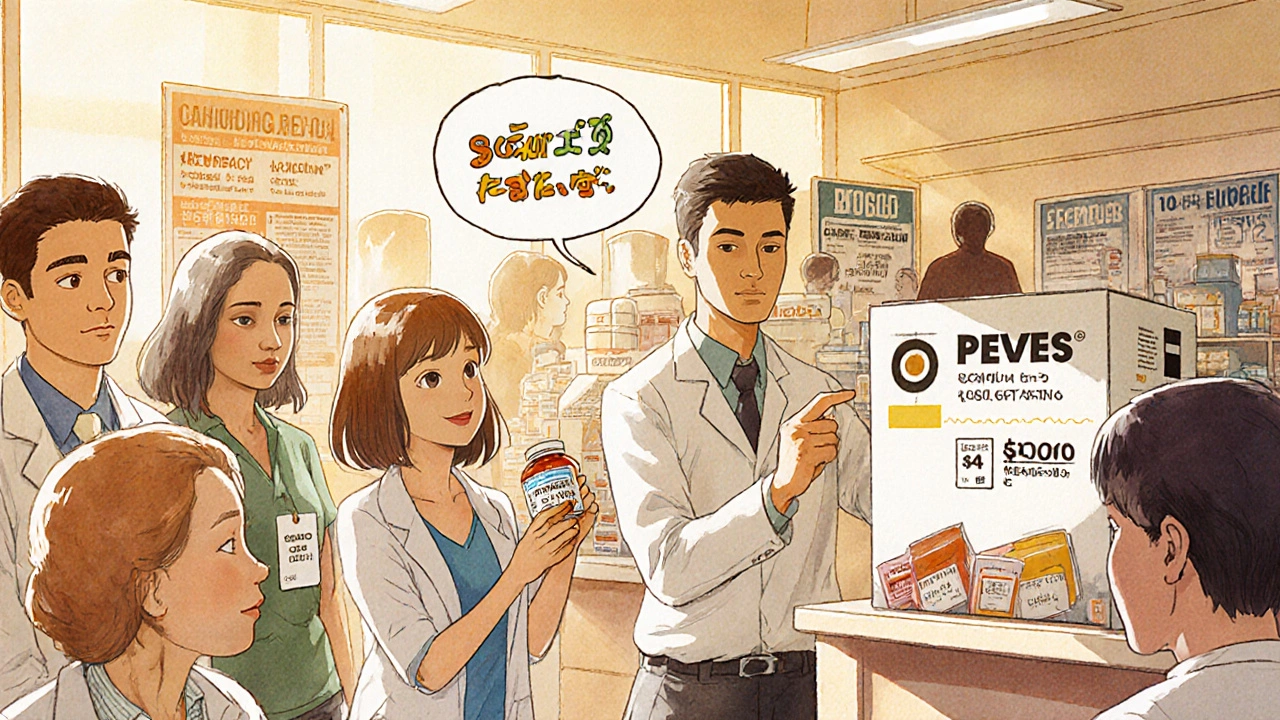
Every year, millions of people in the U.S. skip doses, cut pills in half, or go without their prescriptions because they can’t afford them. The cost of brand-name drugs keeps climbing-sometimes over $500 a month for a single medication. But here’s the truth most people don’t know: generic medications work just as well, and they often cost 85% less. You’re not sacrificing quality when you switch. You’re saving money without losing effectiveness.
They’re the Same Drug, Just Cheaper
Generic medications aren’t knockoffs. They’re not weaker, older, or second-rate. A generic drug contains the exact same active ingredient as the brand-name version. If your doctor prescribes Lipitor (atorvastatin) for cholesterol, the generic version has the same molecule, same dosage, same way it’s absorbed by your body. The U.S. Food and Drug Administration (FDA) requires every generic to prove it delivers the same amount of medicine into your bloodstream at the same speed as the brand-name drug. This is called bioequivalence-and it’s not a suggestion. It’s a legal requirement.
Think of it like buying store-brand coffee. The beans are the same. The roast is the same. The taste? Identical. You’re just paying less because you’re not paying for the fancy packaging, celebrity ads, or decades of marketing. Generic drugs skip the expensive clinical trials that brand-name companies run to get approval. Instead, they rely on the data already proven by the original drug. That’s why they’re cheaper-and why they work just as well.
Real Savings, Not Just Numbers
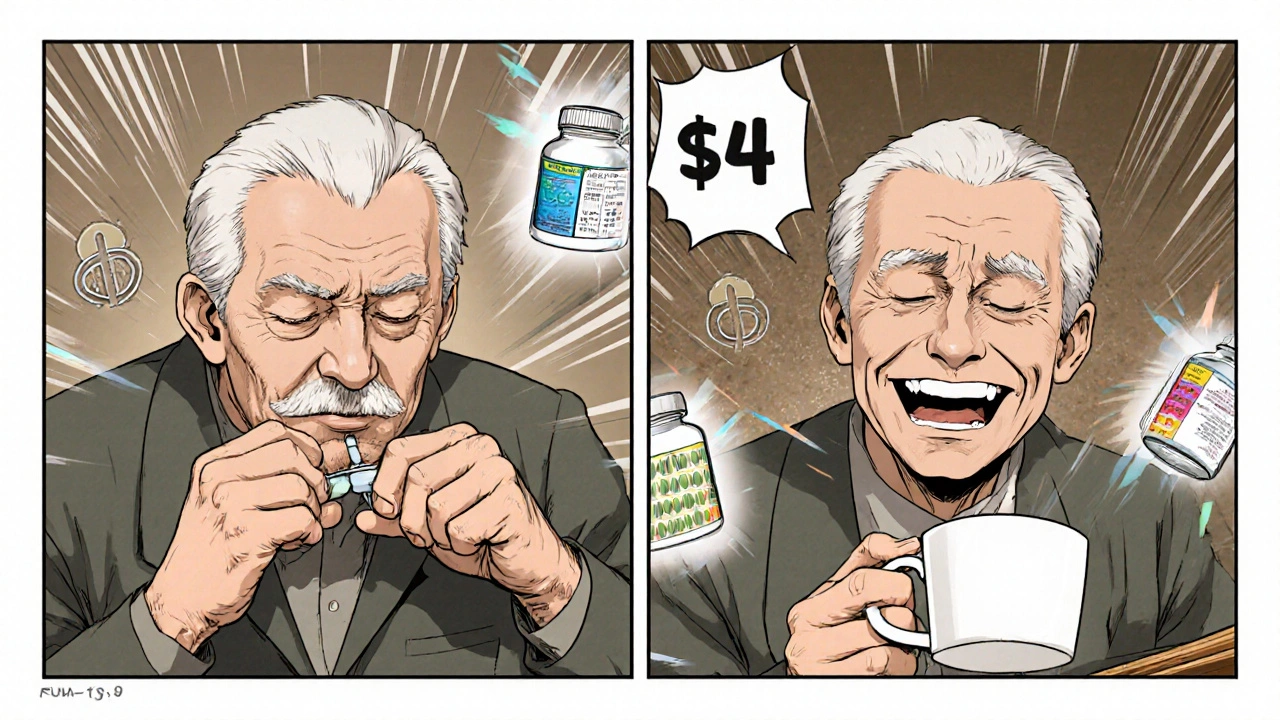
Let’s talk about actual money. Take warfarin, a blood thinner. The brand-name version, Coumadin, can cost over $300 for a 30-day supply. The generic? Around $4. That’s not a typo. Same drug. Same effect. Same risk of side effects. But one costs 98% less.
Or consider fexofenadine, the generic for Allegra. The brand costs about $30. The generic? $10. For a monthly prescription, that’s $240 saved per year. Multiply that across three, five, or ten medications-and you’re talking thousands.
According to the FDA, generic drugs saved the U.S. healthcare system $1.67 trillion between 2012 and 2022. That’s not theoretical. That’s real money kept in people’s pockets, in hospital budgets, and in insurance premiums. The average copay for a generic is $1 to $10. For brand-name drugs? $25 to $75. That’s the difference between filling your prescription and skipping it because you can’t afford it.
They’re Just as Safe
Some people worry: “If it’s cheaper, is it less safe?” The answer is no. The FDA inspects every generic manufacturing facility-same as brand-name ones. In fact, many brand-name companies make their own generics. The FDA conducts over 1,200 inspections a year of facilities worldwide that produce generic drugs. If a plant fails inspection, it’s shut down. No exceptions.
Adverse event reports for generic drugs mirror their usage. Since generics make up 90% of all prescriptions, they naturally show up in more reports. But when you adjust for that, the rate of side effects is identical to brand-name drugs. A 2022 study in the Journal of Managed Care & Specialty Pharmacy looked at over 186,000 patients on heart medications. No difference in outcomes. No increase in hospitalizations. No rise in complications. Just the same results, at a fraction of the cost.
What About the Pill That Looks Different?
You might notice your pill changed color, shape, or size. Maybe it used to be blue and now it’s white. Or the letters on it are different. That’s normal. Generic manufacturers can change the inactive ingredients-like dyes, fillers, or coatings-because those don’t affect how the medicine works. But patients often panic. “Is this the same?” they ask.
It is. The FDA requires that the active ingredient remain unchanged. The difference is purely cosmetic. Still, anxiety is real. That’s why pharmacists are trained to explain the switch. If you’re unsure, ask: “Is this the same medication, just made by a different company?” They’ll confirm it. And if you’re still nervous, your doctor can write “Dispense as written” on the prescription. But most of the time, there’s no reason to worry.
Doctors and Experts Agree
The American Medical Association recommends prescribing generics whenever possible. The FDA’s former director, Dr. Janet Woodcock, said: “Generic drugs undergo rigorous review to ensure they are as safe and effective as brand-name drugs.” Harvard Medical School’s Dr. Aaron Kesselheim studied heart medications and found no difference in effectiveness. Even specialists who once hesitated-like neurologists dealing with epilepsy drugs-are now saying the same thing. While a few narrow therapeutic index drugs require extra monitoring, the vast majority of generics are just as reliable.
And it’s not just doctors. Patients say it too. On Reddit, one person shared: “Switching my blood pressure meds to generic saved me $280 a month. No side effects. No change in how I feel.” A Kaiser Permanente survey found 87% of patients were satisfied with generics. The top reason? Affordability.
Insurance Plans Push Them for a Reason
Your insurance company doesn’t just like generics because they’re cheap. They like them because they work. Most plans have tiered pricing: Tier 1 = generics, Tier 2 = brand-name, Tier 3 = specialty drugs. If you pick a brand-name drug when a generic is available, you pay more. Sometimes a lot more.
Medicare Part D beneficiaries pay an average of $1.85 per generic prescription. For brand-name? $33.67. That’s not a mistake. That’s policy. And it’s working. Hospitals and pharmacies use generics in over 98% of cases when medically appropriate. Why? Because they know it’s safe, effective, and saves money-for everyone.
What About Newer Drugs? Are Generics Available?
Generics only come after the brand-name drug’s patent expires. That usually takes 10 to 12 years. But once it does, multiple companies jump in. The more manufacturers, the lower the price. For example, when five or more companies start making the same generic, prices drop by up to 85%.
And it’s not just pills. Biosimilars-generic versions of complex biologic drugs like insulin or rheumatoid arthritis treatments-are now hitting the market. The FDA has approved 37 so far. These could save Medicare $50 billion a year by 2030. The trend is clear: as patents expire, generics will keep lowering costs.
How to Switch Safely
Switching is simple. When your prescription renews, ask your pharmacist: “Is there a generic version?” If they say yes, they’ll automatically substitute it unless your doctor says otherwise. You can also ask your doctor to write “generic acceptable” on the prescription.
Here’s what to do:
- Check your prescription label. Does it say “brand necessary”? If not, a generic is allowed.
- Ask your pharmacist: “What’s the generic name?” and “How much will it cost?”
- Compare prices at different pharmacies. Sometimes Walmart or Costco has generics for $4.
- If you notice a change in how you feel after switching, tell your doctor. But don’t assume it’s the generic-it could be something else.
- Keep your pill bottles. If the appearance changes, keep the old one as a reference.
There’s no adjustment period needed. Your body doesn’t need time to adapt. The medicine is the same.
The Bigger Picture
Switching to generics isn’t just about saving money on your next prescription. It’s about making healthcare sustainable. When people can afford their meds, they take them. When they take them, they stay healthier. When they stay healthier, hospitals see fewer emergencies. Insurance costs go down. Everyone wins.
Brand-name drugs are rising in price at 5.2% a year. Generics? Only 1.8%. That gap is widening. The longer you wait to switch, the more you’ll pay. And the more you pay, the more likely you are to skip doses-or stop altogether.
You don’t need to be rich to deserve effective medicine. You just need to know the truth: generics are safe, they work, and they’re designed to help you-not the company’s bottom line.
Frequently Asked Questions
Are generic medications as effective as brand-name drugs?
Yes. The FDA requires generic drugs to have the same active ingredient, strength, dosage form, and route of administration as the brand-name version. They must also prove bioequivalence-meaning they deliver the same amount of medicine into your bloodstream at the same rate. Studies show no difference in effectiveness for conditions like high blood pressure, cholesterol, diabetes, and depression.
Why are generic drugs so much cheaper?
Generic manufacturers don’t have to repeat expensive clinical trials or pay for massive marketing campaigns. They use the safety and effectiveness data already proven by the original drug. Once the patent expires, multiple companies can make the same drug, driving prices down through competition. In markets with five or more generic makers, prices can drop by 85%.
Can the different color or shape of a generic pill affect how it works?
No. Changes in color, shape, or size are due to different inactive ingredients like dyes or fillers, which don’t affect how the medicine works. The active ingredient-the part that treats your condition-is identical. Some patients feel uneasy when the pill looks different, but it’s purely cosmetic. If you’re unsure, ask your pharmacist to confirm it’s the same medication.
Are there any drugs where generics aren’t recommended?
For most drugs, generics are just as safe and effective. But a few medications with a narrow therapeutic index-like warfarin, levothyroxine, or some epilepsy drugs-require very precise blood levels. Even small changes could theoretically affect outcomes. However, the FDA still requires these generics to meet strict bioequivalence standards. Most patients switch without issue. If your doctor has concerns, they’ll let you know. Otherwise, generics are the standard of care.
How do I know if my insurance covers the generic version?
Most insurance plans have a tiered formulary where generics are in the lowest-cost tier. You’ll usually pay $1-$10 for a generic versus $25-$75 for a brand-name drug. Check your plan’s formulary online or call your insurer. If your doctor prescribes a brand-name drug when a generic is available, your insurer may require you to try the generic first. This is called step therapy-and it’s common.
Can I switch to a generic at any time, or only when refilling?
You can usually switch when you refill your prescription. If you want to switch mid-cycle, talk to your doctor and pharmacist. They can often make the change right away. Some pharmacies may need to order the generic version, but it’s typically available within a day or two. There’s no need to wait for a new prescription unless your doctor specifically requires it.
Next Steps
If you’re on a brand-name medication, ask your pharmacist at your next refill: “Is there a generic version?” If yes, ask for it. Compare the price. If it’s still expensive, check other pharmacies-Walmart, Costco, and Target often have generics for $4 or less. If you’re worried about switching, bring up your concerns with your doctor. They’ve likely helped hundreds of patients make the same change. And if you’re on multiple prescriptions, calculate how much you could save in a year. You might be surprised.
Sohini Majumder
November 30, 2025 AT 08:43tushar makwana
December 1, 2025 AT 20:10Richard Thomas
December 2, 2025 AT 17:09Steven Howell
December 3, 2025 AT 14:50Robert Bashaw
December 4, 2025 AT 17:13Subhash Singh
December 5, 2025 AT 15:04Geoff Heredia
December 7, 2025 AT 10:59Tina Dinh
December 7, 2025 AT 23:13Peter Lubem Ause
December 8, 2025 AT 17:31Richard Thomas
December 9, 2025 AT 08:39