
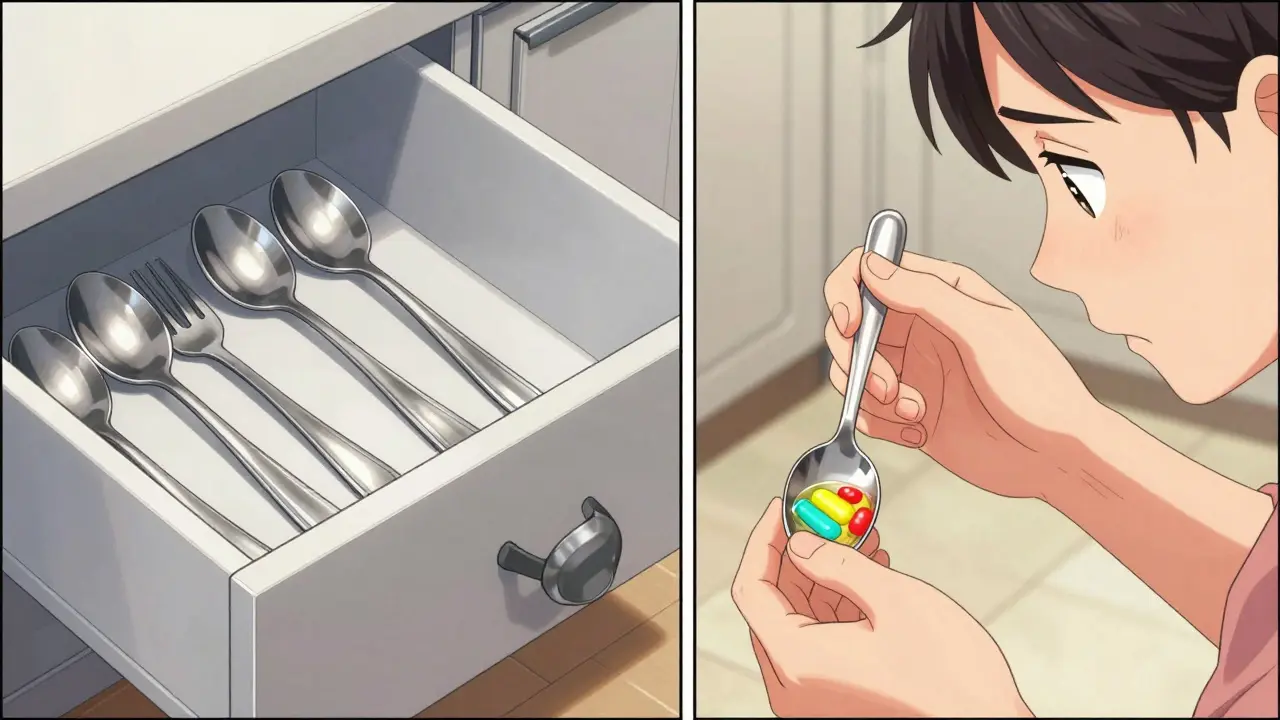
Imagine you're trying to help your sick child feel better. You grab a spoon from the kitchen drawer, pour some liquid medicine, and hand it to them. It seems like a quick, easy fix, right? But here is the scary part: that simple kitchen spoon could be delivering far more or far less medicine than your child actually needs. In the world of pediatric care, a tiny mistake in measurement isn't just a "whoops"-it can be the difference between a healing dose and a dangerous overdose.
The reality is that children's medicine dosing is the process of measuring and administering a specific amount of liquid medication to a pediatric patient based on their weight or age . Because children's bodies are much smaller and more sensitive than adults', they can't process medication errors as easily. This is why health experts have been screaming from the rooftops since 1978 that kitchen utensils have no place in a medicine cabinet.
Quick Safety Check
- Household spoons are for soup, not science.
- Always use the measuring device that comes with the bottle.
- Stick to milliliters (mL) instead of teaspoons (tsp).
- If you lost the dropper or cup, ask your pharmacist for a new one immediately.
The Math Problem: Why Kitchen Spoons Lie
You might think a teaspoon is just a teaspoon, but in your kitchen, that's rarely true. A standard medical teaspoon is exactly 5 milliliters (mL). However, if you go through your silverware drawer, you'll likely find spoons that hold anywhere from 3 mL to 7 mL. That is a massive variance. If you use a spoon that holds 7 mL when the dose is 5 mL, you are giving your child 40% more medicine than prescribed.
It gets even worse when people confuse teaspoons with tablespoons. A standard tablespoon is 15 mL. If a tired parent grabs a tablespoon instead of a teaspoon, they could accidentally give their child three times the intended dose. This isn't just a theoretical risk; poison control centers handle over 10,000 calls every year specifically because of liquid medication errors. When we talk about medication errors, we are talking about the accidental administration of the wrong dose, which can lead to toxicity or make the medicine completely ineffective.
| Tool | Accuracy Level | Best Use Case | Risk Factor |
|---|---|---|---|
| Oral Syringe | Very High | Doses < 5mL or precise increments (e.g., 3.2mL) | Very Low |
| Dosing Cup | Medium | Larger doses in 5mL multiples | Medium (spills/under-filling) |
| Medicine Dropper | High | Very small infant doses | Low (if calibrated in mL) |
| Household Spoon | Very Low | Eating cereal or soup | High (Overdose/Underdose) |
The Gold Standard: The Oral Syringe
If you want the most accurate dose, go for the oral syringe. This is a plastic, non-needle device used to deliver a precise volume of liquid medication into the mouth. Unlike a cup or a spoon, syringes have graduated markings that allow you to measure down to 0.1 mL increments. If your child needs 3.5 mL, a dosing cup (which usually only has marks at 5, 10, and 15) is basically a guessing game. A syringe, however, lets you hit that number exactly.
The American Academy of Pediatrics (AAP) and the CDC emphasize that using a syringe significantly reduces the chance of a mistake. In fact, research shows that parents are much less likely to make a dosing error when they use tools calibrated in milliliters rather than those using terms like "teaspoon." The word "teaspoon" is a trigger-it makes people think of their kitchen, while "mL" makes them think of a medical measurement.
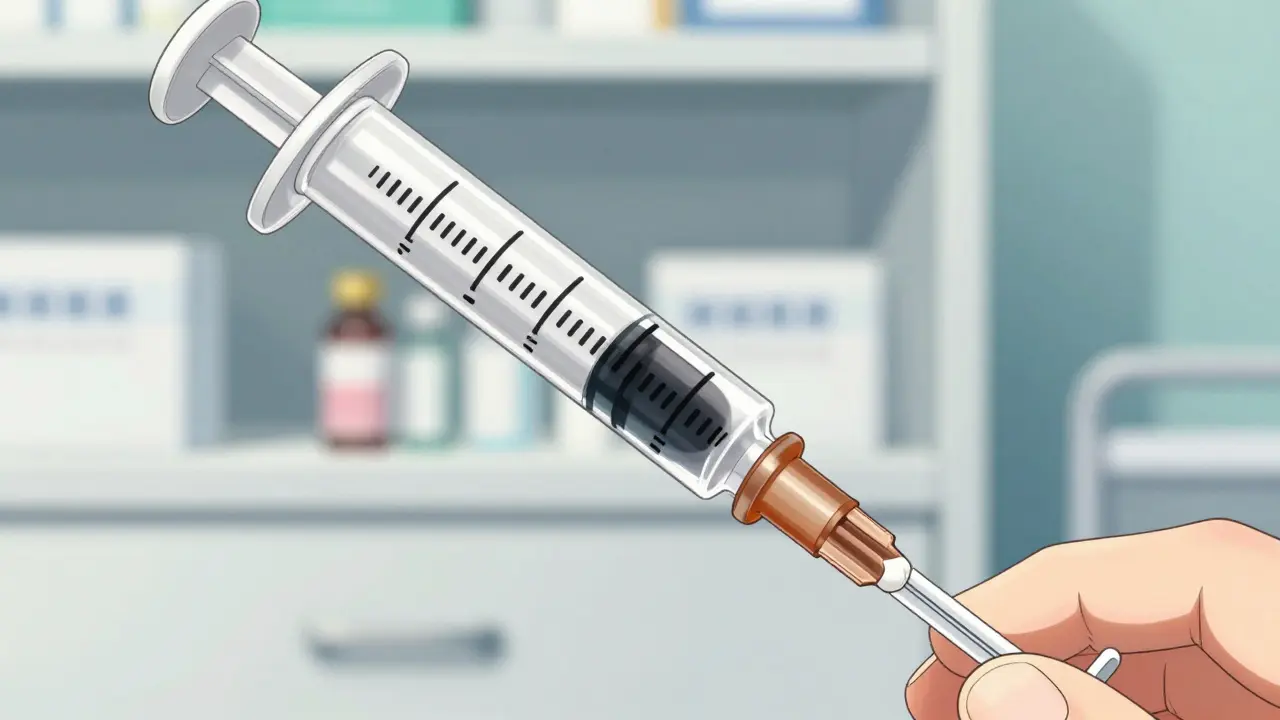
How to Give Medicine Safely (Step-by-Step)
Getting the dose right is only half the battle; the other half is making sure the child actually swallows it without choking or spitting it out. Here is the safest way to do it:
- Read the label twice: Confirm the dose is in mL. If the label says "tsp," check with your pharmacist to confirm the exact mL equivalent.
- Measure at eye level: Don't look down at a cup or syringe from above. Hold it up so your eyes are level with the measurement line to avoid "parallax error" (where the liquid looks higher or lower than it is).
- Position the child: Sit your child up or hold them at a slight angle. Never give medicine while they are lying flat on their back, as this can cause choking.
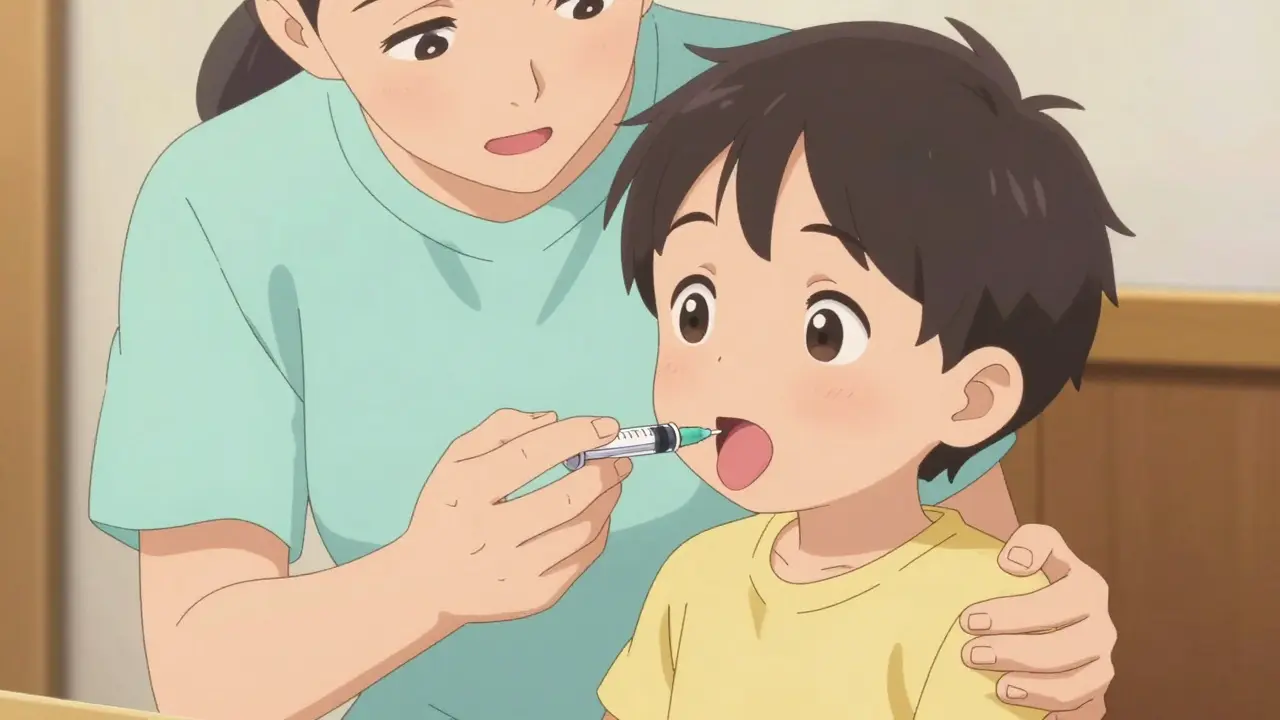
- The "Cheek Pocket" Technique: Instead of squirting the medicine toward the back of the throat (which triggers the gag reflex), aim the syringe or dropper gently between the child's tongue and the inside of their cheek.
- Slow and steady: Push the plunger slowly. Let the child swallow naturally before adding more liquid.
Common Pitfalls and How to Avoid Them
Even careful parents fall into a few common traps. One of the biggest is the "forgotten device." You buy a bottle of medicine, use the cup for a few days, and then lose it. Instead of going to the store, you think, "I'll just use this small spoon for one dose." This is where the danger starts. If you lose your dosing tool, stop immediately and get a replacement from a pharmacy.
Another issue is using a dropper that isn't calibrated for that specific medicine. Some medications come with a proprietary dropper that only works for that specific bottle's concentration. Switching droppers between two different medicines can lead to a massive dosing error because the drop size might differ.
Finally, avoid the "approximation" habit. You might see a line for 2.5 mL and a line for 5 mL and decide to fill it halfway between them to get 3.75 mL. Unless you are using a high-precision syringe, you are just guessing. If the prescribed dose is a number that isn't marked on your cup, you need a more precise tool, like an oral syringe.
Talking to Your Pharmacist
Your pharmacist is your best ally in pediatric safety. When you pick up a liquid prescription, don't just grab the bag and leave. Ask these specific questions:
- "Does this medication come with its own measuring device?"
- "If the dose is 3.2 mL, can you give me a syringe that allows me to measure that exactly?"
- "Can you show me exactly where the line is for this dose?"
Many pharmacies now provide free oral syringes with clear milliliter markings because they know how often the "kitchen spoon" mistake happens. They would much rather spend thirty seconds showing you how to use a syringe than deal with a patient coming in with an accidental overdose.
Why can't I just use a measuring spoon from my baking set?
Baking spoons are designed for flavor, not pharmacology. Even "standard" measuring spoons can vary slightly in volume, and they aren't designed to measure small, precise increments (like 2.3 mL). A tiny difference in volume might not matter in a cake, but in a child's bloodstream, it can lead to significant under-dosing or over-dosing.
What happens if my child accidentally gets too much medicine?
If you suspect an overdose, don't wait for symptoms to appear. Call your local poison control center or seek emergency medical care immediately. Have the medication bottle with you so the doctors know exactly what was administered and the concentration of the drug.
Is a dosing cup better than a syringe?
Generally, no. Oral syringes are more accurate, especially for doses smaller than 5 mL. Dosing cups are prone to spills, and it is harder to get the last bit of medicine out of the cup and into the child's mouth. Syringes allow for direct delivery, meaning less waste and more precision.
Why are some labels still written as 'tsp' instead of 'mL'?
Some older labeling practices persist, but the FDA and AAP are pushing for a universal shift to milliliters. When you see 'tsp,' it's a signal to be extra cautious and convert that measurement to mL using a professional medical device.
Can I reuse an oral syringe from a different medicine?
It is best to use the device provided with the current medication. If you must reuse one, wash it thoroughly with warm soapy water and dry it completely. However, be careful: some syringes are designed specifically for the concentration of one drug and may not have the correct markings for another.
What to do next
If you have a medicine cabinet full of liquid syrups, take five minutes today to audit your tools. Throw away any "medicine spoons" that aren't calibrated in mL. If you find you're missing a proper syringe or cup for a current medication, head to your pharmacy today. Don't risk a "close enough" measurement when it comes to your child's health.